
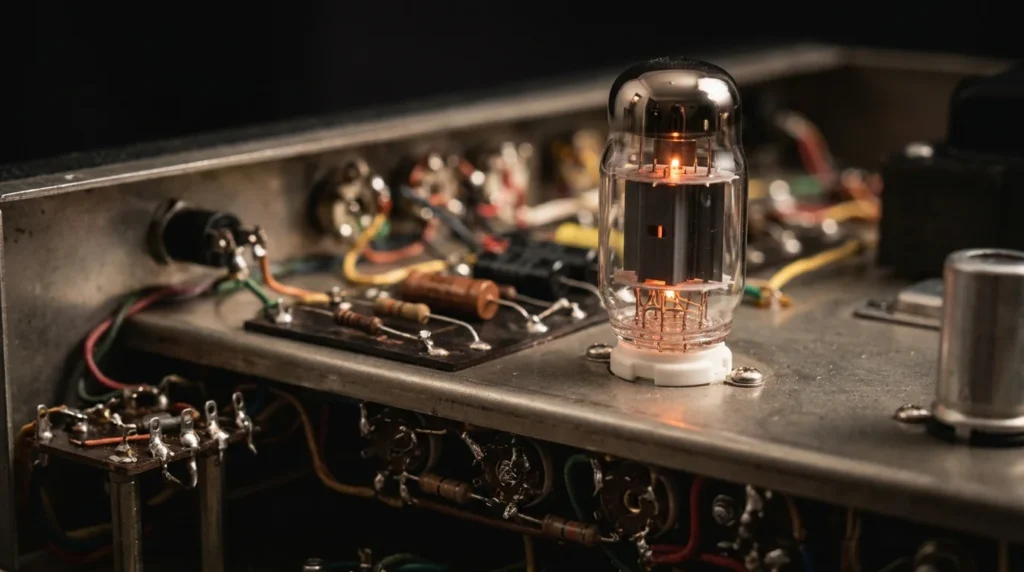
You need reliable tube-sockets octal tube sockets to build or restore high-power tube amplifiers. You can select heavy-duty ceramic socket models or PCB mount options for your 8-pin vacuum tube stages. In addition, you will find original hardware from trusted manufacturers like Belton and QQQ.
Engineers design these sockets with thick phosphor bronze contacts and molded keyways to protect your power tubes. You avoid loose connections and pin damage during tube swaps. Technicians choose high-temperature ceramic socket options to handle extreme heat from EL34 and 6L6 tubes. As a result, you maintain stable electrical bias and clean signal delivery in demanding audio circuits. You can browse our full inventory below to purchase the right octal tube socket for your project.
High-Performance Octal Tube Sockets for Tube Amplifier Builds
You upgrade your tube amplifier performance when you choose high-grade octal tube sockets for your build or repair. As a result, you lock your 8-pin vacuum tube securely into place while preventing thermal failure and bias drift. Our inventory features heavy-duty ceramic socket options and precision PCB mount designs engineered for demanding high-voltage circuits.
When you evaluate socket materials for your project, you gain distinct operational benefits:
-
Ceramic Sockets: You dissipate extreme heat from EL34, 6L6, and KT88 power tubes to protect your chassis.
-
PCB Mount Sockets: You achieve exact pin alignment and reliable solder joints on modern circuit boards.
-
Chassis Mounts with Solder Lugs: You complete clean point-to-point wiring for vintage restorations and custom hand-wired amps.
In addition, top audio manufacturers like Belton and QQQ craft these sockets with heavy phosphor bronze contacts. Consequently, you maintain tight pin tension over years of tube swaps and eliminate signal dropouts. Browse our catalog below to find the exact mounting style and contact plating for your amp build.
Ceramic Socket vs. Glassfiber-Filled PPS Construction
You choose between heavy-duty ceramic sockets and glassfiber-filled polyphenylene sulfide (PPS) construction based on your tube amplifier’s operating heat and chassis demands. High-grade ceramic sockets withstand operating temperatures above 300°C without charring or softening. As a result, you eliminate electrical arcing when running high-bias power tubes like EL34s or KT88s in tight enclosures. Glazed ceramic insulators also prevent carbon tracking under high plate potentials.
Glassfiber-filled PPS sockets provide high structural flexibility and precise manufacturing tolerances, Because PPS is a tough thermoplastic compound, you eliminate socket flange cracking when securing mounting screws into steel or aluminum chassis. In addition, PPS bodies absorb physical vibration during road transport, which prevents pin misalignment on your circuit boards.
When you select the body material for your 8-pin vacuum tube build, consider these practical performance differences:
-
Thermal Capacity: You select ceramic for maximum heat dissipation around hot power tubes. You select PPS for preamp stages and lower-wattage output circuits.
-
Impact Strength: PPS resists physical stress and mounting torque better than ceramic, which protects your octal tube socket assembly during heavy gigging.
-
Dielectric Insulation: Ceramic maintains supreme insulation resistance under severe voltage spikes, while PPS offers uniform pin spacing for high-density PCB layouts.
Pin Contact Plating: Gold-Plated vs. Silver Terminals
More importantly, after selecting your socket body material, you choose the pin contact plating to route your audio and high-voltage signals. Your choice between gold-plated and silver terminals directly impacts long-term signal clarity, thermal resistance, and maintenance requirements in your tube amplifier build.
-
Gold Plating: You select gold plating when you need maximum oxidation resistance. Gold does not tarnish over time, even in high-humidity gigging environments or during long storage periods. As a result, you maintain consistent contact tension on delicate grid signal pins without worrying about micro-corrosion causing static or dropouts. However, gold soft-plates over underlying nickel, which slightly increases contact resistance compared to silver.
-
Silver Plating: You choose silver plating to get the lowest potential electrical resistance across your octal tube socket pins. Silver conducts high currents exceptionally well, making it the ideal surface for power tube filament and plate supply lines running high-bias output tubes. Consequently, silver handles thermal cycling from hot output tubes without boundary layer breakdown, While silver surfaces develop a superficial tarnish over time from atmospheric sulfur, the mechanical insertion of an 8-pin vacuum tube wipes the immediate contact point clean. For high-current power stages wiring directly to chassis-mounted solder lugs, silver delivers optimal current flow. For low-noise preamp stages or PCB mount setups exposed to moisture, gold ensures reliable connection without surface degradation.
Octal Tube Socket Mounting Configurations
In practice, once you match your terminal plating to your signal path, you select the specific mounting hardware for your chassis layout. You evaluate your mechanical build requirements before purchasing an octal tube socket for your tube amplifier.
High-bias power circuits running hot EL34 or KT88 tubes require heavy-duty chassis saddle mount sockets with robust solder lugs. Consequently, you secure the socket body directly to metal chassis plates to manage heat while hand-wiring high-voltage leads.
When building modern high-density layouts, you choose PCB mount configurations instead. Modern Belton sockets offer precision-molded thermoplastic bodies that snap into printed circuit boards and resist autowave soldering heat.
At the same time, for classic hand-wired builds, you select a ceramic socket equipped with top-mount or bottom-mount metal retention rings. Selecting the correct hardware prevents mechanical strain on glass envelopes during tube insertion. Always verify pin indexing, mounting hole spacing, and terminal plating options before completing your amp build.
Chassis Saddle Mount with Solder Lugs
For example, you bolt these heavy-duty sockets directly to your metal chassis using stamped steel or nickel-plated saddle rings. When shopping for point-to-point builds, choose a ceramic socket with sturdy saddle hardware. This setup provides the structural strength required for heavy power tubes.
As a result, you should verify that the mounting hole centers match your chassis punch cutout, which typically measures 1.25 inches to 1.5 inches. Look for thick solder lugs made from tinned brass or phosphor bronze. These heavy-duty terminals retain spring tension after multiple soldering cycles and accept 18-gauge bus wire easily.
Meanwhile, also, premium octal tube socket designs include a central ground lug attached directly to the metal saddle. You solder your ground bus directly to this center post to keep signal paths short and eliminate hum loops.
For high-temperature power stages running an 8-pin vacuum tube like an EL34 or KT88, ceramic saddle mounts shield internal wiring from excessive heat. Brands like Belton and QQQ offer saddle-mount variants that feature wrap-around solder lugs and recessed mounting ears. As a result, you secure your high-voltage connections cleanly without risking short circuits against the metal chassis wall.
PCB Mount and Autowave Solder Options
By contrast, while hand-wired builds rely on chassis saddle mounts, modern production tube amp designs frequently use printed circuit boards. When you select a PCB mount octal tube socket, you trade manual labor for precise automated assembly.
In addition, you evaluate socket body materials carefully before purchasing parts for production boards. High-volume board assembly relies on automated wave soldering. Standard ceramic socket options often crack under thermal shock in wave solder machines. For automated wave soldering, you choose high-temperature thermoplastic sockets made from glassfiber-filled polyphenylene sulfide.
Brands like Belton manufacture PCB-mount thermoplastic sockets that easily withstand wave soldering temperatures up to 260°C. In addition, you verify that the socket pins feature tin or solder-dip plating to ensure fast solder wetting on board traces.
Specifically, always check terminal length and standoff height on PCB models. Integrated board standoffs allow flux cleaning solvents to wash cleanly under the socket base. If you build high-power output stages using an 8-pin vacuum tube like an EL34 or KT88, buy PCB sockets with reinforced pin retainers. This design prevents terminal push-out when you insert heavy power tubes into the amplifier circuit board.
Tube Compatibility and Pin Indexing Requirements
Beyond board-level terminal security, you must select an octal tube socket that matches the exact physical indexing of your valves. When shopping for your next tube amplifier build, you check the center keyway notch for precise alignment. An 8-pin vacuum tube relies on this center spigot for correct pin rotation. Loose keyway tolerances allow accidental misorientation during tube installation.
More importantly, wrong orientation destroys screen grid resistors and short-circuits high plate voltages directly into filament lines. You choose between heavy-duty chassis designs with wrapped solder lugs or high-grade PCB mount options based on your layout. For high-temperature power sections running EL34 or KT88 tubes, a glazed ceramic socket provides superior voltage arc resistance.
Alternatively, Belton thermoplastic sockets offer tighter pin contact retention over repeated insertion cycles. As a result, you preserve tight electrical contact and prevent dangerous thermal runaway in your output stage.
Standard 8-Pin Vacuum Tube Compatibility (EL34, 6L6, KT88, 6SN7)
In practice, to prevent output stage thermal runaway and pin misalignment across standard 8-pin vacuum tube types, you must match your tube selection with the correct socket design. High-power output valves like the EL34, 6L6, and KT88 generate substantial envelope heat and pull high currents. Conversely, dual-triode driver tubes like the 6SN7 demand minimal contact resistance to maintain low noise floors in your signal path.
When shopping for an octal tube socket, evaluate three core mechanical and thermal options:
-
Chassis Saddle Mounts with Solder Lugs: Choose glazed ceramic socket models with silver-plated phosphor bronze solder lugs for hand-wired point-to-point builds. These ceramic units withstand continuous chassis temperatures exceeding 250°C without mechanical degradation.
-
PCB Mount Thermoplastic Sockets: Select glassfiber-filled Belton PPS sockets for circuit board layouts. For example, integrated molded standoffs elevate the socket base, allowing thorough solvent flux cleaning around the trace pads.
At the same time, always check terminal retention force and dielectric voltage ratings before buying replacement hardware. Premium sockets maintain high contact tension through repeated valve changes. Furthermore, verified dielectric strength ratings above 2,000V DC prevent high-voltage arc-over between adjacent plate and heater pins in your tube amplifier.
Keyway Alignment and Pin Tension Safety
For example, to protect your 8-pin vacuum tube investment, inspect the center keyway slot and pin contact tension before completing your assembly. A worn central keyway guide allows misaligned tube insertion. Inserting a power valve off-center delivers hundreds of DC plate volts directly into sensitive control grid circuits.
More importantly, inspect ceramic socket models for a sharp center index slot free of chips or molding flash. On thermoplastic Belton PCB mount units, verify that the central guide cavity shows precise structural tolerances.
In practice, beyond alignment, check the spring design inside each pin terminal. Loose pin contacts cause intermittent filament voltage and catastrophic bias loss. Select silver-plated or phosphor bronze contacts featuring dual-wipe spring construction. These spring designs maintain firm clamping force on tube pins across hundreds of heating cycles.
Test retention force with an unused tube base before applying wire to chassis solder lugs. Each socket cavity must exert firm, uniform drag during extraction. Rigid keyways combined with high-tension contacts prevent short circuits and stabilize bias performance in high-power tube amplifier output stages.
Selecting the Best Octal Sockets: Belton, QQQ, and TAD
Selecting the right octal tube socket requires matching these mechanical safeguards to your specific build configuration and thermal environment. When sourcing components for high-voltage builds, evaluate socket options from Belton, QQQ, and Tube Amp Doctor (TAD). Each manufacturer targets distinct assembly methods and chassis designs:
-
Belton Thermoplastic Sockets: Select Belton units when building a PCB mount tube amplifier layout. Their glassfiber-filled PPS bodies resist heat distortion and feature molded bottom standoffs for flux removal. The dual-wipe spring contacts lock tightly onto every 8-pin vacuum tube pin to eliminate intermittent connections.
-
QQQ Glazed Ceramic Sockets: Choose QQQ ceramic socket models for point-to-point chassis builds requiring exceptional voltage isolation. High-grade Japanese ceramic withstands continuous operating temperatures over 250°C without dielectric breakdown. Sturdy solder lugs provide rigid anchor points for hand-wired components and heavy lead dress.
-
TAD Premium Octal Sockets: Specify TAD sockets for high-output power stages running EL34, 6L6, or KT88 valves. These sockets use extra-thick silver-plated phosphor bronze contacts and reinforced center keyways. Consequently, they maintain firm clamping force across severe heating cycles while preventing dangerous pin misalignment.
Match your mounting style and expected thermal load against these component specifications. Installing high-spec sockets protects your output transformers and ensures stable bias performance for years of operation.
Drain your power supply filter capacitors before touching socket terminals. Clip a 10k-ohm, 5-watt resistor across the main filter caps to bleed residual B+ voltage, which often exceeds 450 volts DC. Attach your multimeter ground lead to the chassis. Confirm zero volts across Pin 3 and Pin 4 before heating your soldering iron.
Orient the socket keyway toward your ground bus before bolting hardware to the chassis. Short wire paths reduce signal noise. Secure the mounting flange using #4-40 stainless steel screws and star lock washers. Drive the star washers through chassis paint to form a continuous ground path.
Mechanically lock wire leads into terminal eyelets before applying heat. Pass 22 AWG hookup wire through the lug hole and crimp a hook with needle-nose pliers. Apply 63/37 solder to the joint until the alloy fills the gap. Keep the iron tip on the lug for under four seconds to prevent pin drift inside the socket base.
Lay 6.3-volt heater wires along the chassis floor. Twist Pin 2 and Pin 7 leads at three turns per inch to cancel magnetic hum. Route Pin 3 plate lines away from grid wires, and slide fiberglass sleeving over Pin 3 terminals to block high-voltage arcs.
FAQ About octal tube sockets
Which tube types require a standard 8-pin octal socket?
Standard 8-pin octal sockets fit classic vacuum tubes built with a central plastic guide pin and eight surrounding contacts. You find these sockets in vintage radios, home stereo receivers, and guitar amplifiers like the Fender Deluxe Reverb. Common power tubes using this base include the 6L6, EL34, 6V6, and KT88. Preamp tubes like the 6SN7 and rectifier tubes like the 5U4G also require this setup.
When you install an octal tube, check the plastic post in the middle of the base. This post features a raised ridge that fits into a matching keyway slot inside the socket. Line up this ridge with the slot before pushing the tube down to avoid snapping the center post.
How do high-temperature base materials prevent thermal breakdown?
Engineers select high-temperature base materials like ceramic to prevent socket failure under intense heat. If you run power tubes like 6L6s, you generate high temperatures near the pins. If you use standard phenolic plastic, you scorch the material and create conductive carbon paths. You stop this damage when you choose ceramic, so you keep electrical contacts isolated past three hundred degrees Celsius.
Before you crank a vintage guitar amplifier, replace brown phenolic octal sockets with glazed ceramic replacements. You block current leakage and protect expensive output transformers.
How do loose socket pins affect tube amp performance and safety?
When socket pins lose their grip, you lose the solid electrical connection between your tube and the amplifier circuit. You hear this as crackling, sudden volume drops, or loud hum through your speaker. If a loose pin interrupts the negative bias voltage, the power tube draws excess current, turns cherry red, and fails. That power spike burns your expensive output transformer and shorts nearby components, creating a fire risk inside your chassis.
You can fix loose contacts before a bad connection ruins your gig. Unplug the amplifier, drain the high-voltage capacitors, and use a miniature jeweler’s screwdriver to push the metal socket contacts toward the center. If a contact feels brittle or snaps during adjustment, replace the octal socket.