
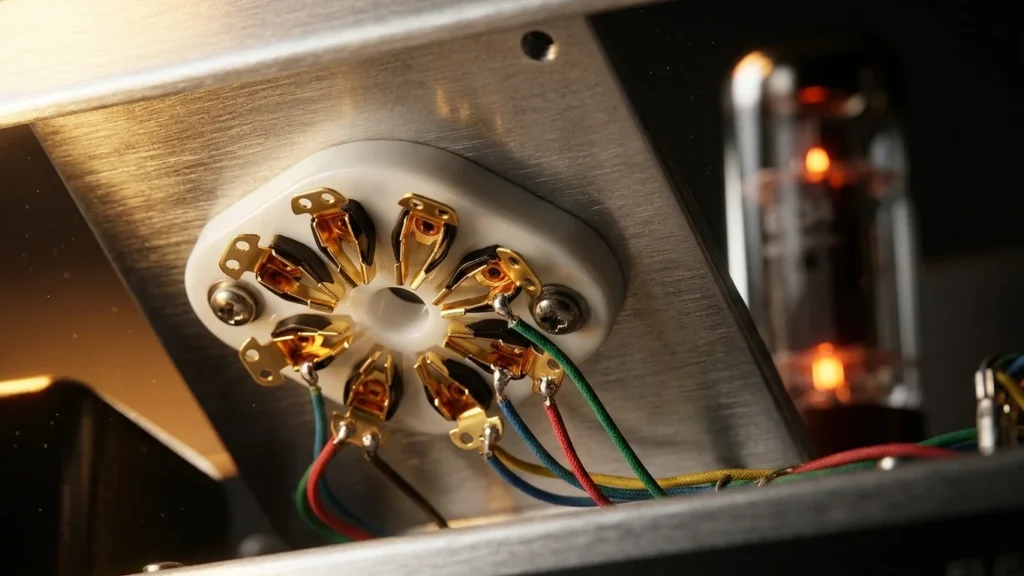
Selecting and optimizing high-quality 8 pin octal sockets is critical for ensuring long-term system reliability. Whether you are building a vintage-style tube amplifier or wiring a heavy-duty industrial control panel, understanding the electrical limits, contact metallurgy, and physical construction of 8 pin octal sockets is paramount to achieving connection integrity.
Industrial buyers typically require rugged DIN rail mounts for secure relay connections. Meanwhile, audio designers demand high-grade materials to handle intense thermal loads. For example, a heavy-duty ceramic octal socket is ideal for running hot EL34 power tubes. For tighter layouts, a specialized PCB mount option is better suited for modern production runs. Leading brands like Belton offer excellent contact retention and low contact resistance.
With so many options available, finding the right component requires analyzing physical dimensions and electrical ratings. This technical review evaluates the top sockets on the market. We will help you source the perfect match for your specific engineering requirements.
Technical Design of 8 Pin Octal Sockets: Audio vs. Industrial Applications
To optimize your choice of an octal socket, you must match your operating environment to the hardware limits. For instance, high-voltage tube circuits demand materials that can withstand continuous thermal stress. In these cases, a ceramic socket prevents arc-over and handles the high heat of EL34 or 6L6 tubes, Because of this, these materials remain the standard for vintage audio designs.
Conversely, modern automated assembly lines favor a PCB mount socket to reduce manual wiring time. If you are rebuilding a classic amplifier, hand-wired chassis designs will require robust solder lugs instead. These lugs provide a mechanically secure connection point for point-to-point wiring. When reliability is your primary goal, premium brands like Belton offer reinforced contacts that resist physical fatigue over many insertion cycles. On the other hand, industrial automation layouts rely on DIN rail configurations to simplify field replacement.
When evaluating potential components, you should prioritize these mechanical and electrical specifications:
-
Dielectric Strength: Ensure the socket is rated for at least 1,500V AC to prevent high-voltage breakdown.
-
Contact Resistance: Select pins with under 10 milliohms of resistance to minimize signal loss and localized heating.
-
Insertion Force: High-retention contacts prevent heavy tubes or relays from walking out of the socket under vibration.
By analyzing these parameters, you can select a component that prevents field failures and reduces long-term maintenance costs.
Vacuum Tube Audio Amplifiers and Vintage Restoration
To achieve this level of system reliability in vacuum tube audio amplifiers, you must match the physical socket construction directly to the thermal load of your power tubes. High-power output stages running EL34 or 6L6 tubes generate significant heat, making a heavy-duty ceramic octal socket the primary choice for chassis-mounted designs. This material prevents structural degradation and maintains high insulation resistance under continuous thermal stress.
For vintage restorations, physical installation demands a robust mechanical interface. Solder lugs are the standard choice for point-to-point hand-wired chassis, as they withstand high soldering heat and securely support heavy component leads, Because of this design, you avoid damaging the socket body during installation.
If you are designing a modern production amplifier, a PCB mount configuration is more appropriate to speed up assembly. For these applications, premium Belton sockets offer high-grade synthetic materials like Polyphenylene Sulfide (PPS). This material resists warping during wave soldering and provides reliable contact retention over many maintenance cycles.
You should select your octal socket based on these specific engineering pairings:
-
Ceramic Sockets with Solder Lugs: Best for high-heat EL34 or 6L6 power stages in hand-wired, chassis-mount guitar amplifiers.
-
Belton PPS Sockets with PCB Pins: Ideal for modern preamplifier and power amplifier boards requiring low contact resistance and automated manufacturing.
Using this targeted approach ensures that your chosen component matches both your thermal dissipation requirements and your assembly methods.
Industrial Relay Circuits and Automation Systems
Transitioning from tube audio to industrial relay circuits requires a shift in how you evaluate octal socket specifications. In these automation environments, physical durability and secure wiring terminations take priority over raw thermal dissipation. Consequently, you must prioritize mechanical stability and ease of replacement under constant operational vibration, While a ceramic socket with solder lugs is ideal for a hot 6L6 or EL34 tube, industrial systems demand quick-change compatibility. For this reason, DIN rail-mounted octal sockets are the industry standard for housing relays and timing modules. These sockets feature screw clamp terminals instead of solder lugs to allow rapid wiring modifications without a soldering iron. As a result, field technicians can swap out failed components in seconds, minimizing system downtime.
Also, industrial octal sockets utilize rugged thermoplastic bodies rather than brittle ceramic or specialized Belton PPS materials. This construction prevents cracking during high-torque wire installation and absorbs cabinet vibrations. To maintain electrical integrity under high-current switching loads, look for sockets with heavy-duty copper alloy contacts. Specifically, these contacts should have a continuous rating of at least 10 amps at 300 volts. If your design uses integrated control boards, a PCB mount octal socket allows direct relay integration. In any case, selecting the correct mechanical interface ensures your automation system remains reliable over millions of cycles.
Materials and Construction: Belton PPS vs. Ceramic Sockets
Achieving this high level of operational reliability requires a strict match between the socket material and your assembly process. When designing or servicing high-fidelity tube amplifiers, engineers must choose between a Belton PPS (polyphenylene sulfide) octal socket and a traditional ceramic socket. Consequently, your choice dictates how well the amplifier survives thermal cycling and mechanical stress.
-
Belton PPS Sockets: These components excel in modern production environments, Because PPS resists warping during high-temperature wave soldering, it is the standard choice for a PCB mount design. Additionally, the molded body maintains precise pin alignment. This precision prevents PCB trace damage when inserting or removing heavy power tubes like the EL34 or 6L6.
-
Ceramic Sockets: For hand-wired point-to-point builds, ceramic remains the superior choice. Ceramic material tolerates extreme heat without losing its dielectric strength. As a result, it is ideal for chassis-mount layouts using solder lugs where iron temperatures run high. However, ceramic is brittle and can crack if you over-tighten the mounting hardware.
To maximize lifespan, pair PCB mount Belton sockets with automated manufacturing lines. Conversely, utilize rugged ceramic sockets for high-heat chassis builds. Selecting the correct material configuration directly prevents insulation breakdown and physical socket failure over years of heavy operation.
Premium Belton Sockets with Gold-Plated Phosphor Bronze Contacts
To guarantee long-term reliability under these heavy operating conditions, you must analyze the contact metallurgy of your chosen octal socket. Specifically, selecting premium Belton sockets with gold-plated phosphor bronze contacts ensures optimal electrical conductivity and mechanical retention. Phosphor bronze possesses superior yield strength compared to standard brass alloys. Consequently, these contacts maintain constant spring tension against tube pins even after hundreds of insertion cycles. This constant pressure prevents intermittent connections in high-draw power tubes like the EL34 and 6L6.
Also, the gold plating directly addresses the issue of contact oxidation. In high-temperature tube environments, base metals degrade quickly. As a result, surface resistance increases, leading to localized heating, thermal runaway, or signal degradation. Gold does not oxidize under these harsh conditions. Therefore, it preserves a low-resistance electrical interface over decades of service. If you are designing high-fidelity audio equipment or demanding industrial control circuits, this stable signal path is vital.
Conversely, cheaper tin-plated contacts suffer from fretting corrosion caused by micro-movements during thermal cycling. This corrosion eventually leads to micro-arcs and socket failure, While standard ceramic options work for basic repairs, high-end applications require the mechanical precision of Belton components. These units use a PCB mount configuration with gold-plated terminals, which simplifies wave soldering while preserving contact alignment. Consequently, specifying this premium material combination reduces field failures and lowers long-term maintenance costs.
Cost-Effective Ceramic Sockets for High-Temperature Durability
While premium Belton PPS options excel in automated PCB mount environments, point-to-point chassis builds demand a different material strategy. For these hand-wired configurations, a ceramic octal socket offers a highly cost-effective solution that tolerates extreme thermal exposure. Specifically, ceramic materials maintain their dielectric strength at operating temperatures well above those tolerated by typical plastics. As a result, they do not melt or warp when positioned directly beneath hot power tubes like the EL34 or 6L6. Consequently, this high thermal limit makes ceramic the standard choice for vintage-style guitar amplifiers and high-draw industrial control circuits where ventilation is limited.
However, the mechanical properties of ceramic require careful handling during assembly, Because ceramic is inherently brittle, these sockets are prone to cracking if mounting screws are over-tightened. To mitigate this risk, designers must specify chassis-mount sockets with resilient metal saddle rings that cushion the ceramic body. In terms of termination, these sockets typically utilize heavy-duty solder lugs rather than PCB pins. These solder lugs provide robust mechanical anchor points for hand-wired components, which ensures reliable operation under continuous vibration.
From an electrical standpoint, a quality ceramic octal socket maintains an insulation resistance exceeding 1000 megohms at 500 volts DC. This high threshold effectively prevents high-voltage arc-over between adjacent pins, even in humid operating conditions. Therefore, while Belton PPS remains the standard for automated production, ceramic is the preferred choice for rugged, high-voltage, and high-temperature service.
Electrical Ratings, Dielectric Strength, and Insulation Resistance
To optimize an octal socket for high-voltage environments, engineers must evaluate specific dielectric breakdown limits. A typical high-end socket must withstand a dielectric breakdown voltage of at least 2,000 volts AC. As a result, this threshold prevents catastrophic arc-over when high plate voltages are applied to an EL34 or 6L6. Standard operating limits typically specify a continuous working voltage of 600V AC or DC. Consequently, running these components near their electrical limits requires careful thermal management to prevent localized heating. This thermal stress can degrade contact spring tension over time.
To preserve insulation resistance, the physical termination style must match the operating voltage. For example, solder lugs offer greater physical spacing between conductors than a high-density PCB mount layout. Therefore, air gap distance is maximized, which directly reduces the risk of surface tracking under high-voltage loads, While Belton PPS sockets offer excellent resistance to moisture absorption, ceramic versions provide superior arc-tracking resistance if localized carbon pathing occurs. To mitigate the risk of surface degradation, designers should specify sockets with glazed top surfaces. This glaze prevents dust and moisture accumulation. Consequently, the socket maintains its high insulation performance even in harsh, unsealed industrial enclosures.
Contact resistance must also be minimized to avoid voltage drops and signal degradation. Most premium sockets maintain a contact resistance of less than 30 milliohms. To achieve this low resistance, contacts must utilize high-pressure spring-tension designs with heavy plating. For instance, gold-plated phosphor bronze contacts ensure consistent electrical coupling. As a result, the connection remains stable through repeated tube replacements.
Mounting Options and Installation Configurations
This mechanical stability depends heavily on how the octal socket is physically anchored to the system chassis. When optimizing an octal socket layout, engineers must match the mounting style to expected thermal and mechanical stresses. For instance, high-power tubes like the EL34 and 6L6 generate substantial heat during operation. Consequently, mounting these tubes to a PCB mount socket transfers excessive thermal energy to the board traces. Over time, this heat degrades the copper adhesion.
To mitigate this risk, designers should utilize chassis-mounted sockets with solder lugs for high-power stages. This configuration allows the metal chassis to act as a heat sink. As a result, the operating temperature of the assembly remains within safe limits.
For applications requiring automated assembly, Belton PPS sockets offer highly precise lead spacing for printed circuit boards. However, the physical forces of inserting and removing tubes can stress the solder joints. Therefore, engineers must specify sockets with physical snap-in brackets or screw-down tabs to absorb these mechanical loads.
If the design demands a ceramic socket due to extreme heat, a metal saddle ring must be integrated. This ring cushions the brittle material against chassis vibrations. Consequently, the ceramic body will not crack when subjected to physical shock or thermal expansion. By selecting the correct mounting hardware, you ensure long-term reliability in both audio and industrial settings.
Chassis Mount and Panel Saddle Sockets
To achieve this reliability, prioritizing chassis mount and panel saddle configurations remains the most effective strategy for high-stress deployments. Panel saddle designs utilize a stamped metal ring wrapped around the socket body. Consequently, this metal ring absorbs the physical stress when you insert or extract heavy tubes like the EL34 or 6L6. Without this metal saddle, the mechanical shear force acts directly on the brittle body of a ceramic octal socket. Therefore, utilizing a saddle-mounted socket prevents physical cracking during routine maintenance.
Also, mounting the octal socket directly to the metal chassis frame improves thermal dissipation. High-power tubes generate substantial heat that must be conducted away from sensitive components. As a result, a chassis-mounted socket operates at a significantly lower temperature than a standard PCB mount equivalent. Solder lugs on these chassis-mounted sockets allow for robust, point-to-point hand wiring. This wiring method tolerates thermal expansion much better than rigid copper circuit board traces.
For maximum reliability, engineers should specify premium Belton or ceramic sockets with integrated steel or brass saddles. These saddles feature pre-punched holes for standard screw sizes or pop rivets. Consequently, the mechanical connection to the enclosure remains rigid over decades of service.
PCB Mount and Solder Lugs Connection Types
Choosing between a PCB mount and solder lugs octal socket depends heavily on these mechanical and thermal constraints. For high-current vacuum tubes like the EL34 or 6L6, solder lugs remain the industry standard. This preference exists because hand-wired solder lugs isolate thermal energy away from the delicate copper traces of a printed circuit board. Consequently, the high operating temperatures of power tubes do not cause trace lifting or board warping. Therefore, design engineers should specify chassis-mounted sockets with solder lugs for heavy-duty power stages and rectifier circuits.
Conversely, a PCB mount octal socket offers significant advantages in manufacturing efficiency and consistency. Automated assembly processes rely on these pin configurations to reduce production costs. As a result, commercial audio amplifiers frequently utilize PCB-mounted sockets for preamplifier stages where heat dissipation is minimal. However, thermal cycling in these setups can eventually fatigue the solder joints. To mitigate this risk, premium Belton PPS sockets utilize flexible leads that absorb minor physical movements. Ceramic sockets with PCB pins require precise alignment during soldering to prevent built-in mechanical stress. Therefore, engineers must ensure perfect vertical alignment during the wave soldering process to avoid premature joint failure.
DIN Rail Mounts for Industrial Relay Integration
Optimizing an octal socket for industrial DIN rail mounts requires a shift from solder joint integrity to robust terminal clamping. Industrial DIN rail systems subject electrical components to continuous vibration and thermal cycling. Consequently, standard PCB mount sockets or ceramic chassis-mount variations with solder lugs are unsuitable for these harsh environments. Instead, industrial octal socket designs utilize heavy-duty screw or tension-clamp terminals. These screw terminals secure stranded or solid-core hookup wires directly without requiring solder.
Also, these industrial sockets must withstand high transient voltage spikes. Therefore, the housing material choice shifts from specialty audio plastics like Belton PPS to flame-retardant polyamides or high-grade ceramic composites. These materials ensure high dielectric strength and prevent electrical tracking between adjacent pins under high-voltage conditions.
Unlike audio equipment running EL34 or 6L6 power tubes, industrial relay installations prioritize rapid field replacement and long-term contact pressure. To maintain electrical integrity under vibration, the internal contact clips must exert high retention force. Consequently, cheap stamped-metal contacts fail quickly. Engineers must specify phosphor bronze or beryllium copper contact leaves to prevent contact fretting. Additionally, the physical footprint must allow for clean mounting on standard 35mm DIN rails. As a result, integrated locking clips must grip the rail flange securely to prevent lateral movement during relay insertion or extraction.
Tube Compatibility and Alignment Standards
This mechanical stability is equally critical when adapting an octal socket for high-voltage vacuum tube applications. Consequently, engineers must analyze both thermal tolerance and mechanical alignment during the selection process. When designing for high-dissipation power tubes like the EL34 or 6L6, the housing material determines the physical degradation rate of the socket over time. For example, a ceramic socket offers superior heat dissipation and resists carbon tracking under extreme temperatures. Conversely, a molded Belton PPS socket provides tighter physical tolerances and prevents moisture absorption in humid environments.
Therefore, the chosen mounting style must match the expected thermal profile of the system. Chassis-mounted sockets utilizing solder lugs isolate high thermal energy away from the delicate circuit boards. As a result, this configuration prevents board warping, trace lifting, and long-term solder joint fatigue. Conversely, a direct PCB mount socket requires precise vertical alignment during manufacturing to survive mechanical insertion stress.
Also, physical alignment during tube insertion represents a primary mechanical failure point. If the central keyway of the socket does not align perfectly with the tube spigot, insertion forces will bend the contact pins. Consequently, the internal contact leaves deform, which reduces the retention force and causes localized electrical arcing. Accordingly, high-reliability specifications dictate self-aligning contact entryways to ensure consistent, low-resistance electrical contact over repeated maintenance cycles.
Supported Tube Types: EL34, 6L6GC, KT88, and 5U4 Rectifiers
Therefore, optimizing the choice of an octal socket for high-performance tubes like the EL34, 6L6, KT88, and 5U4 rectifiers requires analyzing their specific thermal and electrical loads. For instance, the KT88 beam tetrode runs at high plate voltages and dissipates significant heat. Consequently, a ceramic octal socket is the standard choice for these high-voltage environments to prevent electrical arc-over between pins.
Similarly, the 5U4 rectifier tube draws 3 amperes of filament current. As a result, this high current generates intense localized heat at pins 2 and 8. If you use a PCB mount socket for this rectifier, the continuous thermal stress will eventually damage the circuit board. Conversely, utilizing chassis-mounted sockets with solder lugs allows you to wire the filament lines directly, which safely dissipates the heat through the chassis.
For audio applications using the EL34 or 6L6, maintaining a clean signal path is the main priority. Accordingly, high-quality molded Belton sockets are excellent for these tubes because they offer tight physical tolerances and resist moisture. These premium sockets prevent physical movement of the tube, which reduces unwanted mechanical noise in the audio circuit. Therefore, matching the physical socket material to the thermal and electrical output of the specific tube ensures a reliable, long-lasting system.
The Role of the Center Keyway (Spigot) in Preventing Misalignment
Beyond these thermal considerations, precise physical alignment during insertion is critical to prevent mechanical failure of the octal socket. Specifically, the center keyway, or spigot index, dictates the exact rotational orientation of the tube pins. Consequently, any structural failure of this keyway allows for incorrect tube rotation during insertion. If a technician inserts a misaligned tube, high-voltage plate circuits will bridge directly into sensitive grid paths. As a result, this electrical bridging causes catastrophic failure of both the tube and the surrounding circuit components.
Also, forcing a misaligned tube into the socket deforms the internal contact leaves permanently. This physical deformation reduces the retention force of the contacts. Accordingly, weakened contacts exhibit higher contact resistance and localized thermal arcing under high load. This mechanical protection is especially vital when regularly swapping power tubes like the EL34 or 6L6.
To mitigate this risk, premium ceramic and Belton molded sockets feature chamfered entryways at the keyway slot. These chamfered guides align the indexing key before the electrical pins make contact with the internal leaves. Conversely, low-quality sockets often have loose keyway tolerances that permit unacceptable rotational play. Therefore, you must verify the keyway dimensions of your chosen octal socket during the system design phase. For PCB mount configurations, proper keyway alignment is even more critical because off-axis insertion forces will crack solder joints. Utilizing robust chassis-mounted sockets with solder lugs instead isolates these physical insertion stresses from the delicate circuit traces.
FAQ About 8 pin octal sockets
What is the key difference between a PCB mount and solder lugs octal socket?
The main difference lies in how you connect them to your circuit. A PCB mount socket features short, rigid pins designed to plug directly into a printed circuit board for clean, automated assembly. On the other hand, a solder lug socket has flatter metal tabs with small holes, which are designed for hand-soldering individual wires directly to the socket. This style is perfect for traditional point-to-point wiring.
If you are restoring a vintage tube amplifier or building a custom DIY project without a circuit board, you should choose the solder lug version. As a practical tip, always use heat shrink tubing over your soldered connections on a solder lug socket to prevent accidental short circuits between the closely spaced pins.
How do Belton PPS sockets compare to ceramic octal sockets in high-temperature environments?
While ceramic sockets are the traditional champions for extreme heat, Belton PPS sockets hold up incredibly well in modern high-temperature environments. Ceramic can technically withstand higher temperatures before degrading, but it is brittle and prone to cracking if you overtighten the mounting screws. On the other hand, Belton’s rugged PPS synthetic material easily handles the heat generated by hot-running power tubes while offering superior durability and a much tighter grip on the tube pins.
As a practical tip, if you are building or repairing a gigging guitar amplifier that travels often, we recommend going with Belton PPS. They will easily manage the high heat of power tubes like 6L6s while absorbing road vibrations and physical shocks that might easily crack a delicate ceramic socket, keeping your gear running safely.
Can an industrial DIN-rail relay socket handle high-voltage vacuum tubes?
Yes, you can physically plug an eight-pin vacuum tube into a standard industrial DIN-rail relay socket since they share the same octal footprint, but you must proceed with caution, While these sockets are incredibly convenient for prototyping, most industrial relay sockets are only rated for 250 to 300 volts. This is often too low for the high-voltage demands of classic tubes like the 6L6 or EL34, which frequently run at 400 volts or more.
Also, standard industrial plastic sockets can warp or melt under the intense heat that vacuum tubes generate. As a practical tip, always check the socket’s datasheet for its maximum voltage and temperature limits before powering up your project, and consider using ceramic octal sockets if your tube runs especially hot.