
A high price tells you little about how an individual tube will work in your amplifier. Before paying a vintage or NOS premium, confirm the approved type, the problem you want to solve, the seller’s test method and readings, and the return terms. “NOS” describes claimed stock history, not a verified electrical condition or a test result for that tube.
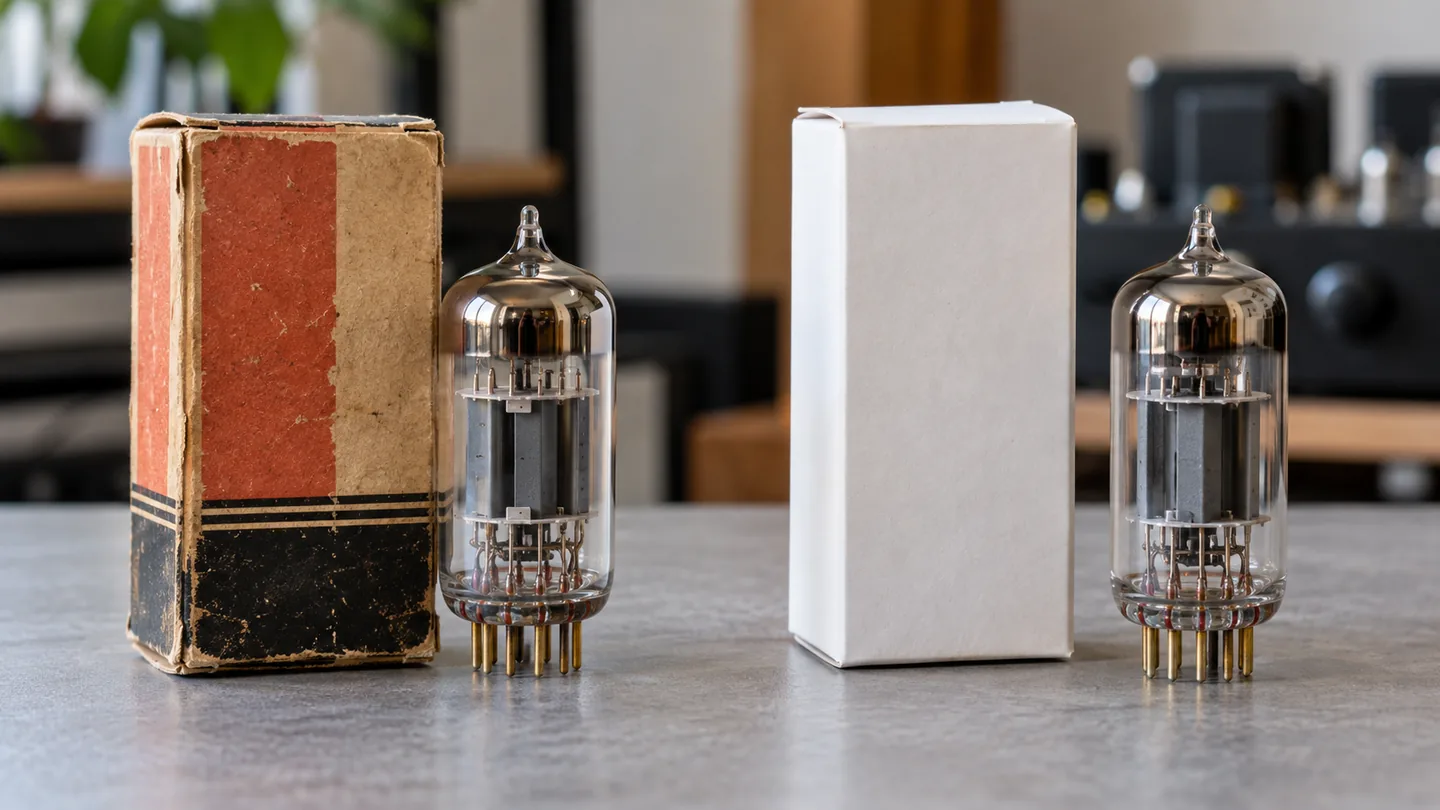
Illustrative image; not a photograph of a specific product.
A real decision, not a brand contest
In one Reddit discussion about expensive tubes, owners described different outcomes and different tolerance for tube rolling. A separate discussion asks how much change a tube swap should produce. Neither thread is a controlled comparison of tube makes or eras.
For a decision you can check, separate four variables: electrical compatibility, measured tube condition, amplifier circuit, and level-matched listening preference. A seller’s label or photograph does not replace measurements. Nor does a good data-sheet match prove that one tube will sound better to every listener.
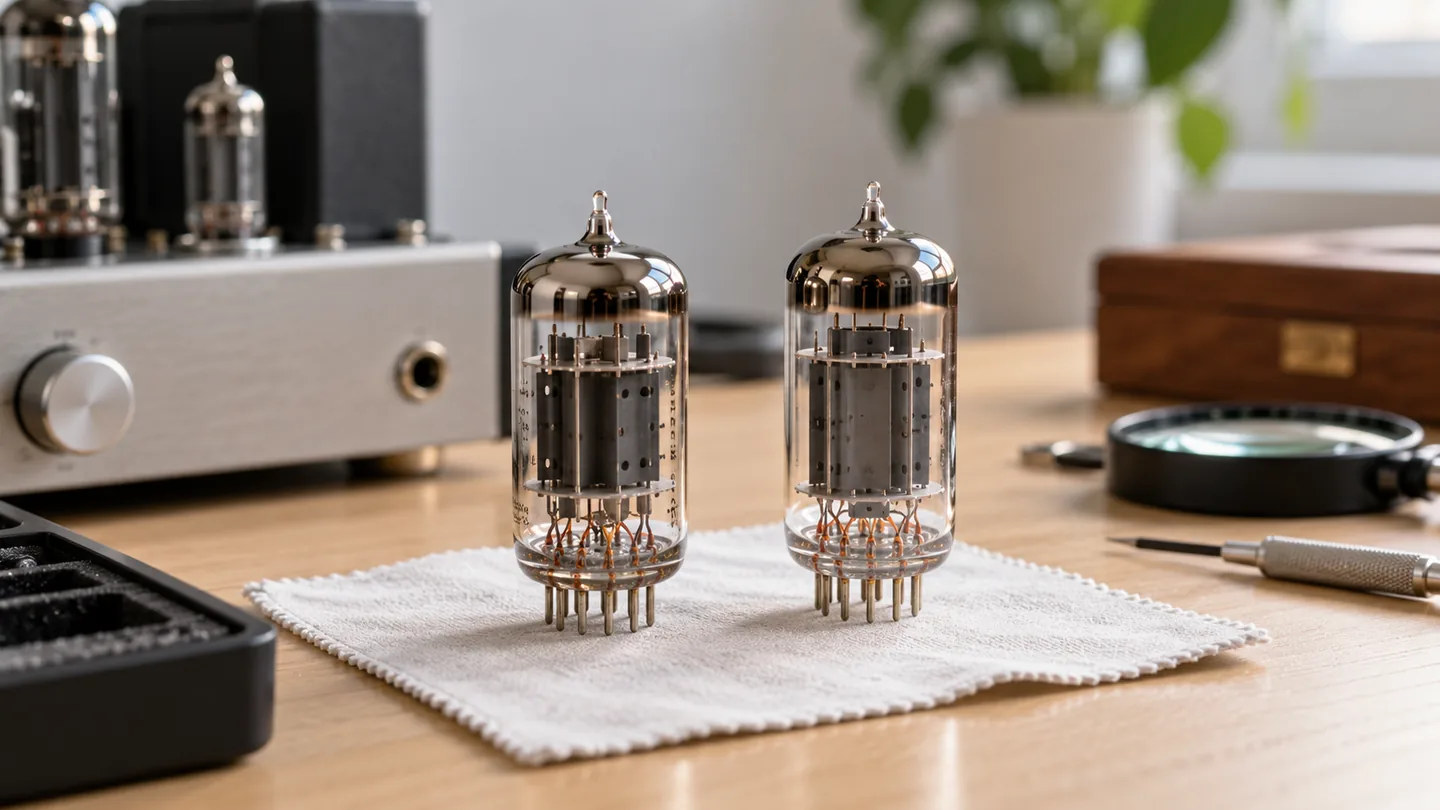
Compare the complete offer
| Check | Current-production tube | NOS/vintage tube |
|---|---|---|
| Approved type and pinout | Required | Required |
| Test result for the unit sold | Ask for readings and the test method | Ask for readings and the test method; age and provenance add uncertainty |
| Noise and microphonics policy | Relevant for sensitive preamp positions | Equally relevant |
| Return terms | Compare | Compare carefully |
| Price and repeatability | Record actual current quote | Record actual current quote and availability |
The JJ ECC83S data sheet demonstrates the kind of electrical information needed for a 12AX7-family comparison: base, heater, limits, and operating characteristics. It is a model data sheet, not a test report for the individual tube a seller offers, and it does not predict the sound of every tube brand in every circuit. For power tubes, the amplifier maker’s matching or bias requirements may matter more than vintage status. Follow the model’s user instructions; internal bias work and fault diagnosis belong to qualified service personnel.
When not to buy NOS
Skip a premium listing if the seller cannot identify the exact tube, provide credible condition information, or accept a return for a noisy unit. If your amplifier already works well, first document what you want to change and whether a different speaker or setup would be more relevant. If the goal is replacement after a failure, solve reliability and compatibility before pursuing subtle tonal differences.