
For a socket specified for a 12AX7, an ECC83 or 7025 is commonly sold as the same basic tube type. That does not make every tube whose name begins with “12A” an equivalent replacement. Check the amplifier manual and the exact manufacturer’s datasheet before buying, especially if the circuit calls for a particular tested version or uses a nonstandard heater arrangement.
The distinction mirrors a r/tubeamps preamp question. After receiving an explanation that ECC83, 12AX7, and 7025 were related names, the original poster asked whether all “12A” parts could be swapped. The follow-up is the real purchasing trap: a family resemblance in a printed code is not a pinout or operating-point specification.
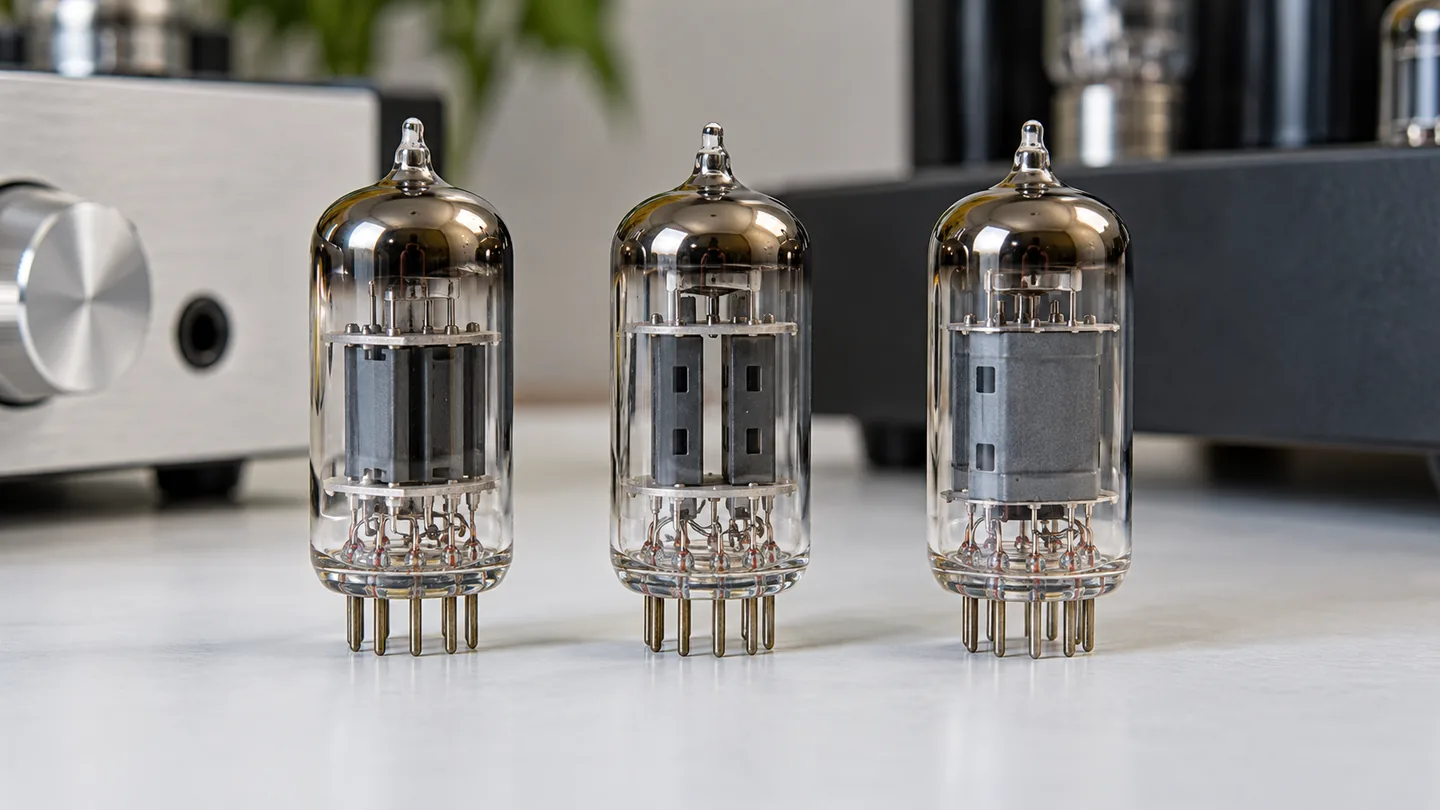
Illustrative image; not a photograph of a specific product.
What the names do and do not tell you
JJ Electronic’s ECC83S datasheet also prints “12AX7, 7025” for that model and identifies it as an audio-frequency double triode. The same sheet lists 6.3 V/300 mA or 12.6 V/150 mA heater operation; the amplifier’s wiring determines which arrangement applies. This is evidence for the naming relationship on this particular product, not proof that every vintage or current tube branded with one of those names has identical noise, microphonics, or measured behavior. The product’s datasheet and the amp maker’s recommendation remain the controlling documents.
If the amplifier specifies 12AX7, search a seller’s listing for the exact tube model and compare its data with the specified type. Verify the base diagram, heater arrangement, key electrical limits, and physical fit. The designations alone do not tell you how the particular amplifier wires its heater supply. Buying from a seller that identifies the manufacturer and part number is more useful than relying on a broad “compatible with everything” claim.
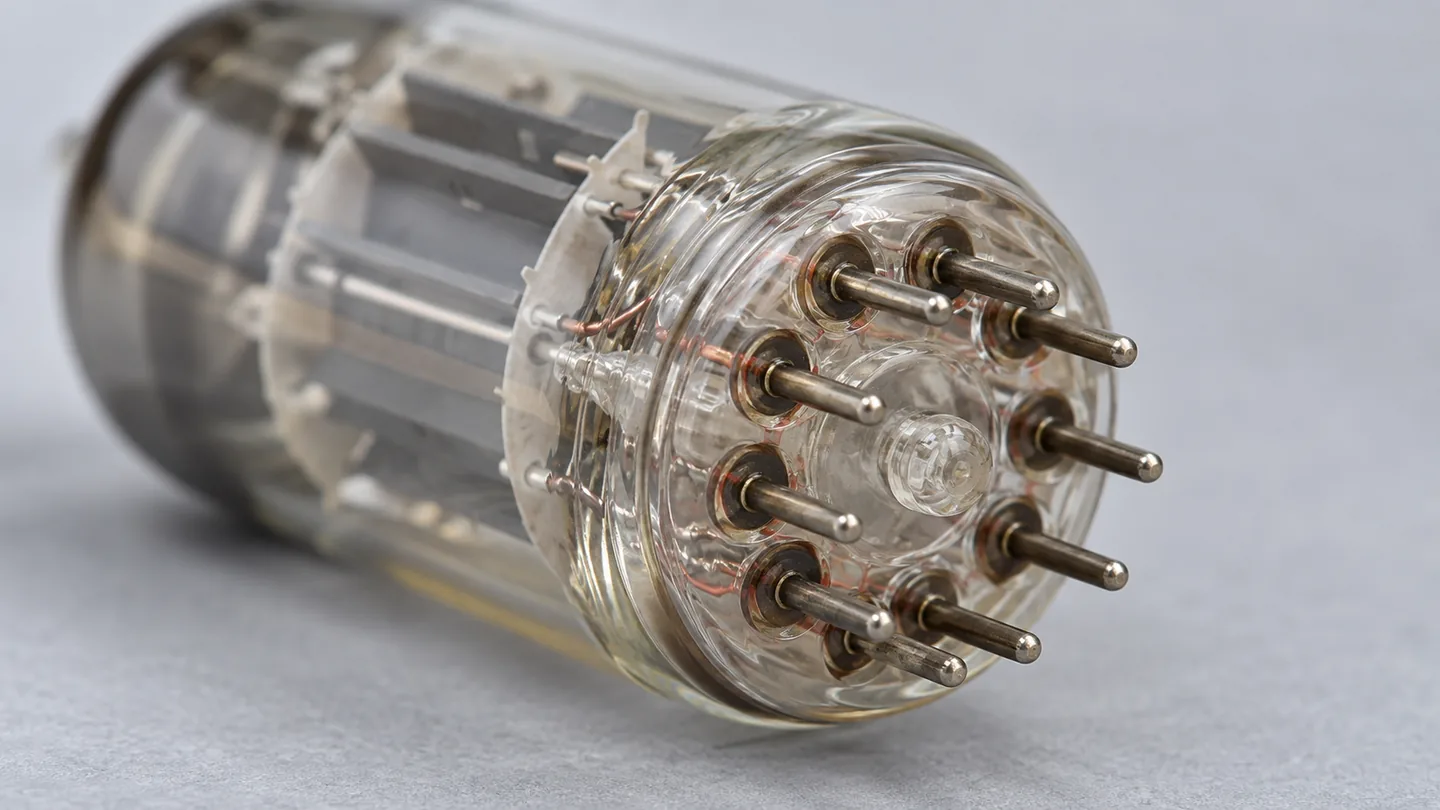
Why a 12AT7 or 12AY7 is a different decision
Other nine-pin dual triodes may fit the same style of socket yet behave differently. JJ’s 12AY7 datasheet gives a typical amplification factor of 40, while its ECC83S sheet gives 100; those are datasheet conditions, not promised gain in an amplifier. A 12AT7 or 12AY7 can be a deliberate experiment in some circuits, but it is a different decision from choosing between 12AX7 and ECC83. The stage’s function and component values matter. A phase inverter or driver may impose different demands from a first gain stage, so ask the amplifier maker or a technician about that socket.
Do not infer interchangeability from a shared glass envelope, number prefix, or the fact that a tube lights up. Nor should a claim of “more gain” or “lower noise” be treated as universal without a measurement method and the exact model being compared. If noise or microphonics is the reason for shopping, first identify which socket produces the symptom and whether the tube is actually at fault; other parts of the amplifier can make similar noises.
A simple buying decision
If the manual says 12AX7 or ECC83 and the seller’s official datasheet names both, the replacement category is straightforward. If the manual specifies 7025, choose a documented 7025/12AX7 variant and review any seller testing claims rather than assuming a premium label guarantees lower noise in your amp. If the proposed tube is a different type, ask for circuit-specific advice before ordering.
The owner-facing information to gather is the amplifier model, the printed designation on the existing tube, the socket position, and the problem being solved. The routine tube change itself should follow the amplifier maker’s instructions. Do not remove the chassis or probe internal circuitry to investigate a preamp-tube problem; tube amps can retain hazardous voltage after unplugging.
Sources
- Reddit: tube preamp questions — demand evidence and the original poster’s follow-up.
- JJ Electronic ECC83S datasheet — manufacturer identification of ECC83S, 12AX7, and 7025.
- JJ Electronic 12AY7 datasheet — manufacturer comparison for a distinct tube type.