
Hum does not automatically mean failed filter capacitors or bad tubes. First record when the noise appears and isolate removable external equipment without opening the amplifier. Stop using the unit if the hum arrives with overheating, smell, smoke, arcing, or abnormal tube glow, and ask a qualified technician to investigate.
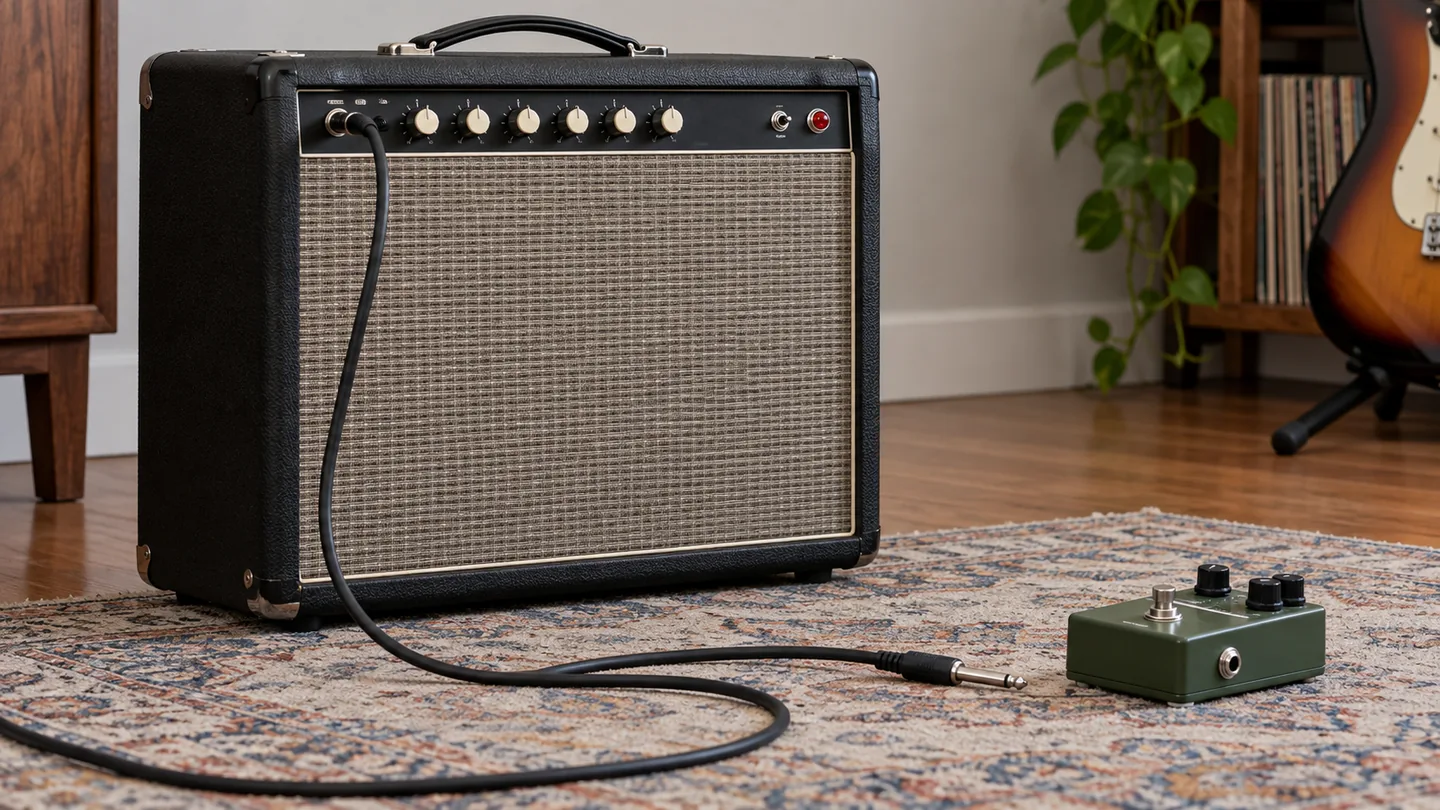
Illustrative image; not a photograph of a specific product.
Why guessing is expensive
A Reddit owner reported loud hum in a Blues Junior after replacing the power tubes and trying a new preamp tube in several positions. The hum began after the amp had been left on for hours. A commenter suggested a power-supply cause, but no measurement or repair result in that thread establishes it. A different thread tried to infer the fault by pulling tubes; that is not a safe diagnostic plan for an untrained owner.
Checks that do not require opening the chassis
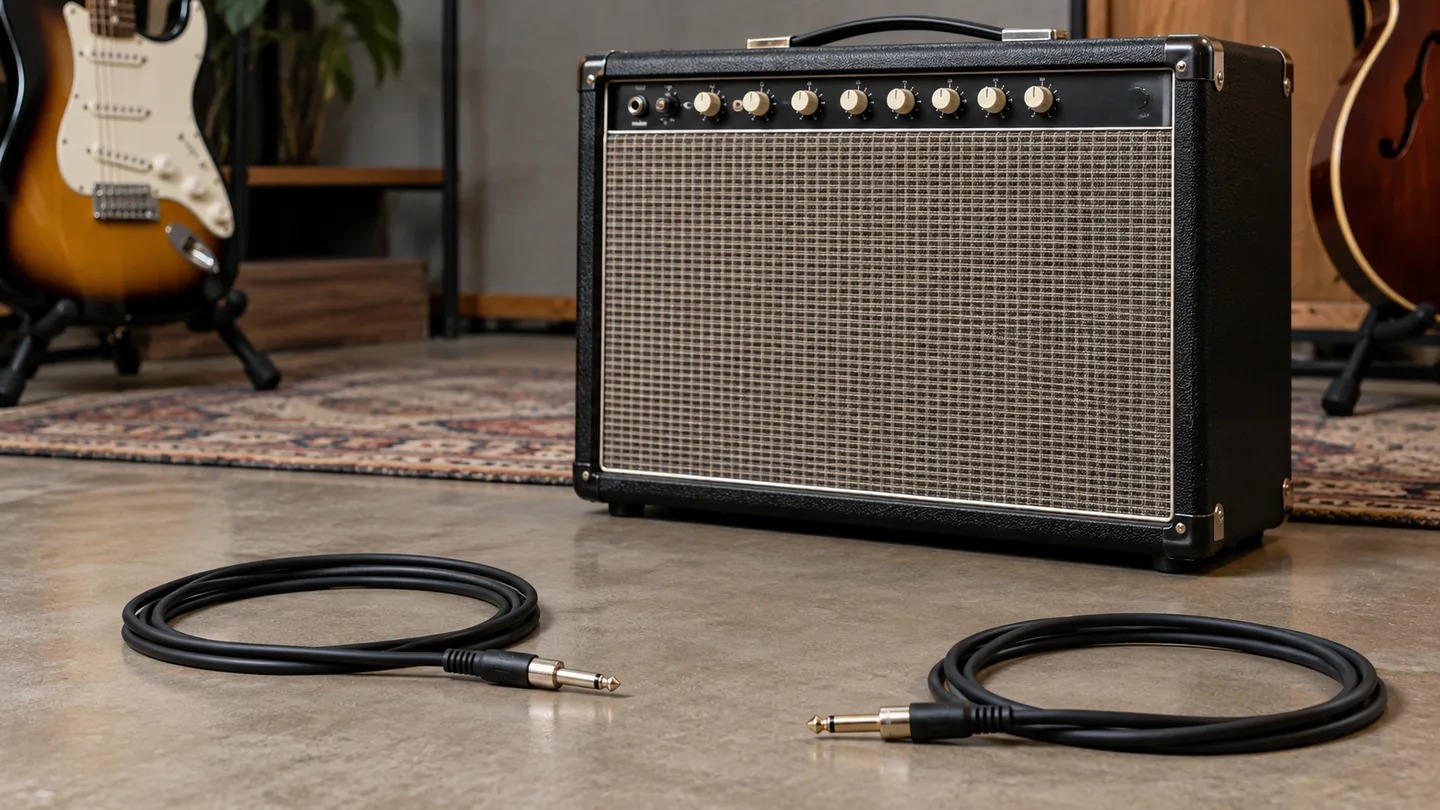
With the amplifier off before each connection change, document the model and speaker/load arrangement. Keep the maker-approved speaker or load connected while the amp is on. Then note whether the hum occurs with the guitar or source unplugged, whether it follows one external cable or pedal, whether the volume controls affect it, and whether it appears only after warm-up. Try a known-good external cable and a normal grounded outlet as the maker permits. Keep the protective earth connection intact. Do not use an adapter that defeats the safety ground as a diagnostic shortcut.
| Observation | Useful information to give a technician | What it does not prove |
|---|---|---|
| Noise changes with an input or pedal removed | External chain may contribute | The amplifier is fault-free |
| Noise changes with a volume control | Location in signal chain may matter | One specific tube is bad |
| Noise starts after warming up | Temperature may affect the fault | Capacitors are definitely bad |
| Hum plus red-plating or smell | Stop-use condition | Safe to keep testing at home |
Marshall’s guitar-buzz troubleshooting points owners to the guitar and cable for one particular buzz pattern. Marshall also describes a quiet transformer hum at idle for its 1974X; that model-specific note does not normalize a newly loud or worsening hum in another amp. Describe whether the sound comes from the speaker or the chassis. Fender’s amplifier support guidance says its amplifiers typically are not user-serviceable. Internal probing, tube-socket work, and capacitor replacement require a qualified technician.
What to request from a repair shop
Describe the onset, external chain, controls affected, any recent tube changes, and the amp’s service history. Ask for a diagnosis and a written quote before authorizing parts replacement. If the shop proposes filter capacitors, ask what test or inspection supports that conclusion and whether any other fault caused their deterioration. This keeps a real symptom from becoming a blanket recap job.