
Choose a tube amp power transformer from the whole power supply requirement. A candidate must suit the local mains supply and provide the required high-voltage and heater windings at adequate current. The rectifier type, bias supply, mounting, and insulation details also have to match the design. Advertised audio watts or a higher VA number alone cannot establish compatibility.
In a r/diytubes headphone-amp build, the builder found an affordable transformer, but the board needed separate high-voltage and heater supplies. The discussion turned on whether the available windings met those requirements. “How many watts is my amp?” would not answer that question.
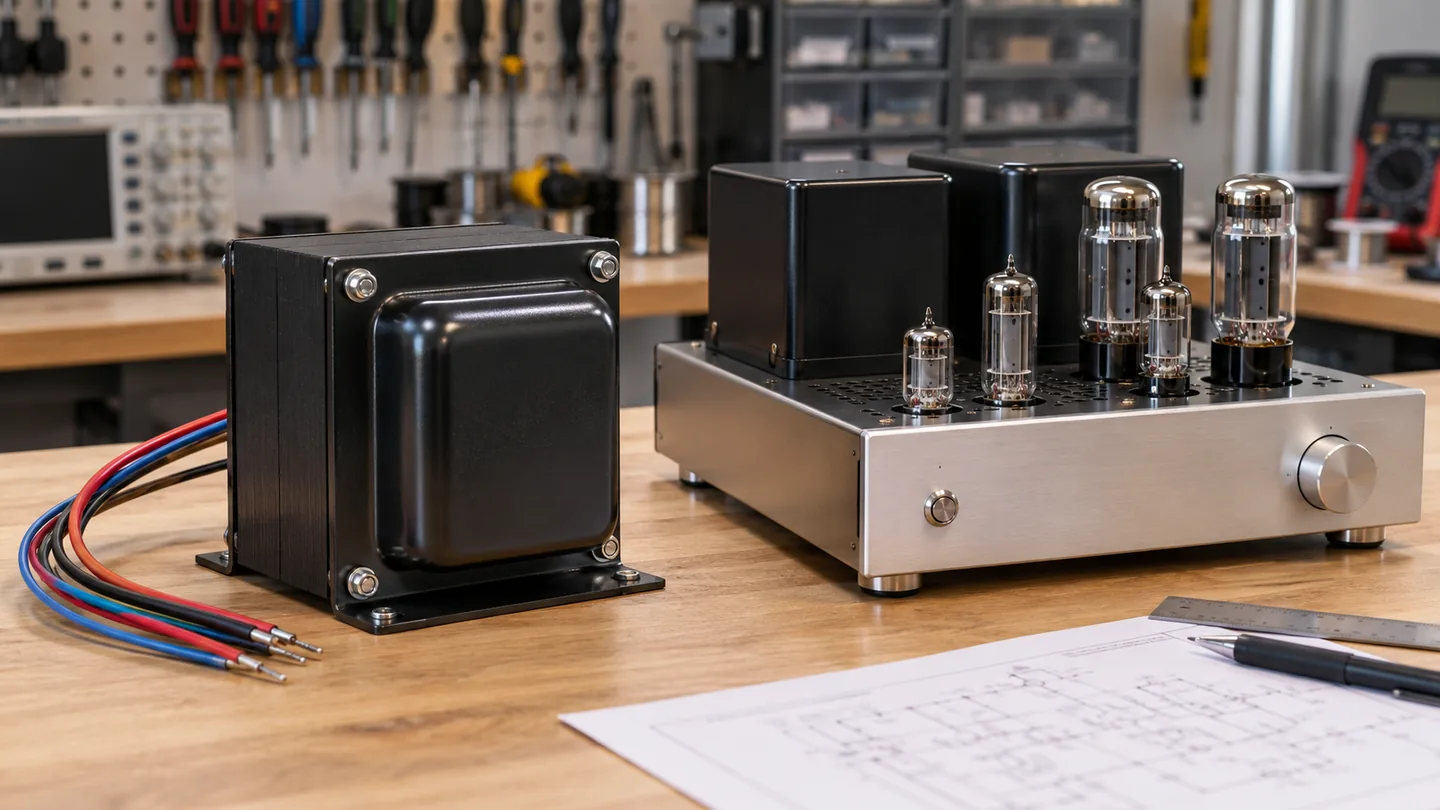
Illustrative image; not a photograph of a specific product.
Write down the demand on each winding
The first input is the amplifier’s schematic or a verified service specification. List the mains voltage and frequency, high-voltage secondary voltage and current, every heater voltage and its total load, and any separate rectifier or bias winding. Add up heater current for the tubes that share a winding; do not compare a single tube’s requirement with the transformer’s total heater rating. Keep winding ratings separate. Spare capacity on one winding does not automatically compensate for a shortage on another.
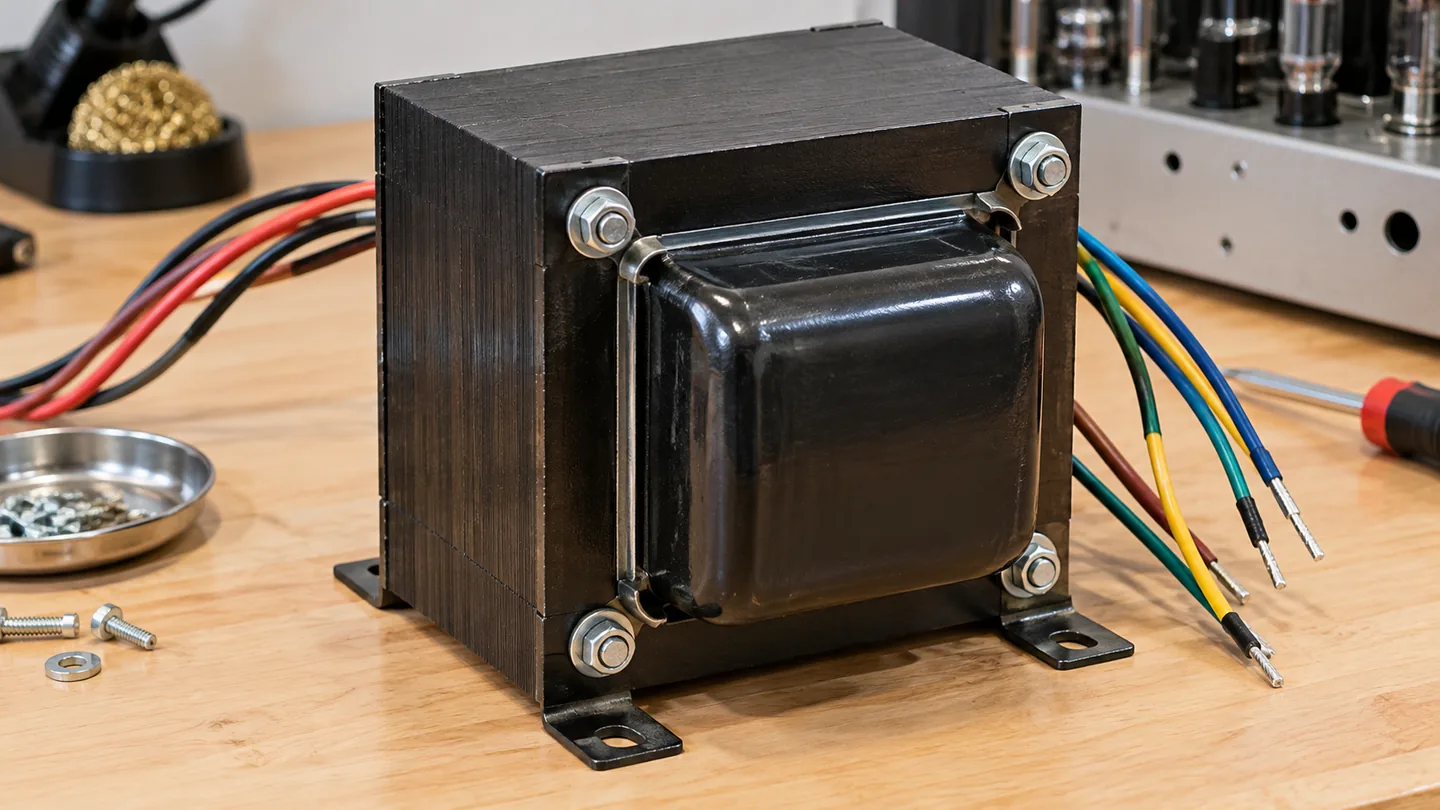
The Hammond 370KZ product sheet illustrates why this matters. Hammond lists selectable primary connections for 100, 110, 120, 200, 220, 230, or 240 V at 50/60 Hz; a 500 V center-tapped secondary across its full winding rated at 300 mA; 5 V center-tapped and 6.3 V center-tapped filament windings each rated at 6 A; and a 50 V bias tap on the high-voltage secondary. The center tap and bias tap are part of the connection scheme, not independent extra power supplies. Those are specifications for that model, not a recommended transformer for every tube amp. A candidate without the required winding arrangement could have the same approximate VA rating and still be unsuitable.
Rectification changes how a high-voltage winding becomes DC supply voltage. The transformer’s AC rating cannot simply be read as the expected operating B+ voltage, and a center-tapped rating must not be mistaken for the voltage from either end to the center tap. Load, rectifier, filter design, and mains conditions affect the result. A technician should use the actual circuit documentation and component ratings to verify the operating range, including no-load and startup conditions, before a substitution is approved.
Replacement and new-build decisions are different
For a replacement, gather the original part number, schematic, mains version, mounting dimensions, and the reason the old transformer was judged bad. A failed fuse or overheated transformer does not by itself identify the transformer as the root cause. In a separate r/diytubes replacement discussion, commenters raised the possibility of a shorted filter capacitor before recommending a replacement. Treat that as a diagnostic question for a technician, not a remote diagnosis of another amp.
For a new build, the power-stage design and tube data establish the requirements before a transformer model is chosen. A ready-made transformer may constrain the circuit, but the builder must still verify every winding and the operating voltages. Physical fit matters: mounting orientation, lead exit, chassis clearance, and temperature exposure can prevent an electrically plausible substitute from being a practical one.
What to send a supplier or repair technician
Provide the amplifier model and mains country, schematic or board requirements, tube complement, rectifier type, old transformer number, winding list, and chassis space. Ask for a model-specific datasheet showing all secondary ratings, not a generic description such as “suitable for 50 W amps.” If a rating is unknown, mark it unknown and obtain the original documentation rather than guessing.
Do not open or probe a tube amplifier to collect these details unless you are qualified for high-voltage work. Internal capacitors can retain dangerous energy after the mains plug is removed. External nameplates, manuals, and supplier documentation are safer starting points for an owner; a technician can complete the electrical assessment.
Sources
- Reddit: DIY tube headphone amp transformer question — demand evidence about winding compatibility.
- Reddit: power transformer replacement — demand evidence about confirming the fault.
- Hammond 370KZ specification — manufacturer example of winding-specific ratings.