
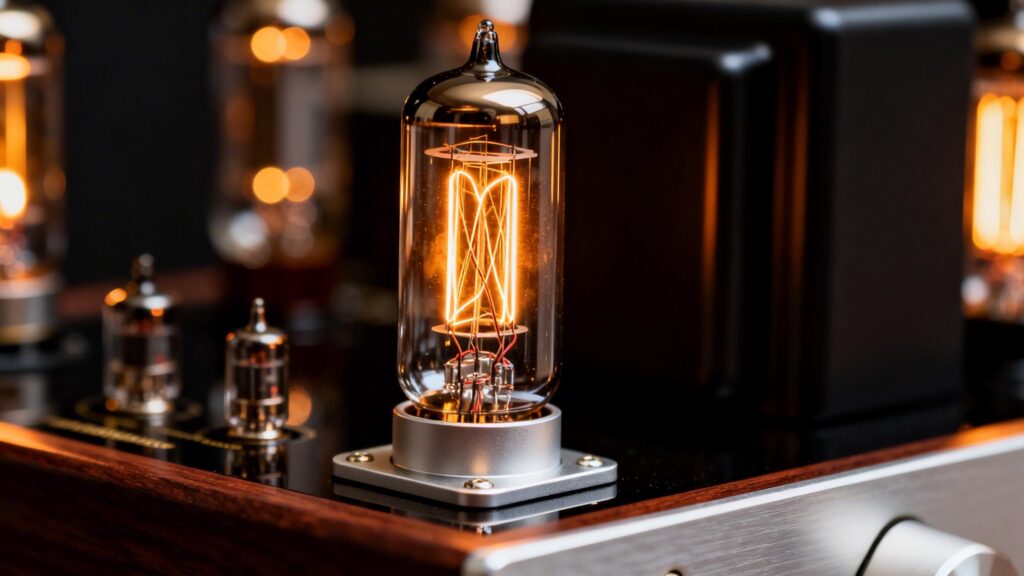
For tone-chasers and audiophiles, the “holy grail” of sound often lies just out of reach, trapped by the physical constraints of mismatched hardware. Vacuum tube socket adapters are the bridge to these forbidden tones, allowing you to experiment with legendary tubes your amplifier wasn’t originally designed to host. Whether you’re converting an 8-pin octal base to a 9-pin noval circuit or exploring high-end gold-plated vs. ceramic options, the possibilities for “tube-rolling” are vast.
However, bridging incompatible circuits requires more than a physical fit; it demands a technical understanding of filament current limits and plate voltage compatibility to prevent catastrophic failure. In this guide, we dive deep into the world of conversion adapters and socket savers, providing the critical electrical guidance you need to modify your gear safely. Learn how to make an informed purchase and unlock a new spectrum of harmonic richness without compromising your equipment’s integrity.
Understanding Vacuum Tube Socket Adapters: Function and Key Applications
Vacuum tube socket adapters serve as precision-engineered interfaces that bridge the mechanical and electrical gap between disparate tube bases and existing chassis sockets. At their core, these components perform two distinct roles: conversion and preservation. Conversion adapters allow audiophiles and engineers to reroute internal pin connections, enabling the use of tubes with different footprints—such as adapting a 9-pin Noval EL84 to an 8-pin Octal 6V6 socket. This is the cornerstone of “tube rolling,” where enthusiasts experiment with vintage or “forbidden” glass to alter harmonic saturation and gain structures without permanent circuit modification.
When navigating these products, technical scrutiny is paramount. A high-quality adapter must account for more than just pin alignment; it must manage the electrical load. For instance, converting from a 12AX7 to a 6SL7 requires an adapter that correctly maps the heater filaments, but the user must verify that the amplifier’s power transformer can handle the potential increase in filament current draw. Commercial-grade adapters often feature CNC-machined ceramic bases for superior heat dissipation and gold-plated pins to ensure low contact resistance and prevent oxidation—critical factors when maintaining signal integrity in high-gain stages.
Furthermore, it is essential to distinguish between conversion adapters and “socket savers.” While conversion adapters facilitate circuit swaps, socket savers are 1:1 extensions designed to take the mechanical wear of frequent tube swaps, protecting the rare, chassis-mounted vintage sockets of high-end boutique amplifiers. For the serious investigator, selecting an adapter is not merely about fitment; it is a balance of metallurgical quality and a strict adherence to voltage tolerances, ensuring that the quest for tonal nirvana does not result in a catastrophic transformer failure.
Socket Savers vs. Conversion Adapters: Choosing the Right Tool for Your Gear
To the uninitiated, all adapters look like simple mechanical bridges, but in high-end audio, the distinction between a “socket saver” and a “conversion adapter” is critical for both circuit longevity and tonal integrity.
Socket Savers are sacrificial components designed for the prolific tube-roller. Their primary function is protective: they take the mechanical wear and tear of frequent insertions, preserving the delicate, original sockets—particularly on vintage amplifiers where PCB-mounted sockets are prone to solder joint failure or fatigue. When selecting a socket saver, prioritize high-quality ceramic bases and gold-plated phosphor bronze pins. These materials ensure low contact resistance and prevent the signal degradation that inferior, loose-fitting plastic versions introduce into the signal path.
Conversion Adapters, conversely, are the keys to unlocking “forbidden” tones by remapping pin configurations to allow cross-family tube swapping. For example, using an 8-pin to 9-pin adapter allows you to run a 6SN7 octal dual-triode in a circuit designed for a 12AU7 noval tube. However, commercial investigation requires more than just pin-matching; you must audit the electrical specifications. Before purchasing a conversion adapter, verify that your amplifier’s power transformer can handle the potentially higher filament current (e.g., a 6SN7 draws 600mA compared to a 12AU7’s 300mA).
Choosing the right tool depends on your goal: use a socket saver to protect a $5,000 investment from mechanical failure during routine maintenance. Use a conversion adapter to expand your sonic palette, provided you have vetted the plate voltage and heater current overhead of your chassis. In both cases, look for high-tolerance CNC-machined components to avoid introducing microphonics or intermittent connections into your high-fidelity chain.
The Technical Checklist: Verifying Voltage, Pinouts, and Filament Current Compatibility
Before committing to a purchase, you must verify that your amplifier’s power transformer can handle the “substitution tax.” The most critical metric in your technical audit is filament current draw. For instance, adapting a 6SN7 (600mA) into a circuit originally designed for a 12AU7 (300mA) could exceed the heater supply’s current capacity, causing the transformer to overheat or fail. Always cross-reference the data sheets of both the original and the “rolled” tube; if the new tube demands significantly more current, no amount of adapter quality can save your power supply.
Equally vital is the dielectric integrity and voltage rating. High-end conversion adapters utilizing ceramic or Teflon bases are superior for high-voltage applications, often handling plate voltages exceeding 450V without risk of arcing. In contrast, budget plastic adapters can degrade under high heat, leading to carbon tracking between pins. When investigating commercial options, prioritize those with gold-plated phosphor bronze or oxygen-free copper pins. These materials ensure low contact resistance and prevent the signal degradation that often plagues cheap, high-impedance transitions.
Lastly, scrutinize the internal pinout mapping. A socket adapter is not just a physical bridge; it is a hard-wired re-routing of electrical paths. You must confirm the adapter is specifically wired for your intended swap—for example, a 12AX7 to 6N2P conversion requires a specific internal jump to account for different heater pinouts (Pins 4/5 vs. Pin 9). When browsing, look for manufacturers who provide transparent wiring diagrams. If an adapter’s pin-to-pin continuity isn’t clearly defined, it represents a gamble that your vintage output transformers simply cannot afford to take.
Elevating Your Sound: How Adapters Facilitate Advanced Tube-Rolling
Tube-rolling is the definitive pursuit for audiophiles seeking to tailor their system’s harmonic profile, but physical socket limitations often act as a barrier to the most sought-after glass. Vacuum tube socket adapters serve as the critical hardware bridge, enabling you to experiment with “forbidden” tube families that were previously incompatible with your amplifier’s architecture. For instance, using a 9-pin to 8-pin adapter allows users to swap standard 12AU7 pre-amp tubes for the lush, holographic soundstage of vintage 6SN7s—a conversion widely regarded for improving mid-range liquidity and depth.
From a commercial investigation standpoint, the quality of the adapter is as vital as the tube itself. To maintain the integrity of a high-end signal path, you must look beyond basic connectivity. Premium adapters utilize ceramic bases rather than molded plastic; ceramic offers superior thermal stability and high-voltage insulation, preventing the “arc-over” risks associated with high-gain circuits. Furthermore, look for adapters featuring gold-plated pins and high-purity copper internal wiring. These materials minimize contact resistance and prevent oxidation, ensuring that the micro-details of a rare New Old Stock (NOS) tube aren’t lost to signal degradation.
While “socket savers” are essential for protecting the delicate PCB traces of vintage gear from frequent swaps, conversion adapters are the true tools of tonal discovery. By expanding your hardware’s compatibility to include different heater voltages or pin configurations—such as adapting a 6DJ8 to a 12AX7 circuit—you gain the ability to shift your system’s voicing from clinical and analytical to warm and euphonic. Investing in high-tolerance, precision-machined adapters ensures that this sonic exploration remains both electrically safe and sonically transparent.
Material Science in Audio: Ceramic, Teflon, and the Value of Gold-Plated Contacts
When investing in socket adapters, the choice of materials is far from aesthetic; it is a critical engineering decision that dictates thermal management, signal integrity, and the longevity of your vintage or high-end transformers. Because vacuum tubes operate at high temperatures and high voltages, the dielectric properties of the adapter housing are paramount.
Ceramic is the industry standard for a reason. Its exceptional thermal stability and high insulation resistance make it ideal for power tubes that radiate significant heat. Ceramic won’t warp or off-gas under thermal stress, ensuring that the structural integrity of the pin alignment remains true over years of use. For those prioritizing safety and durability in high-wattage amplifiers, ceramic is the pragmatic choice.
However, for the discerning audiophile, Teflon (PTFE) is often considered the “holy grail” of socket materials. Teflon boasts a superior dielectric constant, which minimizes capacitive coupling between pins—a subtle but measurable factor in maintaining high-frequency clarity. Furthermore, Teflon’s natural damping properties help absorb mechanical vibrations, potentially reducing microphonics in sensitive preamp tubes. While more expensive, Teflon adapters offer a “soft” grip on tube pins that reduces the risk of glass stress during insertion and removal.
The interface itself—the pins and sleeves—is where signal loss is most likely to occur. Gold-plated contacts are not merely a luxury; they are a safeguard against oxidation. In the high-voltage environment of a tube circuit, even minor surface corrosion on tin or nickel pins can lead to increased contact resistance, noise, or intermittent signal drops. Gold’s chemical inertness ensures a low-resistance connection that remains stable for decades. When bridging incompatible circuits, where the adapter adds an extra set of contact points to your signal chain, choosing gold-plated interfaces is the best way to ensure that your “forbidden tones” remain pure and uninterrupted.
Essential Conversions: Navigating 8-Pin Octal to 9-Pin Miniature Transitions
The transition between 8-pin octal bases (like the legendary 6SN7 or 6SL7) and 9-pin miniature Noval sockets (common to 12AX7 or 12AU7 circuits) represents the most popular yet technically demanding conversion in high-end audio. This specific bridge allows audiophiles to introduce the “big bottle” sonics—characterized by greater headroom and a more expansive soundstage—into modern, compact preamps. However, navigating this transition requires more than just a physical fit; it demands a deep understanding of internal pin-mapping and electrical overhead.
When investigating these adapters, your primary concern must be heater current draw. For instance, a 12AU7 typically draws 150mA at 12.6V, while an octal 6SN7 requires 600mA at 6.3V. Before purchasing, verify that your amplifier’s power transformer can handle the significantly higher current demand of the larger octal tube. A high-quality adapter will feature internal wiring that correctly reroutes the heater pins—converting the 9-pin series/parallel heater arrangement to the standard octal pins 2 and 7—while maintaining ultra-low contact resistance.
From a commercial standpoint, look for adapters that utilize heavy-duty ceramic or Teflon bodies. Because octal tubes are physically larger and heavier than their miniature counterparts, the mechanical stress on a 9-pin socket is substantial. Premium adapters often incorporate a wider base or “skirt” to distribute this weight, preventing the 9-pin socket on your PCB from cracking. If you are chasing “forbidden tones,” prioritize gold-plated phosphor bronze pins; they ensure that the delicate signal from a vintage octal tube isn’t degraded by the very bridge that allows it to sing in a modern circuit. Selecting a precision-engineered conversion adapter over a generic “socket saver” is the only way to ensure these disparate eras of vacuum tube technology coexist without compromising your hardware’s integrity.
The Safety Protocol: How to Prevent Circuit Overload and Equipment Damage
Implementing socket adapters is a calculated risk that requires rigorous electrical verification to protect your transformer and circuitry. The most critical safety metric in this protocol is the filament (heater) current draw. While an adapter physically allows a different tube to fit, it does not regulate the amperage pulled from the power transformer. For example, adapting an 8-pin octal socket to accept a high-output tube that draws 1.5A of heater current when the circuit was designed for 0.6A can lead to immediate transformer saturation and eventual burnout. Always cross-reference the host amplifier’s transformer specifications before committing to a conversion.
Beyond current draw, insulation resistance and dielectric strength are paramount. High-voltage “B+” rails—often exceeding 400V—demand superior materials. Low-grade plastic adapters are prone to carbon tracking and arcing, which can send high voltage into the signal path, destroying downstream components. To mitigate this, prioritize adapters with kiln-fired ceramic or CNC-machined Teflon bodies. These materials offer the high-temperature stability necessary to prevent the structural warping that leads to short circuits.
Finally, consider the mechanical leverage an adapter introduces. By increasing the height of the tube, the adapter acts as a lever, amplifying the force applied to the original chassis-mounted socket. When swapping tubes, always stabilize the adapter base with one hand to prevent the original PCB solder joints or mounting lugs from cracking. Furthermore, ensure your chassis has the vertical clearance for both the adapter and the new tube to maintain proper thermal convection. Restricting airflow around a high-dissipation tube can cause localized heat buildup, compromising the adapter’s internal wiring and potentially damaging the surrounding capacitors. Verification of these parameters transforms “tube-rolling” from a gamble into a controlled engineering upgrade.
Diagnostic and Testing Adapters: Streamlining Voltage and Current Measurements
Diagnostic and testing adapters are the essential “missing link” for audiophiles and technicians who demand surgical precision during the tube-rolling process. While standard conversion adapters facilitate tonal experimentation, diagnostic variants—often called bias probes or breakout adapters—are engineered to provide non-invasive access to critical electrical parameters like plate current ($I_p$) and cathode voltage.
For the discerning buyer, the choice often hinges on material integrity and measurement accuracy. Premium diagnostic adapters utilize heavy-duty ceramic bases to withstand the high thermal output of power tubes like the KT88 or EL34, coupled with gold-plated contact points. These gold surfaces are not merely for show; they ensure minimal contact resistance, which is vital when measuring millivolt-level drops across a precision internal resistor to calculate bias. When navigating commercial options, look for “test point” breakouts that allow for standard multimeter probe insertion, eliminating the dangerous need to invert the chassis and expose high-voltage filter capacitors.
Integrating a diagnostic adapter into your workflow transforms maintenance from guesswork into science. By streamlining the measurement of filament current draw and plate dissipation, these tools ensure that your “forbidden tones” don’t lead to thermal runaway or output transformer failure. Whether you are comparing a vintage 6L6GC against a modern boutique equivalent, a high-quality testing adapter serves as the ultimate safety net, bridging the gap between peak sonic performance and long-term circuit reliability. Using these tools allows you to verify that your heater supply can handle the increased draw of a conversion before a single note is played, protecting your investment while you optimize your signal path.
Premium vs. Budget Adapters: Evaluating Build Quality and Electrical Conductivity
In the realm of high-end audio, the distinction between a budget adapter and a premium component is rarely just cosmetic; it is a matter of electrical integrity and long-term circuit safety. When performing a commercial investigation into these tools, the discerning audiophile must prioritize the quality of the base material and the precision of the pin tension.
Budget adapters often utilize molded plastic or low-grade Bakelite, which can become brittle under the intense thermal cycling of power tubes. These units frequently feature stamped-metal “fork” contacts that lose their tensile strength after only a few swaps, leading to intermittent signal loss or, more dangerously, high-resistance “hot spots” that can char the tube pins. In contrast, premium adapters employ high-dielectric materials such as CNC-machined Teflon (PTFE) or aerospace-grade ceramics. These materials offer superior insulation resistance, effectively preventing voltage arcing in high-plate-voltage circuits (400V+).
From a conductivity standpoint, the metallurgy of the contacts is paramount. Premium adapters typically feature oxygen-free copper or phosphor bronze pins with thick gold plating. This isn’t merely for “audio jewelry” purposes; gold’s resistance to oxidation ensures that the low-level signal transition remains transparent over years of use. Furthermore, premium conversion adapters often utilize internal point-to-point hand-wiring with high-purity silver or copper leads, whereas budget versions may rely on thin, mass-produced PCBs that can bottleneck current delivery—particularly critical for the high-amperage demands of 6.3V or 12.6V filament heaters. For the serious tube-roller, investing in a premium adapter is insurance against microphonics and the catastrophic failure of a vintage amplifier’s socket.
Investment Guide: What to Look for When Purchasing High-Fidelity Socket Hardware
When sourcing high-fidelity socket hardware, your primary objective is to balance electrical transparency with mechanical longevity. The most critical metric in this commercial investigation is mechanical retention and contact resistance. High-quality adapters utilize precision-machined, spring-loaded copper or phosphor-bronze sockets that maintain consistent, high-pressure contact on tube pins. Budget alternatives often rely on thin, stamped metal contacts that fatigue over time, leading to intermittent signal loss, “crackling” microphonics, or even dangerous arcing in high-voltage circuits.
Beyond the pins, evaluate the insulator’s dielectric strength and thermal stability. While molded plastic suffices for low-heat applications, high-performance audio demands ceramic or Teflon (PTFE). Ceramic is favored for its immense heat resistance in power stages, while Teflon is the audiophile choice for preamps due to its superior dielectric constant, which minimizes parasitic inter-electrode capacitance. Furthermore, prioritize thick gold plating over nickel or silver. While silver is highly conductive, it tarnishes under heat; gold’s immunity to oxidation ensures a gas-tight seal and a transparent signal path through hundreds of thermal cycles.
Finally, consider the physical profile and structural leverage. A tall adapter increases the lever-arm effect on your equipment’s original PCB-mounted socket, potentially cracking solder joints. Seek out “low-profile” designs that keep the center of gravity low and provide a stable footprint. In the boutique market, the price premium for a hand-wired, shielded adapter is a justified insurance policy. It protects your expensive vintage glass and heavy-duty transformers from the catastrophic failures associated with “loose-fit” generic hardware. Buy for the precision of the machining, not just the compatibility of the pins.
Have questions or your own tips to share? Drop a comment below!