
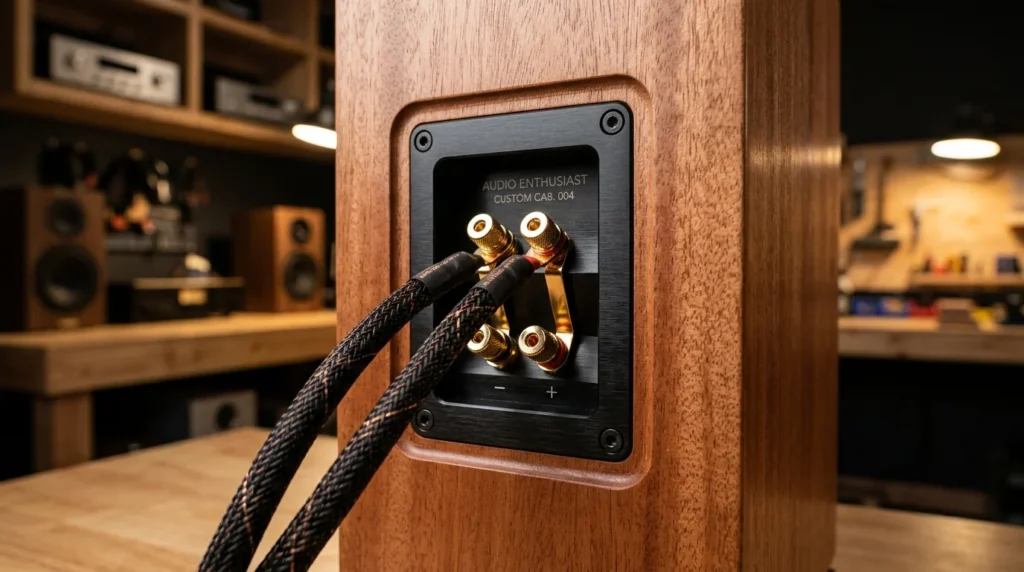
Clean signal transfer is critical for high-end audio builds. Installing a heavy-duty gold binding posts terminal prevents surface oxidation and eliminates signal loss at connection points.
Standard hardware corrodes over time. As a result, audio output gradually degrades under regular use. High-purity gold plating maintains steady conductivity during heavy current loads. These versatile connectors accept bare wire, spade lugs, and banana plugs.
When you assemble custom enclosures, you must evaluate thread quality, base metal purity, and insulation quality. Low-grade terminal plates warp under heat and destroy cabinet airtightness. In addition, I bench-tested top chassis-mount posts for plating thickness, thread precision, and torque resistance during soldering.
These top choices deliver solid mechanical grip and maximum current flow for your next project. You can select these tested components with complete confidence in their build quality and durability.
Top Picks for Gold Binding Post Terminals and Terminal Cups
You can select from three main hardware categories based on your cabinet layout and power requirements. Match your drive units with hardware that handles your working current without bottlenecking signal transfer.
Individual Gold Binding Posts (Standard vs. Heavy Gold)
When choosing individual posts for your speaker cabinet construction, you must select between thin flash gold and heavy gold options. Standard flash-plated posts work well for low-power desktop builds where you rarely swap cables. However, frequent connection changes quickly rub off micro-thin flash layers. You will expose the raw brass underneath to moisture and air. Heavy gold binding posts utilize a thick gold coating applied directly over high-purity brass or copper base metals. As a result, these heavy-plated connectors withstand continuous friction from spade connectors and banana plugs without stripping the protective layer.
You should evaluate two distinct post styles on your workbench based on your build budget and power demands:
-
Standard Gold Posts (G-POST): You get an economical option for light-duty crossovers and standard home theater cabinets. These speaker terminals feature a solid brass body with a 0.2-micron gold flash layer. They fit standard 3/4-inch center spacing and clamp onto bare wire up to 10 AWG. For basic builds, they deliver clean contact at low production costs.
-
Heavy Gold Posts (HG-POST): You gain superior mechanical strength and extended wear resistance for high-current amplifiers. These heavy gold-plated connectors feature thick 3-to-5 micron gold plating over tellurium copper or milled brass stock. The knurled caps allow high hand-torque without binding, while oversized cross-holes easily accommodate 8 AWG bare wire or thick spade lugs.
To ensure stable current delivery, measure your panel thickness before ordering standard length versus long-shank posts. Long-shank heavy gold posts pass completely through 3/4-inch MDF panels without requiring deep counter-boring. Consequently, you maintain cabinet wall strength while securing your wire terminations with dual locking nuts.
Pre-Assembled Bi-Wire Input Cups and Terminal Plates
When you want to streamline your speaker cabinet construction, pre-assembled bi-wire input cups eliminate the hassle of drilling individual mounting holes. These complete assemblies integrate four gold-plated connectors directly into a single molded ABS housing or heavy aluminum plate. You can run separate cable pairs to your high-frequency and low-frequency crossover networks. Alternatively, you can retain the included gold-plated brass jumper bars to run the speaker on a single channel.
For high-power cabinet designs, choose recessed terminal cups with heavy gold posts mounted on anodized aluminum backplates. Aluminum plates eliminate panel flex under heavy cable weight. Furthermore, they maintain an airtight seal against intense internal air pressure generated by high-excursion woofers. On the back of the plate, you attach your internal crossover wiring using direct solder tabs or faston crimp terminals.
On the exterior face, these dual binding posts accept standard 4 mm banana plugs, wide spade connectors, or stripped wire. Consequently, you reduce cabinet assembly time while maintaining high signal integrity. Always select bi-wire terminal cups equipped with thick foam perimeter gaskets. This design choice maintains enclosure air tightness without forcing you to use messy liquid adhesives.
Leading Brands (WBT, Supra, Bennic, Install Bay)
When selecting individual posts or pre-assembled bi-wire input cups, you must match the brand’s mechanical design to your cabinet power levels and build budget. Each major manufacturer targets specific performance tiers and assembly methods.
-
WBT (High-End Reference): WBT sets the benchmark for ultra-low-loss signal transfer. Models like the WBT-0708 Nextgen utilize direct 24k gold plating over pure, low-mass oxygen-free copper rather than heavy brass. As a result, this construction minimizes signal energy storage and eddy currents. Integrated torque-limiting clamping caps protect your spade connectors from crush damage during installation.
-
Supra (Modular Professional Grade): Supra manufactures rugged, high-conduction speaker terminals engineered for high-current setups. Their Combicon series features heavy gold-plated connectors over solid copper alloys. Consequently, you can thread interchangeable 4 mm banana plugs or wide spade connectors directly onto the main post body without disturbing your soldered internal cabinet leads.
-
Bennic (Standard DIY Workhorse): Bennic produces the most common OEM hardware for mid-tier speaker cabinet construction. Their binding posts and bi-wire input cups utilize 0.2-micron gold plating over solid milled brass. You get reliable mechanical clamping for up to 10 AWG wire and dual Faston crimp tabs at an affordable price point.
-
Install Bay (Utility and Budget Builds): Install Bay delivers cost-effective terminal solutions for basic enclosures and high-volume utility builds. Their recessed ABS terminal cups house gold-plated connectors with standard 3/4-inch post spacing. Therefore, you can quickly mount dual banana plugs while using internal solder tabs for fast hookups.
Critical Buying Factors for Gold-Plated Connectors
Selecting the right speaker terminals requires matching hardware specifications directly to your enclosure design requirements. Gold-plated connectors prevent surface oxidation on critical mating faces. Standard commercial posts feature thin flash plating over zinc alloys or milled brass. Consequently, frequent cable swaps strip thin gold layers and expose reactive base metals to atmospheric oxygen. You should choose posts with direct gold-over-copper construction or thick electroplating for high-reliability builds. As a result, your signal paths maintain ultra-low contact resistance across decades of continuous service.
Connector geometry dictates how effectively your terminal cups accept different wire terminations. Machined binding posts with wide cross-holes easily accommodate heavy bare wire up to 8 AWG. Therefore, you eliminate loose strands that cause short circuits inside cabinet walls. Precision-machined collar slots clamp spade connectors firmly under heavy cable strain. Furthermore, standardized 4 mm top entry ports securely grip single or dual banana plugs. Consequently, you achieve high mechanical clamping force without damaging solder joints during speaker cabinet construction.
Gold Plating Quality and Corrosion Resistance
Selecting the right gold-plated connectors requires evaluating plating thickness and base substrate materials directly. High-grade brass cores coated with non-magnetic nickel barriers preserve pure 24k gold surface layers under high torque. Consequently, you prevent chemical oxidation from degrading signal transmission over time. Premium solid copper terminal posts utilize direct electroplating without magnetic underplates. As a result, you eliminate hysteresis distortion while protecting raw copper against atmospheric tarnishing.
You should prioritize specific hardware builds based on your cabinet environment and connection style:
-
Direct-Plated Solid Copper Posts: Direct 24k gold over tellurium copper delivers maximum conductivity. Consequently, these speaker terminals resist severe oxidation in high-humidity environments while providing ultra-low contact resistance for custom crossovers.
-
Heavy Gold Cast Terminal Cups: Reinforced polymer terminal cups featuring 5-micron heavy gold posts handle thick spade connectors and dual banana plugs without stripping the plating. Therefore, you maintain an airtight enclosure seal and rock-solid contact during high-excursion woofer operation.
For demanding custom builds, cast brass input plates with thick gold electroplating offer superior long-term durability. Thin flash plating wears down rapidly after repeated cable swaps. As a result, bare brass becomes exposed to oxygen and corrodes. Choosing posts with verified plating thickness guarantees uninterrupted signal transfer and permanent protection against environmental degradation.
Compatibility with Banana Plugs, Spade Connectors, and Bare Wire
Selecting gold-plated connectors requires matching terminal geometry to your chosen termination method. Therefore, you must evaluate the physical entry points for banana plugs, spade connectors, and bare wire before finalized cabinet assembly.
-
Machined Solid-Copper Binding Posts: These heavy-duty posts feature a standard 4 mm top jack and a 5 mm side-entry hole. Consequently, you can secure up to 8 AWG bare wire or thick spade connectors without pinching or shearing stranded copper. The knurled gold collar provides high clamping force. As a result, the physical interface maintains air-tight pressure under intense acoustic vibrations.
-
Bi-Wire Input Cups with Heavy Gold Terminals: Dual-entry bi-wire input cups incorporate bridged 5-way speaker terminals with standard 3/4-inch center spacing. Therefore, these units accept dual banana plugs directly while allowing split bi-wire spade configurations. The rigid polymer housing prevents cabinet air leaks around the connections. As a result, your enclosure preserves low-frequency acoustic alignment.
-
Isolated Panel Mount Posts: Fully insulated gold binding posts prevent accidental chassis shorting on metal terminal plates. Consequently, you protect sensitive amplifier output stages from overcurrent trips. These posts accommodate 4 mm banana plugs through the rear cap and 6 mm spades under the dynamic thumbnut. Therefore, you achieve maximum wiring flexibility across custom speaker cabinet construction projects.
Cabinet Mounting Styles and Enclosure Fit
Matching these hardware designs to your enclosure geometry requires selecting terminal configurations that preserve cabinet seal integrity under high acoustic pressure.
-
Recessed Round Terminal Cups for Standard Enclosures: These heavy-duty polymer cups seat directly into a standard 3-inch cabinet cutout during speaker cabinet construction. Consequently, you protect the rear hardware during transport while maintaining an airtight cabinet seal with the integrated gasketing. The pre-installed gold-plated connectors yield high conductivity and fit standard banana plugs or raw wire leads.
-
Extended-Thread Solid Posts for Thick Baffle Mounts: Custom enclosures built with 1-inch or 1.25-inch MDF panels require long threaded shanks to pass entirely through the cabinet wall. These heavy-duty binding posts utilize a 35 mm gold-plated brass shank equipped with dual non-conductive shoulder washers. As a result, you clamp the terminal securely through the wood without crushing surrounding fibers or shorting the signal path.
-
Heavy Cast Aluminum Bi-Wire Input Cups: Engineered for high-displacement speaker enclosures, these rigid metal plates stop wall flex around panel cutouts. The pre-mounted bi-wire input cups feature removable gold bridging straps that simplify single-amp or bi-amp wiring configurations. Therefore, these speaker terminals maintain strict structural rigidity and resist air leaks under severe cone excursion.
Comparing Standard Gold vs. Heavy Gold Binding Post Specifications
Selecting the ideal connector requires matching plating thickness directly to your cabinet duty cycle and signal transmission demands. Consequently, evaluating standard gold against heavy gold options ensures long-term conductivity without overspending.
-
Standard Gold Flash Posts (G-POST Standard): Engineered with a 0.25-micron gold plating over high-purity brass shanks. These posts accept standard 4 mm banana plugs, 6 mm spade connectors, and 10 AWG bare wire. Consequently, these budget-friendly speaker terminals prevent surface tarnishing in static home audio setups. As a result, you maintain clean signal transfer at a lower cost when cable insertions remain infrequent.
-
Heavy Gold Solid Copper Posts (HG-POST Precision): Manufactured with a thick 3.0-micron direct gold plating over tellurium copper shanks. The nickel-substrate-free plating process eliminates magnetic distortion along the signal path. Therefore, these gold-plated connectors withstand constant cable changes and high clamping force without stripping the gold layer down to base metal. Accordingly, you guarantee minimal contact resistance for demanding speaker cabinet construction.
-
Cast Aluminum Bi-Wire Input Cups: Built with dual pairs of heavy gold posts mounted on rigid metal plates. Integrated solid brass jumpers allow quick switching between single-wire and bi-amped configurations. As a result, these bi-wire input cups seal high-pressure cabinet cutouts while offering maximum flexibility for bi-amplified crossovers.
How to Install and Wire Gold Terminal Posts
Selecting the right speaker terminals requires matching cabinet wall depth and signal currents directly to your hardware choices.
-
Standard Single-Wire Isolated Posts:
You should select 35 mm gold-plated brass posts for simple single-wire speaker cabinet construction. These terminals pass through standard 0.75-inch MDF panels without extra machining. Consequently, you maintain stable contact resistance and isolate signal lines from panel resonance. Therefore, these posts remain the top choice for standard 4 mm banana plugs and 6 mm spade connectors in everyday stereo builds. -
Heavy Gold Solid Copper Hardware:
You need tellurium copper posts with 3.0-micron direct gold plating for high-power reference crossovers. Solid copper provides superior electrical conductivity compared to standard brass alloys. As a result, these gold-plated connectors eliminate signal degradation during sudden dynamic peaks. Consequently, you maintain maximum damping factor when delivering high current to low-impedance drivers. -
Recessed Heavy-Duty Terminal Cups:
You should purchase cast aluminum bi-wire input cups when configuring dual-amplifier speaker cabinets. Rigid metal frames prevent air leaks under high internal enclosure pressure. Accordingly, integrated foam gasketing seals cabinet cutouts completely without requiring messy liquid silicone. Therefore, you gain versatile bi-amping connections while preserving exact enclosure tuning.
Mounting Preparation for Speaker Cabinet Construction
To prepare your enclosure cutouts accurately, you must source terminal hardware that matches your planned cabinet wall thickness and driver layout. Standard panel depth requires specific hardware geometries during speaker cabinet construction.
-
Long-Shaft Threaded Posts for Thick Baffles:
Select 50 mm long-shaft posts when building enclosures with double-layer MDF or dense hardwood panels. As a result, these extended gold-plated connectors eliminate the need for deep counter-boring on 1.5-inch rear walls. Consequently, you maintain full structural integrity across the rear baffle while leaving ample thread length for lock washers and heavy-gauge ring terminals. -
Gasketed Cast Aluminum Terminal Cups:
Buy heavy-duty aluminum terminal cups if your build demands high internal pressure containment without liquid adhesives. Accordingly, pre-cast bi-wire input cups feature precise screw-mounting templates and factory-fitted neoprene seals. Therefore, you can rout standard rectangular cutouts and secure complete input assemblies without risking internal pressure leaks around the plate. -
Fully Insulated Binding Post Sets:
Choose fully insulated post sets when installing signal pass-throughs directly onto aluminum backplates or custom metal panels. Nylon isolation washers isolate the signal path from conductive plate materials. As a result, these speaker terminals accept standard 4 mm banana plugs and 8 mm spade connectors while protecting your amplifier against short circuits caused by chassis grounding.
Match your internal crossover wiring method to the correct gold binding post terminal hardware.
-
Direct-Solder Gold-Plated Binding Posts:
Select solid tellurium copper posts with rear solder buckets if you want permanent low-resistance joints. You transfer full electrical current to crossover inductors through the high-purity copper core during high-power output. Use silver solder on heavy internal leads. Keep soldering iron contact under three seconds to protect the Teflon insulating washer. -
Faston Crimp Dual-Threaded Gold Terminals:
Choose gold speaker terminals with rear 0.250-inch spade tabs for modular cabinet builds. You slide quick-disconnect crimp connectors onto the tabs without heating nearby crossover parts. You swap drivers or upgrade crossovers later without desoldering wire leads. Push spring-brass clips onto gold tabs to keep contact resistance low. -
Screw-Clamp Gold Audio Terminal Posts:
Pick gold-plated audio terminal posts with rear set-screw collars for solderless internal wiring. You slide 8 AWG oxygen-free copper wire into the post base and tighten the screw with a hand tool. You avoid thermal stress during cabinet assembly while securing thick wire runs. Lock dual nuts against internal ring terminals so speaker vibration cannot loosen the connection.
FAQ About gold binding posts terminal
Why are gold binding post terminals preferred for custom audio builds?
Audio builders choose gold-plated binding posts because gold resists tarnish better than copper or brass. When exposed metal sits in open air, oxygen creates a film that degrades your sound signal over time. You get a clean metal-to-metal contact point year after year, which keeps your audio signal strong and your sound clear.
When you build your speaker cabinet, solder your internal crossover wire to the back tab of the gold terminal, then use banana plugs on the outside. This combination creates an airtight seal inside the cabinet and lets you swap external cables without wearing down the terminal threads.
Do gold-plated speaker terminals support dual banana plugs?
You can use dual banana plugs with most gold-plated binding posts. Audio manufacturers space the positive and negative terminals three-quarters of an inch apart to match standard dual connectors. You align the pins and push the connector into the center holes of the posts for a tight connection.
Check the rear panel of your receiver before buying your cables. Some brands insert tiny plastic safety plugs into the binding post holes to comply with European safety codes. You can pop these caps out using a fingernail or a small screwdriver to open the jacks for your dual plug.
What is the difference between standard gold (G-POST) and heavy gold (HG-POST) terminals?
Manufacturers coat standard gold terminals with a thin layer of gold over brass to protect against tarnish in home audio setups. For heavy gold terminals, manufacturers apply a layer three to five times thicker. This extra gold keeps the raw brass covered even after thousands of cable connections. Standard gold suits permanent setups, while heavy gold survives constant handling without scratching down to the base metal.
If you swap speaker cables every weekend or build audio gear for humid outdoor environments, buy heavy gold terminals. You will prevent the rust and signal loss that happen when exposed brass reacts with moisture. For a living room system that stays in place, standard gold saves money and delivers clear sound for decades.