
To match a tube amp with speakers, first confirm that the amplifier supports the speaker’s electrical load. Then check whether the speaker’s sensitivity and your listening distance leave enough clean headroom. Only after those checks should you audition the tonal result. A nominal impedance number and a wattage headline cannot settle the match on their own.
The uncertainty appears in a Reddit thread asking how much amplifier power 87 dB bookshelf speakers need. The poster had heard that someone else’s higher-sensitivity floorstanders worked with far fewer watts and wondered whether a lower-power amp would suit a first system. The discussion moves between listening level, sensitivity, and impedance; one example cannot answer every speaker match.
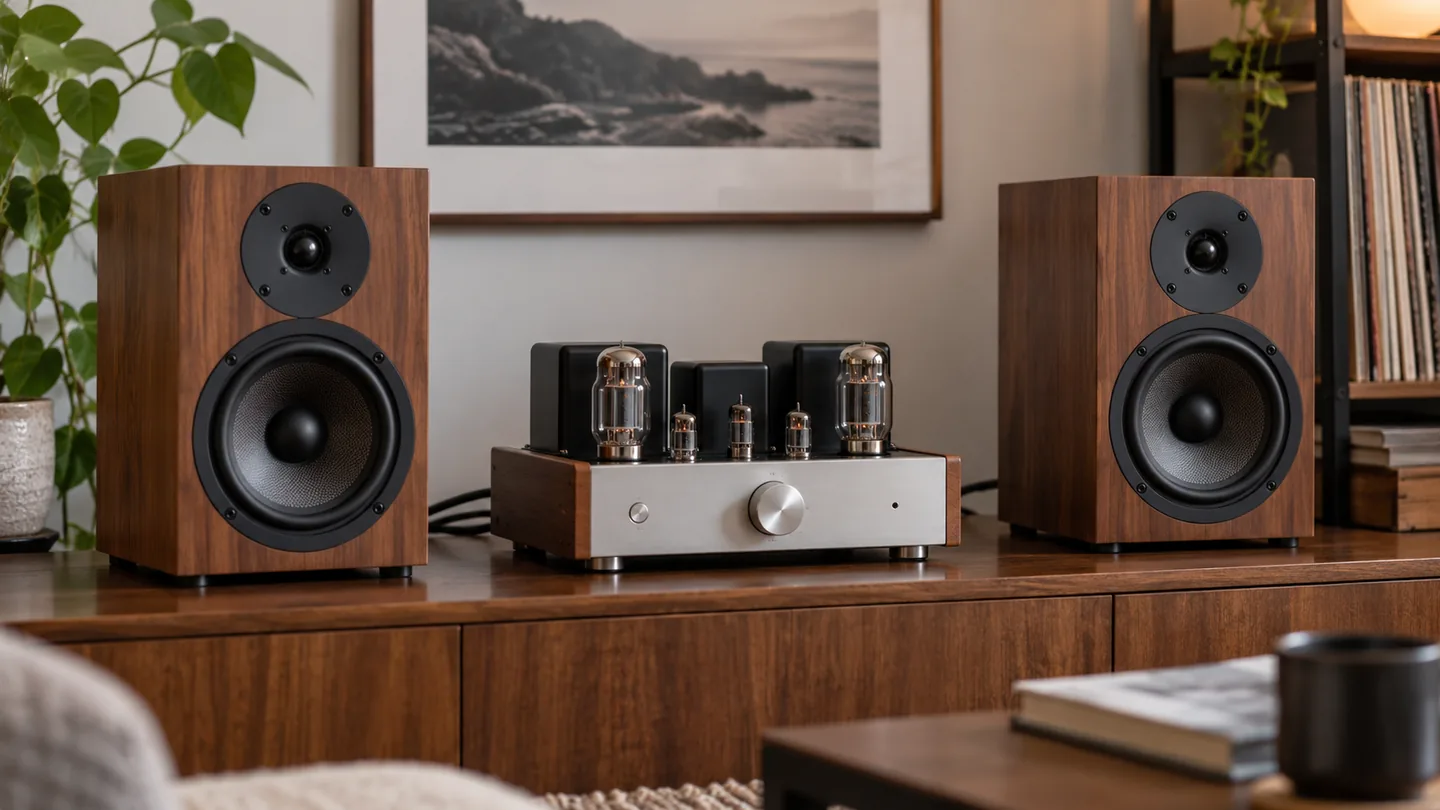
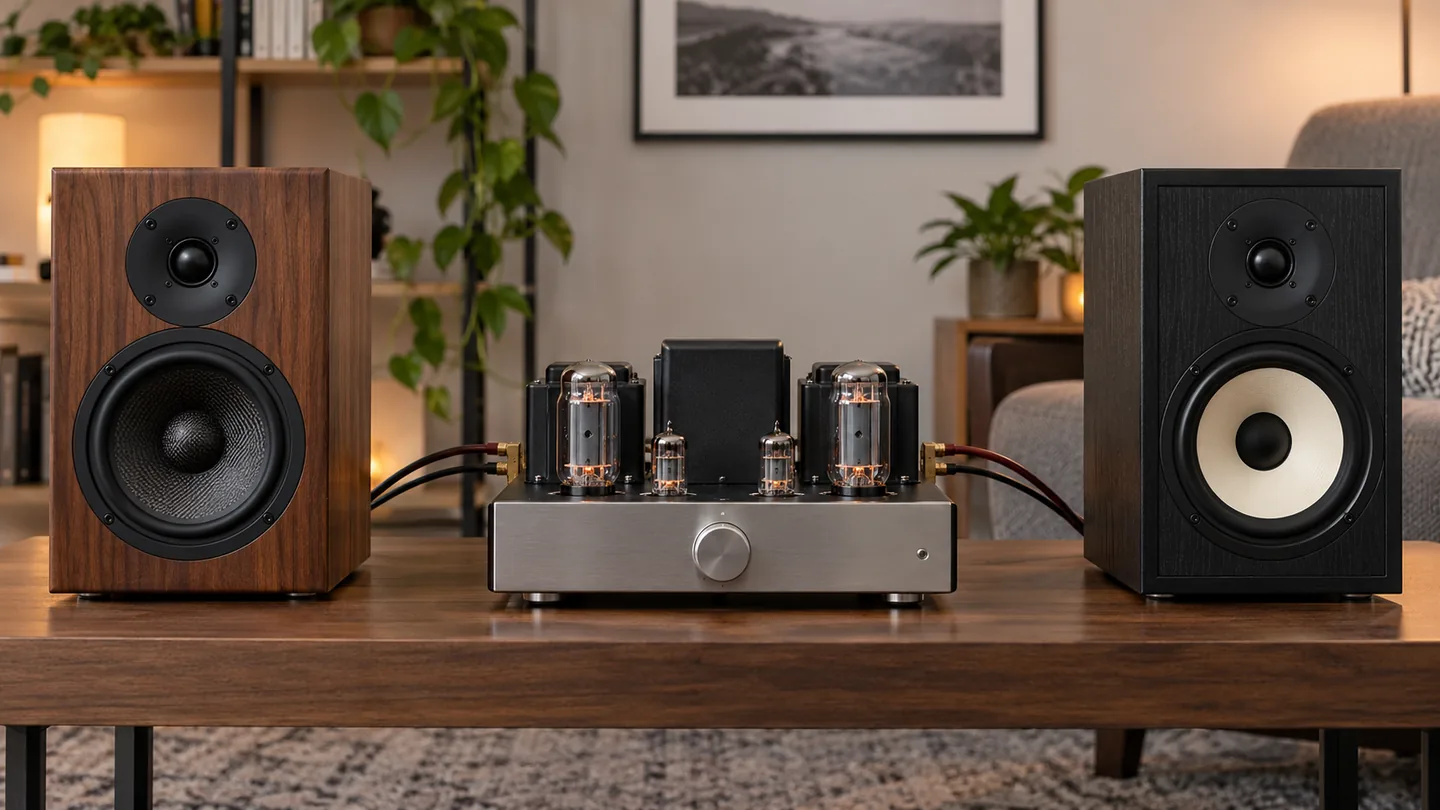
Illustrative image; not a photograph of a specific product.
Start with the load the amplifier is allowed to drive
Find the speaker’s nominal impedance and, if published, its minimum impedance or curve. Find the amplifier maker’s permitted speaker range and the instructions for its output terminals or taps. If the amp provides multiple taps, use the tap the maker specifies for that speaker. Do not infer that a tap labeled 8 ohms makes every nominally 8-ohm speaker equally easy.
Klipsch’s explanation of speaker specifications notes that nominal impedance varies with frequency and that a lower rating can challenge an amplifier. A speaker that dips low can therefore be difficult for an amp even when its nominal label looks ordinary. When specifications are incomplete, request guidance for the exact models from the manufacturers or a competent dealer.
Use sensitivity to estimate headroom, not to promise volume
Klipsch defines speaker sensitivity in terms of output from a specified power input. Higher sensitivity generally helps an amplifier reach a desired level with less input power under comparable measurement conditions. The comparison becomes weaker if one maker reports at one watt and another at 2.83 volts without explaining the speaker load: 2.83 volts corresponds to one watt only into an 8-ohm resistive load. Check the test convention before comparing advertised dB figures.
Your seating distance, room acoustics, placement, and desired peak level still matter. Ordinary listening may use modest average power while music peaks demand more headroom. If a seller claims that a particular low-watt tube amp will fill any room, ask which speaker, distance, and sound level the claim assumes. A home audition at your normal level is more informative than a vague statement that tube watts are “stronger.”
Check the real pairing for unwanted changes
Compare the speakers on the candidate amplifier with a known suitable reference at similar listening levels. Note whether the bass becomes loose, loud passages compress, noise is audible from the listening seat, or the balance changes more than you want. Any difference is a property of that pairing, not a diagnosis of every tube amplifier. If an amp has adjustable output taps or modes, follow the manual and repeat the comparison at the recommended setting.
A high sensitivity figure cannot tell you whether you will like the speaker’s response, directivity, size, or placement needs. A modest amplifier wattage does not rule out a pairing either; establish the actual load and headroom. If the maker does not authorize the speaker load, or the amp strains at your intended level, remove that combination from your shortlist.
Finally, keep speaker wiring secure and follow the amplifier’s instructions before changing connections or output taps. The Rogue Audio M-120 manual warns that hazardous voltages can remain after unplugging, so internal adjustment belongs to a qualified technician. A good match is one that satisfies the documentation, plays cleanly where you sit, and sounds right to you.