
Do not buy a full tube set just because one tube appears faulty. First identify whether the suspect tube is a preamp tube, a power tube, or a rectifier, and verify the amplifier’s replacement and bias instructions. A visible fault or recurring failure may point beyond the tube itself.
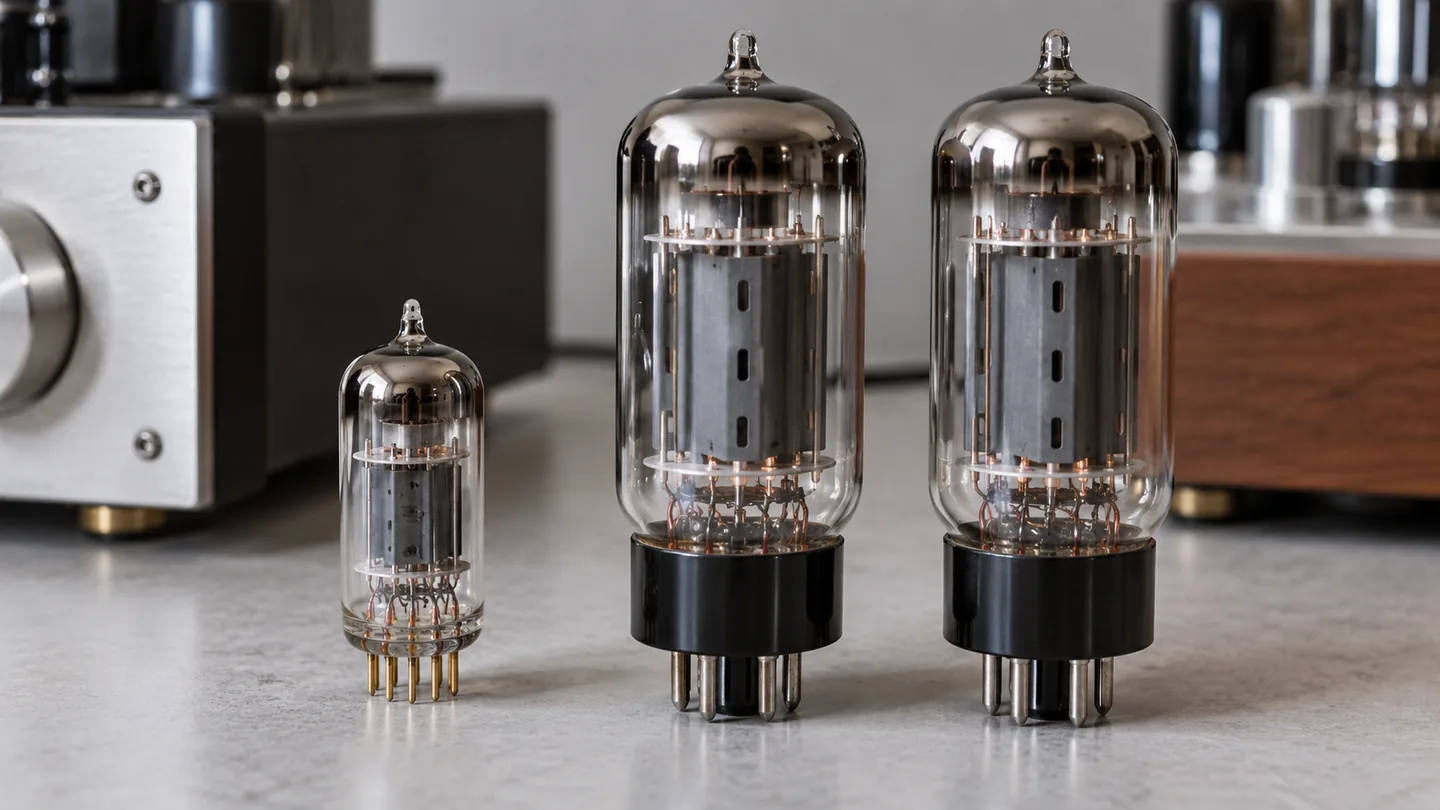
Illustrative image; not a photograph of a specific product.
Why the distinction matters
A Reddit owner asked whether a single faulty tube required replacing every tube, worrying about “cross-contamination.” Commenters disagreed about whether the pictured tube was in the preamp or power stage, and about replacing a power pair. That makes the first purchase question practical: identify the tube’s actual position before ordering. Another owner reported crackling and overheating after changing power tubes; that symptom needs diagnosis, not a blanket replacement order. Neither thread establishes what failed in another amplifier.
| Suspected part | First question | Purchase decision |
|---|---|---|
| Preamp tube | Is its exact type and position known? | One specified-type replacement may be enough if the maker permits it. |
| Paired or grouped power tubes | Does the maker specify a matched set, tube grade, or bias procedure? | Follow the model manual; budget for the required set and check. |
| Rectifier tube | Is the replacement type approved for this circuit? | Do not substitute by pin count or appearance alone. |
| Tube with repeated red-plating or arcing | Is another circuit fault causing the symptom? | Stop using the amp and have it inspected. |
Marshall’s JVM410 support page says its power valves need biasing on replacement. A different Marshall 1974X page states that its cathode-biased power valves do not require that adjustment. This contrast concerns bias adjustment; it does not decide whether a complete pair or set is required in an unidentified amp. The Rogue Audio M-120 manual, for example, instructs owners replacing output tubes to obtain a new set. Follow the exact model’s tube-grouping instructions rather than assuming that every amp follows the same rule.

Avoid turning a replacement into a diagnosis
Record the model, symptom, when it occurs, and any recent changes. Check the maker’s user-accessible guidance. An amp that cuts out, smells hot, arcs, or shows abnormal plate glow should be switched off. Do not continue installing new tubes until the underlying fault is checked. The M-120 manual also warns that lethal voltage can remain after unplugging; internal work belongs to a qualified technician.
Before ordering, ask the seller whether the tube is the specified type and whether the manufacturer requires matching, grading, or bias service. The cost of a compatible tube plus any required professional check is the relevant comparison with a full replacement set.