
A rattling or intermittent tube amplifier may have a tube fault, a socket-contact fault, a retainer problem, or another circuit fault. A loose feeling alone does not identify the failed part. Record what changes with heat and vibration, stop using the amp if it arcs or red-plates, and have a qualified technician inspect the socket and surrounding circuit.
Fender says its amplifiers typically are not user-serviceable and may refer owners to an authorized technician. That is a better route for an internal socket fault than treating a loose tube as proof that the socket needs replacement.
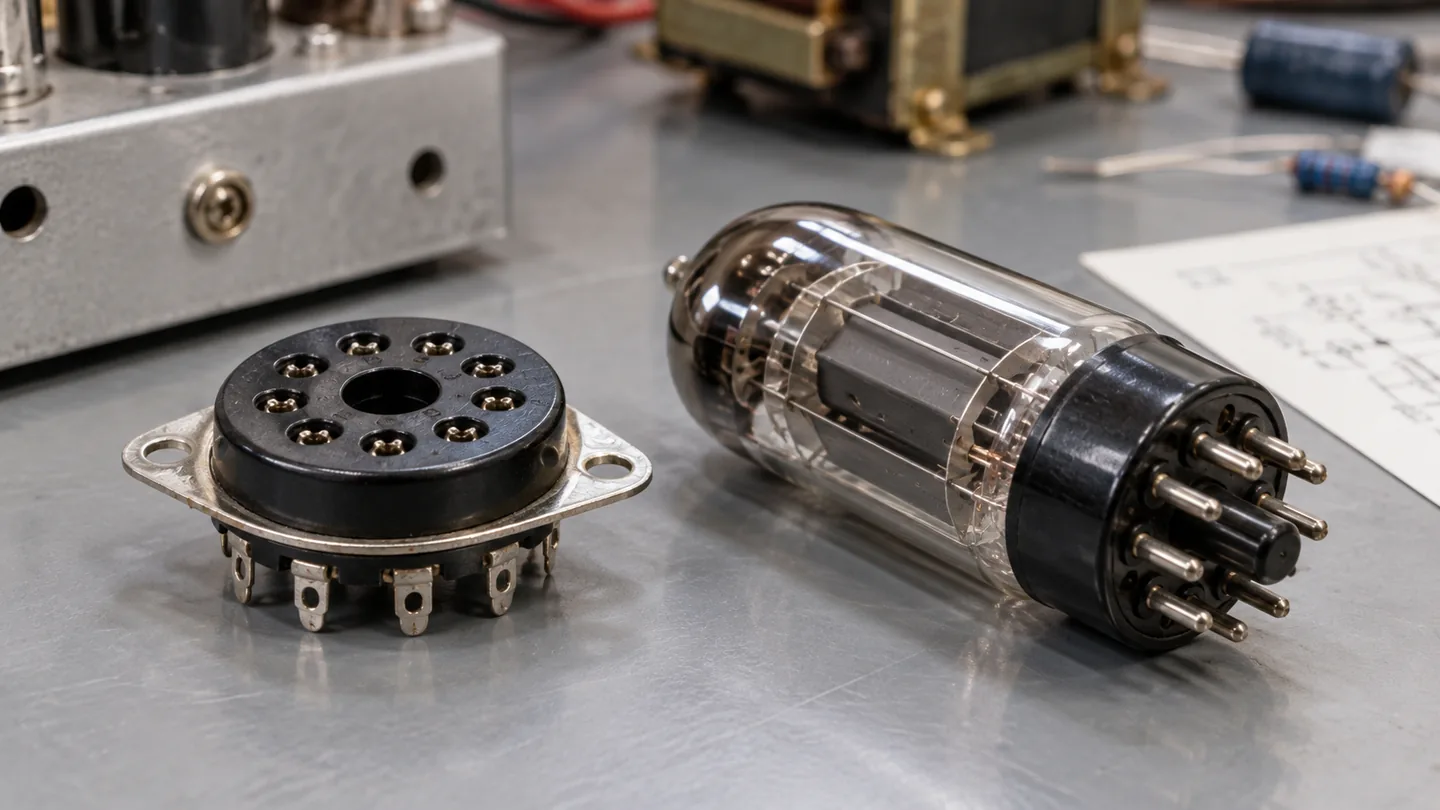
Illustrative image; not a photograph of a specific product.
The real customer question
A Reddit owner asked whether a rattling Fender needed a new tube, a new socket, or both. Another owner described a loose retainer and a tube moving out of place. These are different mechanical situations. Buying a new tube before identifying the cause can leave an intermittent connection untouched.
Record symptoms without internal work
With the amplifier powered off and cooled, photograph the exterior tube position and retainer only if they are visible without removing a cover. Note whether the noise occurs only at high speaker volume, after warm-up, or with a particular channel. Do not pull a hot tube, probe inside the chassis, bend socket contacts, or keep playing to reproduce an arc. Fender’s amplifier support guidance explains why internal amplifier faults belong with a qualified technician.
| Sign | Possible explanation | Safer next step |
|---|---|---|
| Rattle appears to come from the glass tube | An internal mechanical issue may exist, but the sound alone is inconclusive | Ask a shop to test the tube and amplifier. |
| Tube sits visibly askew or moves excessively | Retainer or socket issue may exist | Stop use and document the condition. |
| Crackles recur after a new tube | Contact, solder, bias, or another fault may remain | Request a circuit-level diagnosis. |
| Arc, burning smell, or abnormal plate glow | Potentially damaging fault | Switch off and do not repeat the test. |
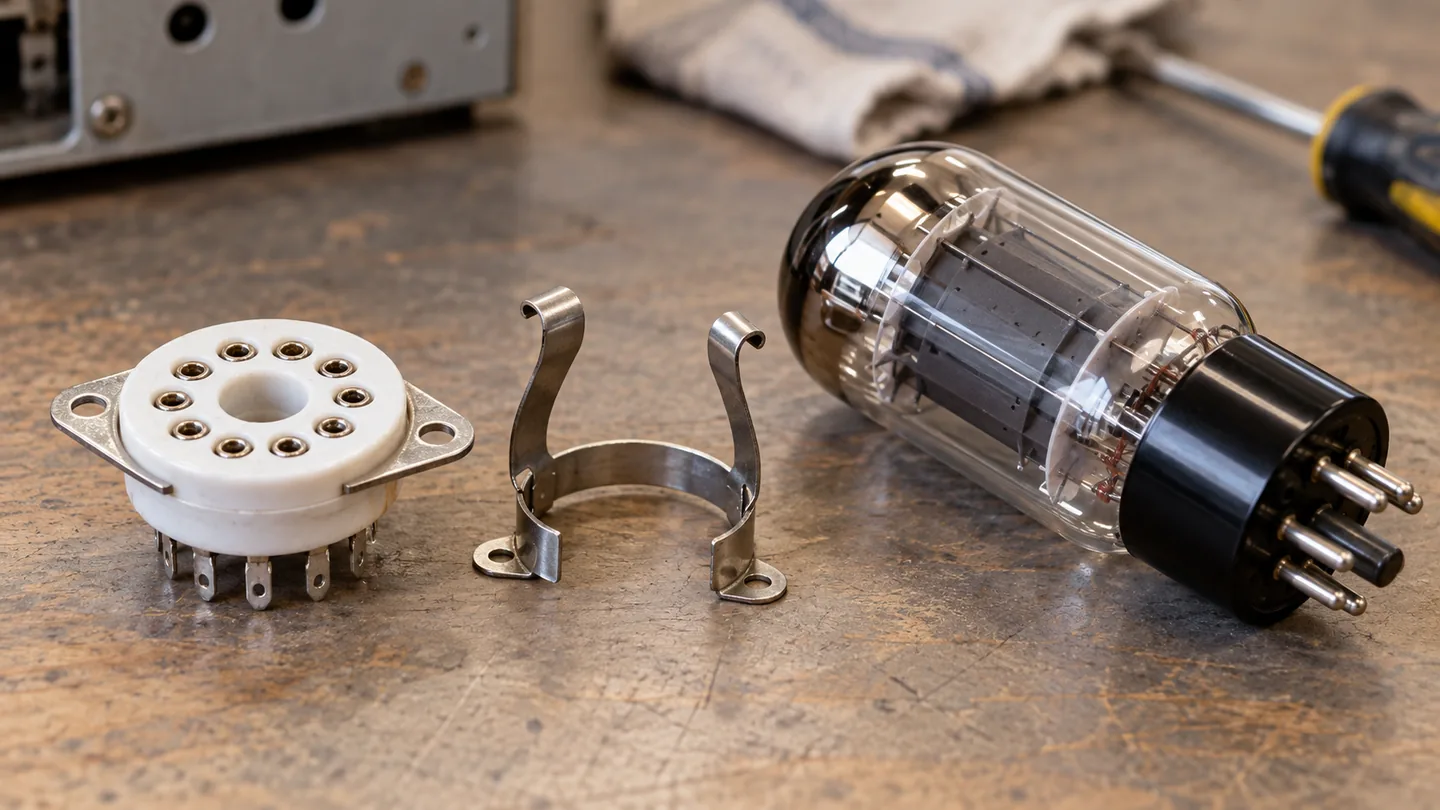
A separate crackling-after-replacement thread illustrates why a symptom can involve more than the tube. A seller’s claim that a ceramic or gold-plated socket will automatically improve tone does not diagnose an intermittent electrical connection. A technician should select a replacement by pin count, mounting geometry, electrical and thermal ratings, contact quality, and wiring arrangement for the actual chassis.
What to ask before ordering a socket
Provide the technician with the amplifier model, tube type, clear photographs, and the original socket’s mounting pattern. Ask whether the contact, retainer, solder joint, or tube is responsible, and whether the proposed part fits the chassis without unsafe modification. Buy a replacement only after the fault and part fit are established.
This article focuses on the first decision when the owner hears a physical rattle. Internal socket repair should be based on a fault diagnosis for the actual amplifier, not a symptom list alone.