
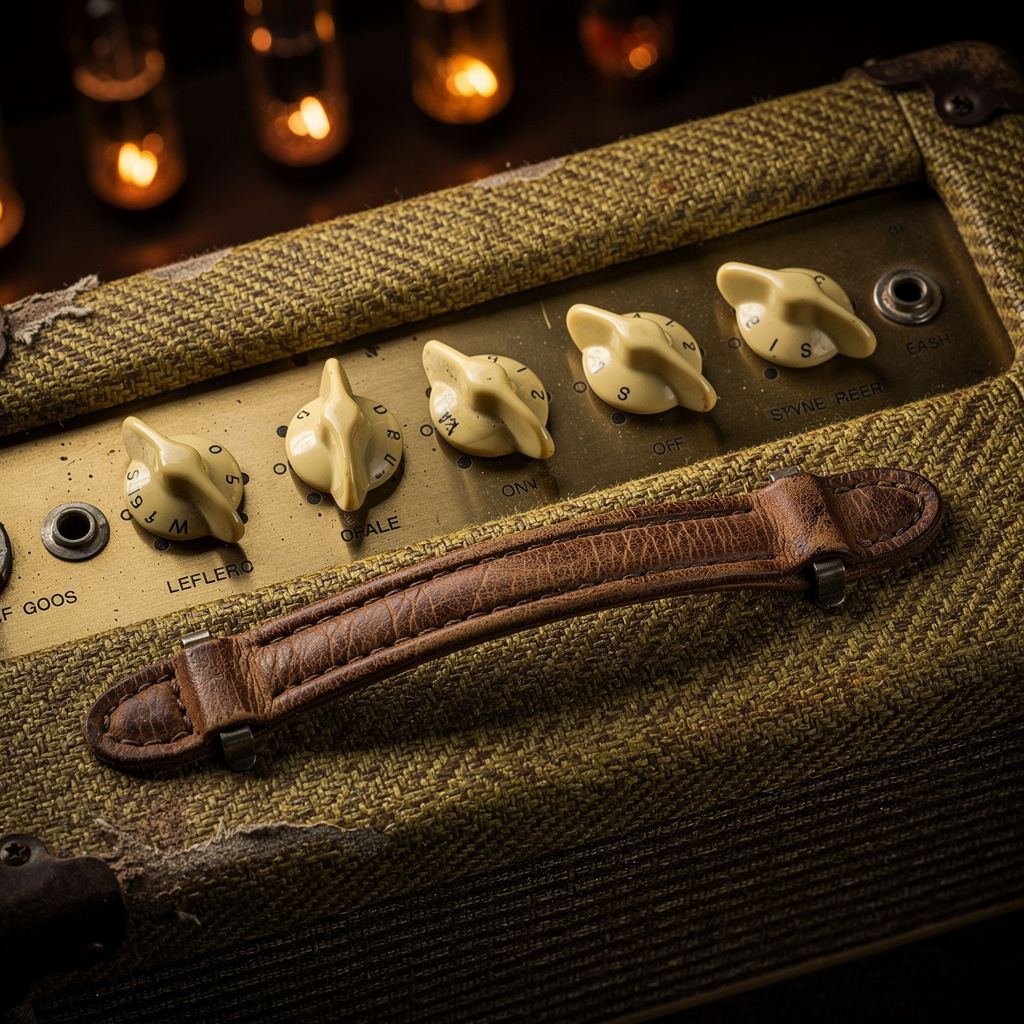
In the high-stakes environment of a live performance, the difference between a perfect tone and a muddy mix often comes down to a split-second adjustment. While standard dials offer a sleek look, chicken head knobs provide a functional advantage that has made them a mainstay on the world’s most iconic amplifiers. Originally cementing their legacy on vintage Fender and Vox gear, these “pointer” style controls serve a dual purpose: they bridge the gap between retro aesthetics and ergonomic utility.
Their distinct, elongated shape offers unrivaled visibility on dark stages, allowing guitarists to confirm their settings with a single glance or a quick tactile touch. In this article, we explore the historical context and engineering behind these dials, detailing how they revolutionize on-stage precision. Discover why these vintage-inspired components remain the gold standard for players who demand speed, accuracy, and a tangible connection to their sound.
Related Reading: guitar amplifier chicken head knobs
The Anatomy of an Icon: Defining the Guitar Amplifier Chicken Head Knob
At its core, the chicken head knob is a masterclass in functional design, characterized by its distinct, elongated “beak” that tapers to a sharp point. Unlike standard cylindrical or “top hat” knobs, which often rely on a small, printed line to indicate settings, the chicken head utilizes a geometric asymmetry that provides immediate visual and tactile feedback. This design originated in mid-century industrial and radio equipment before being immortalized by legendary manufacturers like Fender and Vox. By integrating these into the control panels of iconic amplifiers like the Tweed Deluxe or the AC30, these brands solved a recurring problem for live performers: the need for rapid, error-free adjustments in high-pressure environments.
The “anatomy” of this knob is rooted in two critical performance factors: high-contrast indexing and ergonomic leverage. The extended pointer acts as a physical arrow, significantly reducing parallax error—the misperception of a dial’s position when viewed from an angle. On a dimly lit stage, a guitarist can glance down and instantly recognize the orientation of their EQ or gain stages based on the “beak’s” direction, even if the markings on the faceplate are obscured by shadows.
Furthermore, the teardrop-shaped body offers superior grip compared to smooth-sided or knurled knobs. This added leverage allows for minute, high-precision adjustments, facilitating a degree of “blind” control where the player can feel the knob’s orientation through touch alone. By bridging the gap between vintage aesthetics and utilitarian precision, the chicken head knob remains the gold standard for players who prioritize real-time tonal manipulation without sacrificing the classic “boutique” visual edge.
Precision at a Glance: How the “Pointer” Design Enhances Visibility on Dark Stages
In the high-pressure environment of a live performance, a guitarist’s interaction with their amplifier must be instinctive. While standard cylindrical or skirted knobs often rely on a minuscule etched line to indicate parameters, the chicken head knob utilizes its entire physical geometry as a high-contrast directional vector. This is where the “pointer” design transitions from a vintage aesthetic choice to a critical ergonomic tool.
On dimly lit stages, where fine markings disappear under saturated gel lighting or thick stage fog, the elongated “beak” of the chicken head provides a clear silhouette that is discernible even in peripheral vision. For the professional, this design offers two distinct advantages: visual indexing and tactile confirmation. From a distance, the orientation of multiple chicken head knobs creates a visual “map” of settings. If a gain stage or EQ sweep is misaligned, the deviation is immediately apparent because the knob’s asymmetrical shape breaks the visual horizon of the control panel.
Furthermore, the tactile feedback is unparalleled. During a mid-set transition or a quick adjustment between songs, a player can reach down and physically “feel” the position of the knob relative to the amp’s chassis. Unlike a round knob, which requires visual focus to locate the indicator line, the chicken head allows for “blind” precision. You don’t need to read the numbers on the faceplate; you simply feel the angle of the pointer. This allows for rapid, accurate adjustments without breaking the performance’s flow or diverting focus from the audience. This marriage of form and function—honed by legendary brands like Fender and Vox—ensures that the chicken head remains the gold standard for players who prioritize real-world utility in low-light environments.
The Ergonomic Advantage: Tactile Feedback and Rapid On-Stage Adjustments
Beyond mere visibility, the ergonomic superiority of the chicken head knob lies in its asymmetrical geometry. Unlike traditional cylindrical or “top hat” knobs, which rely solely on friction against the outer circumference, the chicken head acts as a high-torque lever. This elongated “beak” provides a physical handle that allows for more granular control over the potentiometer’s sweep. For a guitarist mid-set, this translates to effortless adjustments; even with sweaty hands or under the pressure of a live performance, the protrusion offers a secure grip that a standard knurled knob cannot match.
The true revolution, however, is the tactile feedback—the ability to “read” the amplifier’s settings through touch alone. Because the pointer creates a distinct directional axis, a player can develop a sophisticated level of muscle memory. By resting a thumb or forefinger on the pointer, you instantly recognize the dial’s position relative to the amp’s faceplate without ever breaking eye contact with the audience.
This “blind” operation is critical for making rapid on-stage adjustments, such as rolling back gain for a verse or boosting mids for a solo, where a fraction of an inch in rotation significantly alters the tonal output. In high-stakes environments, the chicken head knob functions less like a decorative ornament and more like a precision interface, bridging the gap between human intuition and electronic circuitry. This mechanical advantage ensures that the transition between specific sonic textures is both instantaneous and exact, allowing the artist to remain present in the music rather than fumbling with their gear.
Vintage Pedigree: The Historical Link to Fender and Vox “Golden Era” Amplifiers
The chicken head knob is far more than a retro aesthetic choice; it is a permanent fixture of the “Golden Era” of tube amplification, representing a pivotal moment where industrial utility met musical expression. Its prominence traces back to the 1950s and 60s, a period where Leo Fender and the engineers at Jennings Musical Industries (Vox) were defining the visual and functional language of the modern stage.
On early Fender “Tweed” and “Brownface” amplifiers, the inclusion of the chicken head knob was a masterstroke of pragmatic design. Leo Fender, known for his utilitarian approach, favored these pointers because they provided a clear “clocking” position. This allowed guitarists to index their volume and tone settings with high-contrast visibility against the control plate—a necessity when navigating the sensitive, non-master volume circuits of the era.
Across the Atlantic, Vox solidified the chicken head’s status as a professional standard with the AC15 and AC30. In the dimly lit, smoke-filled clubs of the British Invasion, the distinct, elongated silhouette of a Vox knob allowed players to monitor their Top Boost or Tremolo settings from several feet away. This design heritage stems from the surplus of the mid-century radio and laboratory industries, where “pointer” knobs were the gold standard for test equipment requiring high-torque adjustments and zero-margin-for-error readings. By adopting this industrial pedigree, Fender and Vox ensured that their amplifiers weren’t just instruments, but precision-engineered tools. Today, seeing these knobs on a modern boutique build immediately signals a connection to that high-fidelity past, promising the same rugged reliability and instant visual feedback that defined the legendary tones of the 1950s and 60s.
Aesthetic Authority: Why Retro Knobs Dominate Modern Boutique Amp Design
In the world of boutique amplification, where signal paths are meticulously hand-wired and components are curated for “mojo,” the choice of control hardware is never incidental. Modern builders favor chicken head knobs because they represent a convergence of industrial heritage and uncompromising utility. For a boutique manufacturer, these knobs serve as a visual shorthand for quality; they evoke the “Golden Era” of vacuum tube technology, signaling to the player that the amplifier is a professional-grade instrument rather than a mass-produced consumer electronic.
The aesthetic authority of the chicken head lies in its silhouette. Unlike generic cylindrical knobs that often blend into the faceplate, the aggressive, pointed geometry of the chicken head creates a distinctive profile that breaks the horizontal plane of the chassis. This allows builders to design high-contrast control panels where the “settings” are visible from across the room. In high-end design, form follows function: the knob’s vintage charm is inextricably linked to its operational superiority. When a player sees a cream or oxblood chicken head on a custom-built head, there is an immediate psychological association with tactile precision and high-voltage reliability.
Furthermore, boutique designers use these knobs to define the “voice” of their brand. A row of chicken heads doesn’t just look retro; it suggests a specific type of responsiveness. Because these knobs provide more leverage and a clearer visual indicator of the “sweet spot,” they align perfectly with the philosophy of boutique gear—where every micro-adjustment to the gain or EQ should be felt and seen. By leaning into this retro aesthetic, modern builders aren’t just being nostalgic; they are reclaiming an era where gear was designed to be adjusted by feel in the heat of a performance, ensuring that the visual language of the amp matches its sonic integrity.
Practical Durability: Why These Knobs Withstand the Rigors of Professional Touring
Beyond their vintage silhouette, chicken head knobs are engineered for the physical demands of the road. While standard cylindrical knobs rely on friction and small surface areas, the extended “beak” of a chicken head knob acts as a high-torque lever. This mechanical advantage is vital for professional touring, where potentiometers can become stiff due to dust, humidity, or age. The elongated shape allows a player to exert precise control with minimal effort, ensuring that settings remain adjustable even in the most grueling environmental conditions.
The durability of these components is often rooted in their material composition. High-grade chicken head knobs are typically molded from heavy-duty thermoset plastics or authentic Bakelite, materials chosen for their high heat resistance and structural rigidity. Unlike cheaper injection-molded plastics that may warp or crack under the intense heat of vacuum tube operation, these materials maintain their integrity over decades. Furthermore, professional-tier versions feature internal brass inserts and recessed hex-head set screws. This metal-to-metal connection prevents the knob from stripping the potentiometer’s D-shaft or knurled split-shaft—a common failure point in consumer-grade gear during heavy transport.
From a protection standpoint, the tapered, low-profile design of the “tail” and “beak” helps deflect accidental impacts. While a tall, straight knob might catch on a guitar cable or a padded road case lid—potentially snapping the pot’s shaft—the sloped geometry of the chicken head encourages objects to glide over it. This “armor-like” functionality, combined with the tactile certainty provided by the pointer’s physical orientation, ensures that the amplifier’s interface remains functional and accurate through years of stage vibration, rapid load-ins, and the unpredictable rigors of the touring circuit.
Restoration and Care: Cleaning and Maintaining Original Vintage Control Dials
For the discerning collector or the touring professional, maintaining original chicken head knobs is a matter of both fiscal preservation and operational reliability. Vintage knobs, often molded from early Bakelite or high-impact resins, are susceptible to the cumulative effects of oxidation, nicotine buildup, and UV exposure, which can dull their high-contrast “pointer” and compromise their tactile grip.
To restore the visual edge of these components, start with a non-invasive cleaning. After loosening the set screw—carefully, to avoid stripping the aged threads—soak the knobs in a solution of warm water and mild dish soap. Use a soft-bristled toothbrush to lift grime from the “beak” and the fluted base. Avoid harsh chemical solvents or alcohol-based cleaners, which can cause vintage plastics to become brittle or dissolve the original white enamel paint in the pointer recess. If the pointer has faded, undermining the knob’s primary function of at-a-glance visibility, you can “re-wick” the line using a lacquer stick or a fine-tipped enamel paint pen, wiping away the excess to leave a crisp, high-visibility marker.
Mechanical maintenance is equally critical. Inspect the internal brass insert for signs of corrosion. If a set screw is seized, a single drop of penetrating oil applied via a toothpick can prevent a catastrophic snap. When reinstalling, precision indexing is paramount: ensure the pointer aligns perfectly with the potentiometer’s minimum and maximum travel. In the high-pressure environment of a live set, a misaligned chicken head provides false feedback, neutralizing the ergonomic advantage of the design. By ensuring the knob is seated firmly and indexed correctly, you preserve the tactile synergy between the player and the amplifier’s internal circuitry.
Customization and Compatibility: Upgrading Your Modern Gear with Classic Styling
Integrating chicken head knobs into contemporary gear is more than a cosmetic choice; it is a functional overhaul that bridges the gap between mass-produced efficiency and boutique ergonomics. Most modern amplifiers and multi-effects processors ship with standardized “cup” or “skirted” knobs that, while sleek, often offer poor peripheral visibility. By retrofitting these units with chicken head dials, players gain the “pointer” advantage—instant visual confirmation of gain, EQ, or volume levels from across a dark stage—without needing to modify the underlying circuitry.
Successful customization hinges on understanding technical potentiometer shaft specifications. High-end “American-spec” amplifiers typically feature 1/4-inch (6.35mm) solid-shaft potentiometers. In contrast, many modern digital modeling amps or import pedals utilize 6mm split-shaft pots. When selecting replacements, it is vital to match the knob’s internal diameter and fastening method to ensure a secure fit. For solid shafts, a chicken head knob with a high-quality brass insert and a steel set screw (tightened via flat-head or hex-key) is the professional standard, providing a “slip-free” grip that withstands the torque of rapid adjustments.
Beyond the mechanical fit, this upgrade allows for a cohesive aesthetic across a hybrid rig. Whether you are adding cream-colored pointers to a modern high-gain head to evoke a “boutique” hand-wired feel or outfitting a contemporary pedalboard for a vintage-inspired workflow, the swap provides a tactile consistency that improves the live performance experience. This modification transforms generic, mass-market gear into a personalized performance tool, marrying modern reliability with the timeless, high-visibility precision of “Golden Era” design.
Have questions or your own tips to share? Drop a comment below!