
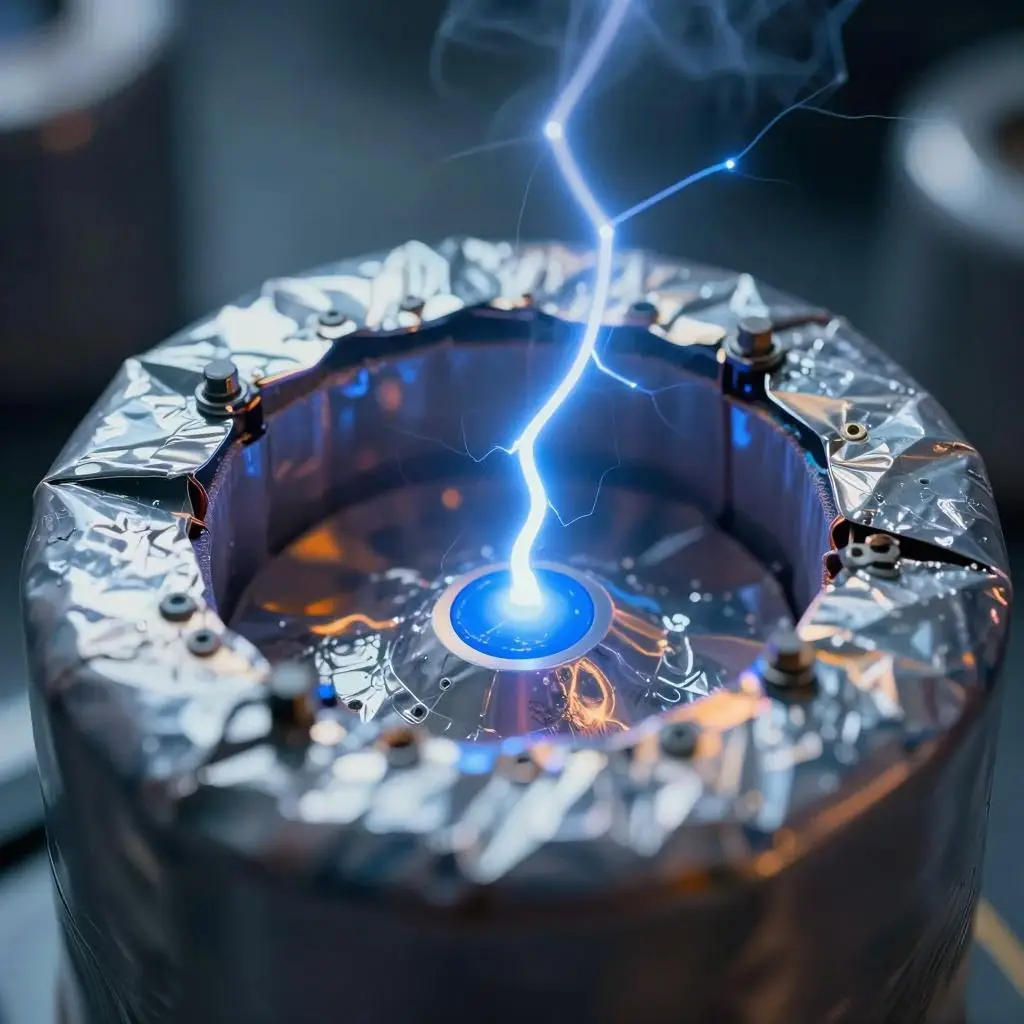
In the high-stakes world of power electronics, the difference between a robust system and a catastrophic failure often comes down to a single component: the capacitor. When your circuit is subjected to rapid voltage transitions and high-frequency ripples, standard components often succumb to thermal stress and dielectric breakdown. Enter the polypropylene (PP) film capacitor—the industry’s “secret weapon” for superior pulse-handling.
Renowned for their ultra-low dielectric loss and exceptional dV/dt ratings, these capacitors excel where others falter. But what truly sets them apart? From the critical self-healing mechanism that prevents permanent shorts to their remarkably low Equivalent Series Resistance (ESR), polypropylene film offers a level of precision and durability essential for high-fidelity audio, induction heating, and EV power inverters. In this technical deep dive, we will analyze why PP film is the definitive choice for engineers who refuse to compromise on efficiency, stability, or long-term reliability.
Understanding the Polypropylene Dielectric: The Foundation of High-Power Stability
At the core of a polypropylene (PP) film capacitor’s performance is its non-polar molecular structure. Unlike polar dielectrics like polyester (PET), polypropylene exhibits an exceptionally low dissipation factor (tan δ), often remaining below 0.05% even at high frequencies. In high-power applications, this characteristic is paramount: lower dielectric loss translates directly to minimal internal heat generation, allowing the component to manage massive ripple currents without the risk of thermal runaway.
The technical superiority of the PP dielectric is most evident when evaluating its Equivalent Series Resistance (ESR) and dV/dt ratings. Because polypropylene maintains high dielectric strength and low ESR across a broad temperature spectrum, it can withstand rapid voltage transitions—often exceeding several thousand volts per microsecond. This pulse-handling capability is essential for snubber circuits and resonant converters where fast-switching IGBTs or MOSFETs generate steep wavefronts that would puncture or degrade lesser materials.
Furthermore, the “self-healing” mechanism of metallized polypropylene adds a critical layer of circuit reliability. When a localized dielectric breakdown occurs due to an overvoltage transient, the thin metallized electrode vaporizes around the point of failure, isolating the fault and restoring insulation resistance in microseconds. Unlike Class II MLCCs, which suffer from significant capacitance drift under DC bias and piezoelectric “singing,” polypropylene remains linear and acoustically silent. This stability ensures that high-power systems—from induction heating to high-fidelity audio crossovers—maintain their precise design parameters under strenuous electrical loads, providing a level of predictability that electrolytic and ceramic alternatives simply cannot match.
Superior Pulse Handling: Decoding the Importance of High dV/dt Ratings
In the realm of high-power electronics, the ability to withstand rapid voltage transitions is not merely a technical specification—it is a survival requirement. This is where the dV/dt rating becomes the most critical metric on a datasheet. Measured in volts per microsecond (V/μs), dV/dt represents the maximum rate of voltage change a capacitor can endure without suffering dielectric degradation or catastrophic failure.
Polypropylene (PP) film capacitors excel in pulse-heavy environments due to their remarkably low dissipation factor (tan δ) and Equivalent Series Resistance (ESR). When a high-frequency pulse or a steep-fronted wave passes through a capacitor, the resulting displacement current generates internal heat proportional to the material’s losses. While materials like polyester (PET) may offer a higher dielectric constant, their higher internal losses lead to rapid heat accumulation during fast switching. Polypropylene’s molecular symmetry ensures that even at high frequencies, energy loss is kept to an absolute minimum, preventing thermal runaway and maintaining capacitance stability.
Furthermore, the superior pulse handling of PP film is often augmented by sophisticated metallization techniques. By utilizing “heavy edges”—where the metal spray contact area is thickened—manufacturers reduce the contact resistance between the electrode and the end-spray (schoopage). This allows the capacitor to manage massive peak currents ($I_{peak} = C cdot dV/dt$) without the risk of the electrodes stripping away from the dielectric. In applications such as snubber circuits, SCR commutation, and resonant converters, these capacitors endure repetitive, high-energy transients that would puncture lesser materials. Combined with the “self-healing” property—which vaporizes the metallization around a localized fault to isolate it—polypropylene offers a level of transient robustness that makes it the gold standard for high-reliability power paths.
Low Dissipation Factor and ESR: Why Polypropylene Stays Cool Under Pressure
In high-power applications, the efficiency of a capacitor is dictated by how little energy it wastes as heat. This is where polypropylene (PP) excels through its remarkably low Dissipation Factor (DF), often referred to as the loss tangent ($tan delta$). While polyester (PET) or electrolytic capacitors may exhibit significant dielectric losses, polypropylene maintains a DF typically below 0.05% at 1 kHz. This intrinsic property means that the molecular friction within the dielectric—caused by the rapid orientation of dipoles in an alternating electric field—is minimal, leading to exceptionally low internal heat generation.
Closely linked to the DF is the Equivalent Series Resistance (ESR). In a circuit, ESR represents the sum of the resistive losses from the leads, electrode plates, and the dielectric itself. Because polypropylene film capacitors feature high-purity dielectric materials and often utilize sophisticated metallization or foil construction, their ESR remains ultra-low even at high frequencies. This is critical for high-power circuits because heat generation is calculated by $P = I^2 times ESR$. When handling high ripple currents or rapid pulse discharges, a higher ESR would cause the component to overheat, leading to dielectric degradation or “thermal runaway.”
Polypropylene’s thermal stability ensures that its ESR remains low across a broad temperature and frequency spectrum. Unlike other materials that may see a sharp rise in losses as frequency increases, PP stays “cool under pressure,” maintaining its structural integrity and electrical characteristics. For the engineer, this translates to higher efficiency, reduced cooling requirements, and a significantly longer operational lifespan in demanding environments like induction heating, resonant converters, and high-fidelity audio crossovers where signal purity and thermal management are paramount.
The Self-Healing Phenomenon: How Metallized Film Extends Component Lifespan
One of the most compelling reasons engineers specify metallized polypropylene film capacitors for high-reliability applications is their inherent “self-healing” property, technically known as “clearing.” In high-power circuits, transient overvoltages or microscopic dielectric flaws can lead to a localized breakdown of the dielectric material. While such an event would cause a catastrophic short-circuit in ceramic or electrolytic capacitors, metallized film components are designed to survive it.
The mechanism relies on the extreme thinness of the vacuum-deposited metal electrodes—typically aluminum or zinc—which are only tens of nanometers thick. When a dielectric puncture occurs, a localized arc forms at the point of failure. The intense heat generated by this plasma arc (reaching several thousand degrees Celsius) instantaneously vaporizes the thin metallization layer surrounding the breakdown site. Because the polypropylene dielectric itself acts as a gas-evolving material, the resulting pressure helps extinguish the arc.
Once the arc is cleared, a tiny, non-conductive “island” is created around the fault, effectively isolating the defect from the rest of the capacitor. The insulation resistance is restored within microseconds, allowing the circuit to continue operating without interruption. While this process results in a negligible loss of total capacitance (often picofarads per event), it prevents the thermal runaway or “fail-short” scenarios common in other technologies. For power electronics subject to unpredictable line transients or harsh industrial EMI, this self-healing capability translates directly to an extended component lifespan and a “graceful” aging profile, ensuring that a single voltage spike doesn’t result in total system downtime.
Polypropylene in High-Fidelity Audio: Achieving Transparency and Low Distortion
In the realm of high-fidelity audio, the capacitor is far more than a passive energy reservoir; it is a critical gatekeeper of signal integrity. Polypropylene (PP) film capacitors are the industry standard for audiophile-grade crossovers, coupling, and bypass applications due to their near-perfect linearity and exceptionally low Dielectric Absorption (DA).
Dielectric absorption—often described as the “memory effect”—occurs when a dielectric material retains a residual charge after discharge, which is subsequently leaked back into the signal path. In high-resolution audio, this manifests as “time-smearing,” where trailing residual voltages blur the leading edges of transients. While electrolytic capacitors may exhibit DA levels exceeding 1%, polypropylene maintains a DA typically below 0.01%. This technical superiority ensures that the audio signal remains transparent, preserving the micro-dynamics and spatial imaging of the original recording.
Furthermore, polypropylene’s negligible Dissipation Factor (DF) minimizes Total Harmonic Distortion (THD) and Phase Distortion across the entire audible spectrum. Unlike Class 2 ceramic capacitors, which suffer from a significant voltage coefficient (changing capacitance based on the applied voltage) and a disruptive piezoelectric effect—where mechanical vibrations are converted into electrical noise—polypropylene is electrically stable and microphonically inert. This stability ensures a flat frequency response and a neutral “sonic signature.” In high-power tube or solid-state amplifiers where high-voltage swings are common, the high insulation resistance and low ESR of polypropylene prevent thermal compression, allowing for unrestricted dynamic range and a level of clarity that inferior dielectrics simply cannot replicate.
Comparing Dielectrics: Polypropylene (PP) vs. Polyester (PET) and Ceramic Capacitors
Selecting the right capacitor requires balancing volumetric efficiency against electrical performance. While Polyester (PET) and Ceramic (MLCC) dielectrics are ubiquitous in general electronics, they falter in the high-stress environments where polypropylene (PP) thrives.
When compared to Polyester, the primary differentiator is the Dissipation Factor (DF). PET possesses a higher dielectric constant, allowing for smaller components, but its DF is typically 10 to 100 times higher than that of PP. In high-frequency or high-current pulse applications, this higher internal resistance leads to significant self-heating. While a PET capacitor might suffice for simple DC blocking, using it in a high-power resonant circuit often results in thermal runaway. Polypropylene’s ultra-low DF (often <0.05% at 1 kHz) ensures that energy is stored and released with minimal thermal loss, maintaining circuit efficiency and component longevity.
Against Ceramic capacitors, specifically Class II dielectrics like X7R, Polypropylene offers superior stability. MLCCs suffer from a significant “voltage coefficient of capacitance,” where the actual capacitance can drop by 50% or more as the applied voltage approaches the rated limit. Polypropylene capacitors maintain a nearly linear capacitance across their entire voltage range. Furthermore, PP film is immune to the piezoelectric effects that cause “singing” or microphonic noise in ceramics—a critical factor for high-fidelity audio and sensitive instrumentation. Perhaps most importantly, the self-healing nature of metallized PP provides a “fail-safe” mechanism; whereas a ceramic capacitor might crack and short-circuit under mechanical or electrical stress, a PP film capacitor clears the fault and continues to operate. For high-power pulse handling, the combination of PP’s high dV/dt ratings and its inherent reliability makes it the only viable choice over its more volatile counterparts.
Thermal Performance and Voltage Derating: Ensuring Reliability in Harsh Environments
In high-power applications, the reliability of a capacitor is inextricably linked to its thermal management strategy. While polypropylene (PP) film offers a remarkably low dissipation factor, it is a thermoplastic with a relatively modest melting point. Consequently, understanding the intersection of ambient temperature, internal self-heating, and voltage derating is critical for long-term circuit stability.
Polypropylene exhibits a stable, slightly negative temperature coefficient (typically -200 ppm/°C), which ensures predictable performance across its standard operating range—usually up to +85°C or +105°C. However, as the temperature ascends toward these limits, the dielectric strength of the film diminishes. To prevent premature dielectric breakdown, designers must implement voltage derating. Generally, once the temperature exceeds +85°C, the rated DC voltage ($V_R$) must be reduced—often by 1.25% to 1.5% for every degree Celsius increase—to maintain the same level of reliability and life expectancy.
In harsh environments, the “hot spot” temperature becomes the defining metric. This is the sum of the ambient temperature and the temperature rise ($Delta T$) generated by internal $I^2R$ losses from high ripple currents. Because PP capacitors have such low ESR, they minimize this self-heating; however, in high-frequency power electronics, even milliohms of resistance can cause significant thermal stress. Failing to account for this can lead to accelerated aging of the dielectric or, in extreme cases, a loss of “self-healing” efficacy as the local temperature prevents the metallization from vaporizing cleanly. By strictly adhering to derating curves and ensuring adequate airflow or heatsinking, engineers can leverage PP’s superior electrical characteristics without sacrificing the decade-plus operational life expected in industrial and automotive sectors.
Critical Application Areas: From Induction Heating to Renewable Energy Inverters
The transition from theoretical specifications to practical deployment highlights why polypropylene (PP) film capacitors are the backbone of modern power electronics. In induction heating systems, components must endure massive circulating currents and high-frequency oscillations. Here, the polypropylene dielectric’s exceptionally low dissipation factor is non-negotiable. Because PP generates minimal internal heat even when subjected to several hundred kilovolt-amperes (kVAR) of reactive power, it prevents the thermal runaway that would otherwise catastrophicially degrade polyester or ceramic alternatives.
In the realm of renewable energy, specifically solar and wind inverters, polypropylene capacitors serve as critical DC-link components. These systems require high capacitance stability and the ability to manage significant ripple currents over a twenty-year service life. The “self-healing” properties of metallized PP film are vital here; should a localized dielectric breakdown occur due to a transient overvoltage, the thin metallization evaporates, isolating the fault and allowing the inverter to continue operation without a short circuit.
Furthermore, the high dV/dt ratings of polypropylene make them the preferred choice for snubber circuits protecting high-speed IGBT and SiC MOSFET power modules. In these environments, the capacitor must suppress voltage spikes characterized by extremely fast rise times. Polypropylene’s ability to withstand these rapid potential shifts without dielectric fatigue ensures the longevity of the entire power semiconductor stack. From Electric Vehicle (EV) motor drives to pulse-forming networks in medical imaging, the combination of low ESR and high peak-current capability makes polypropylene the gold standard for any application where power density and reliability cannot be compromised.
Selecting the Right Construction: Film-Foil vs. Metallized Polypropylene Designs
When engineering high-power circuits, the choice between film-foil and metallized construction is a critical decision that dictates both the longevity and the physical footprint of your design. While both utilize a polypropylene dielectric, their internal architectures serve vastly different stress profiles.
Metallized Polypropylene (MKP) capacitors are constructed by vacuum-depositing a thin layer of metal—typically aluminum or zinc—directly onto the plastic film. The hallmark of this design is the “self-healing” property. In the event of a local dielectric breakdown, the thin metallization evaporates around the fault site, isolating the failure and allowing the capacitor to remain functional. This results in a highly reliable, compact component with excellent volumetric efficiency. However, because the conductive layer is measured in nanometers, the current-carrying capacity is limited. The higher contact resistance at the end-sprayed (schoopage) terminals means metallized designs are better suited for applications prioritizing space and safety, such as power factor correction and general-purpose filtering.
Film-Foil capacitors utilize discrete layers of thick metal foil (usually aluminum or tin) interleaved with the polypropylene film. This “solid” electrode construction provides a massive cross-sectional area for current flow, resulting in the lowest possible ESR and the highest dV/dt ratings available. Because the foil is a superior thermal conductor and offers robust mechanical contact with the leads, these capacitors can handle extreme peak currents and high-frequency oscillations without internal overheating. The trade-off is the lack of self-healing; a dielectric puncture results in a permanent short. Consequently, film-foil construction is the gold standard for snubber circuits, high-voltage pulse generators, and induction heating, where the component must survive repetitive, high-energy surges that would cause the thin layers of a metallized capacitor to degrade.
Maintaining Signal Integrity: Dielectric Absorption and Its Impact on Precision Circuits
In high-precision electronics, the ideal capacitor acts as an instantaneous energy reservoir; however, real-world components suffer from dielectric absorption (DA), commonly referred to as “soakage” or the “memory effect.” DA occurs when a dielectric material fails to fully discharge, retaining a residual charge that slowly “creeps” back across the terminals after the capacitor has been shorted. For precision circuits—such as sample-and-hold amplifiers, integrators, and high-resolution data converters—this residual voltage is a primary source of signal error, ghosting, and non-linearity.
Polypropylene (PP) is the industry benchmark for minimizing these errors, boasting a dielectric absorption coefficient typically ranging from 0.01% to 0.05%. To put this in perspective, polyester (PET) capacitors exhibit DA levels roughly ten times higher (0.2% to 0.5%), while electrolytic and certain ceramic formulations are orders of magnitude worse. In high-power switching applications and pulse-forming networks, high DA can lead to unintended DC offsets and cumulative timing jitters that destabilize control loops.
The molecular symmetry of the polypropylene polymer chain ensures that dipoles realign almost instantaneously when the electric field is removed. This rapid recovery is critical for signal integrity; it prevents the “smearing” of fast-moving waveforms and ensures that the capacitor does not retain a history of previous signal states. By selecting polypropylene, engineers can maintain a clean, predictable response in high-impedance nodes where even a few millivolts of recovered charge could compromise system accuracy. Whether in precision instrumentation or high-fidelity audio crossover networks, the ultra-low DA of polypropylene ensures that the temporal purity of the signal remains uncompromised, delivering a level of transparency that other film dielectrics simply cannot match.
Have questions or your own tips to share? Drop a comment below!