
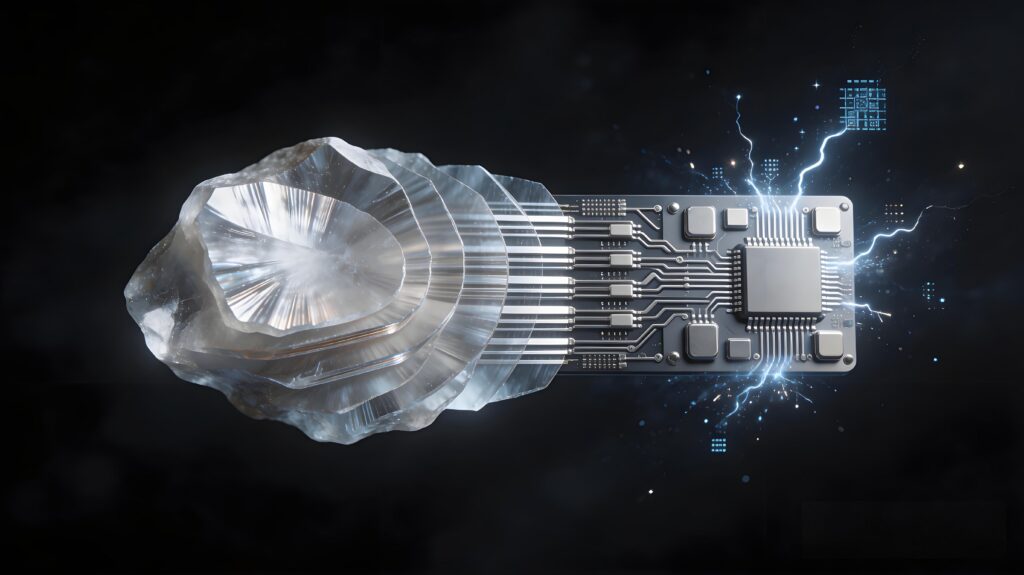
In the world of high-stakes circuit design, “good enough” is a dangerous compromise. When your project demands absolute thermal stability and near-zero drift, even high-end C0G/NP0 ceramics can fall short of the rigorous performance profiles required for mission-critical applications. This is where silver mica capacitors prove their worth.
While they command a premium price point, the ROI is found in their peerless High-Q factors, minimal equivalent series resistance (ESR), and an incredibly tight temperature coefficient (TCC) that remains linear across extreme ranges. Whether you are engineering high-frequency RF oscillators, precision medical imaging sensors, or aerospace telemetry systems where environmental shifts are brutal, the choice of capacitor determines the boundary between signal integrity and system failure. This guide dives into the technical trade-offs to explain exactly why silver mica remains the definitive choice for engineers who refuse to compromise on precision.
Understanding the Anatomy of Silvered Mica: Construction and Why It Eliminates Air Gaps
To appreciate the superior stability of silver mica, one must understand the transition from early “clamped mica” designs to the modern “silvered” process. The construction begins with high-quality muscovite mica, a naturally occurring mineral selected for its exceptional chemical inertness and crystalline cleavage. Unlike standard film capacitors that layer separate foils and dielectrics, silver mica capacitors utilize a screening process where silver paste is applied directly to the mica sheets and then fired at high temperatures.
This direct deposition is the engineering “secret sauce” that eliminates air gaps—the primary enemy of precision in high-frequency circuits. In older clamped designs or lower-grade dielectrics, microscopic voids between the electrode and the dielectric are inevitable. Because the dielectric constant of air ($\approx 1.0$) is significantly lower than that of mica ($\approx 6.5–7.0$), any mechanical vibration or thermal expansion that shifts these air pockets causes the total capacitance to drift. By firing the silver directly onto the substrate, manufacturers create a monolithic structure that behaves as a single thermal unit.
For the design engineer, this eliminates the “capacitance jump” common in lesser components. It yields a Temperature Coefficient (TCC) as tight as 0 to +70 ppm/°C, ensuring that RF oscillators and filter networks remain locked on frequency despite fluctuating internal chassis temperatures. While C0G (NP0) ceramic capacitors are often viewed as a cost-effective alternative, silver mica remains the gold standard for mission-critical applications because it lacks the piezoelectric sensitivity and voltage coefficient issues found in ceramics. In high-Q applications like medical imaging or aerospace telemetry, the absence of air gaps and the resulting mechanical rigidity translate directly into lower ESR and extreme long-term reliability.
The Physics of Thermal Stability: Why Silver Mica Dominates in Temperature-Sensitive Designs
The thermal stability of silver mica capacitors is not merely a byproduct of their assembly but a fundamental characteristic of the muscovite mica’s crystalline lattice. As a phyllosilicate mineral, mica possesses a unique atomic structure that is chemically inert and mechanically rigid, allowing it to withstand extreme temperature fluctuations without significant shifts in its dielectric constant. While Class 1 ceramic dielectrics like C0G (NP0) offer a competitive temperature coefficient (TCC) of ±30 ppm/°C, silver mica provides a distinct advantage in “retrace” accuracy and long-term aging stability.
In precision RF oscillators and filter networks, even minor thermal hysteresis—the failure of a component to return to its original capacitance after a temperature cycle—can cause frequency drift that compromises system integrity. Silver mica capacitors exhibit near-zero hysteresis. Their TCC is exceptionally linear and predictable, typically ranging from 0 to +70 ppm/°C. This ensures that resonant circuits remain locked even in the volatile thermal environments of aerospace telemetry or high-power transmitter stages.
Furthermore, the high Q-factor—frequently exceeding 1,000 at 1 MHz—remains remarkably flat across the entire operating temperature range. Unlike multi-layer ceramic capacitors (MLCCs), which can suffer from piezoelectric effects or voltage-coefficient instability, the silvered mica stack is physically immutable. For engineers designing medical imaging equipment or high-fidelity instrumentation, the higher unit cost is a strategic investment. By utilizing silver mica, you eliminate the need for complex, software-driven temperature compensation or active cooling, as the component itself serves as a stable, physical reference point that resists the molecular-level degradation common in synthetic dielectrics.
High Q Factor and Low Dissipation: Maximizing Efficiency in RF and High-Frequency Circuits
In the high-frequency domain, efficiency is more than a metric of power conservation; it is the fundamental determinant of signal purity and thermal management. Silver mica capacitors are distinguished by an exceptionally high Quality Factor (Q)—often exceeding 1,000 at 1 MHz—and a correspondingly low dissipation factor (DF). While modern C0G/NP0 ceramic capacitors offer formidable competition in low-power SMD applications, silver mica remains the superior choice for high-power RF transmitters, medical imaging (MRI) equipment, and aerospace telemetry where dielectric loss cannot be tolerated.
This performance stems from the capacitor’s low Equivalent Series Resistance (ESR) and minimal inductance (ESL). Because the silver electrodes are fused directly to the mica dielectric, energy loss through ohmic heating is minimized, ensuring that the component does not contribute to thermal runaway in high-current resonant tanks. In RF oscillators and filter networks, a high Q factor translates to a narrower bandwidth and steeper roll-off, allowing for the precise frequency discrimination required in congested signal environments.
Furthermore, unlike Class 2 ceramics, silver mica exhibits negligible dielectric absorption and no voltage coefficient. This means the capacitance remains rock-steady regardless of the applied voltage or frequency, preventing the phase noise and harmonic distortion that plague lesser components. For engineers specifying parts for mission-critical applications, the premium cost of silver mica is justified by this “set-and-forget” reliability. In a tuned circuit where even a 0.1% shift in dissipation could compromise the signal-to-noise ratio or lead to component fatigue under high-stress RF loads, the thermal and electrical efficiency of silver mica is not just a luxury—it is a technical necessity.
Silver Mica vs. C0G/NP0 Ceramic: Navigating the Trade-offs in Precision Circuitry
For most modern surface-mount applications, C0G (NP0) ceramics are the industry standard for stability. However, when your design requirements move into high-power RF or high-voltage precision, the “good enough” performance of Class 1 ceramics often hits a functional ceiling. The primary trade-off is one of dielectric robustness and the voltage coefficient of capacitance (VCC). Unlike ceramics, silver mica exhibits an almost negligible VCC, meaning its capacitance remains exceptionally stable even as operating voltage fluctuates—a critical requirement for high-precision tuning and timing circuits in aerospace and medical imaging.
Furthermore, while C0G capacitors are lauded for their low equivalent series resistance (ESR), silver mica’s physical construction allows it to handle significantly higher RF currents without the risk of thermal runaway. In high-wattage RF transmitters, C0G components can suffer from localized heating and dielectric fatigue at voltage peaks where silver mica remains thermally indifferent. Additionally, mica is inherently non-piezoelectric. While C0G is significantly more stable than X7R in this regard, silver mica provides a higher level of immunity to microphonics and mechanical stress, ensuring that signal integrity is not compromised by physical vibration—a common failure point in avionics and ruggedized military hardware.
Ultimately, specifying silver mica over C0G is a strategic decision to prioritize long-term reliability and transient headroom over board density and unit cost. While C0G wins on footprint and price, silver mica remains the definitive choice for mission-critical systems where the cost of component drift or catastrophic failure far outweighs the initial BOM premium. For engineers designing for decadal stability rather than consumer lifecycles, silver mica’s performance margins justify its place in the schematic.
Voltage Ratings and Dielectric Strength: Handling Extreme Stress in High-Power Applications
While high-frequency performance often takes center stage, the intrinsic dielectric integrity of muscovite mica is what renders these capacitors indispensable for high-power, high-voltage environments. Mica boasts a dielectric strength typically ranging from 1,000 to 2,000 volts per mil. This extraordinary ceiling allows for the construction of capacitors that can reliably handle working voltages (WVDC) from 500V to well over 10,000V in specialized RF power applications.
In mission-critical designs—such as pulse-forming networks, high-power RF transmitters, and medical MRI gradient coils—the primary challenge isn’t just surviving the voltage, but maintaining precision under extreme electrical stress. Unlike Class II ceramic dielectrics, which suffer from a significant voltage coefficient of capacitance (VCC), silver mica remains virtually immune to capacitance shifts induced by DC bias. This ensures that your resonant frequency stays locked even as the system swings through high-voltage transients.
Furthermore, the silvered mica architecture is uniquely resistant to corona discharge and internal arcing. In high-power RF amplifiers, where peak-to-peak voltages can be immense, the lack of air gaps in the silvered-plate construction prevents the ionized gas breakdown that often plagues lower-tier film or ceramic components. For engineers, the premium cost of silver mica is a direct investment in the circuit’s safety margin. When a dielectric failure in a satellite transponder or a deep-sea repeater could result in catastrophic system loss, the thermal and electrical robustness of mica provides a level of de-risking that C0G ceramics simply cannot match at high-voltage tiers. Silver mica doesn’t just survive high-stress environments; it maintains its metrological integrity within them.
Mission-Critical Applications: From RF Oscillators to Medical Imaging and Aerospace Systems
In mission-critical electronics, the decision to specify silver mica capacitors over lower-cost surface-mount alternatives is rarely about initial budget and entirely about the long-term cost of failure or signal degradation. When drift, noise, or dielectric breakdown can compromise an entire system, the inherent stability of silvered mica becomes an engineering necessity.
In RF Oscillators and Transmitters, frequency stability is paramount. Even minor capacitance shifts due to thermal fluctuations can lead to frequency drifting out of band or increased phase noise. Silver mica’s remarkably low and linear temperature coefficient ensures that resonant circuits stay tuned to their precise center frequency across wide operating ranges. This makes them the gold standard for high-stability oscillators and narrow-band filters in military-grade communication hardware and ham radio equipment where “set and forget” reliability is required.
The Medical Imaging sector, particularly MRI and CT scanners, utilizes silver mica for its ability to handle high RF voltages and rapid pulsing without significant dielectric absorption or heat buildup. In these environments, the capacitor must maintain its characteristics while subjected to intense magnetic fields and high-frequency stress. Unlike some ceramic dielectrics that exhibit piezoelectric effects (microphonics), silver mica remains electrically quiet, ensuring the integrity of sensitive diagnostic data.
Finally, in Aerospace and Defense, components face the harshest environmental extremes—from the vacuum of space to the violent vibration of launch. The mechanical robustness of the silver mica stack, often protected by high-quality epoxy dipping, resists thermal cycling fatigue and mechanical shock better than many brittle multilayer ceramic capacitors (MLCCs). When a component is destined for a satellite or an avionics suite where field repair is impossible, the premium paid for silver mica is an investment in mission success and the mitigation of catastrophic system drift.
The Longevity Factor: Why Silver Mica Components Maintain Precision for Decades
In precision engineering, the total cost of ownership is often dictated by the frequency of recalibration and the risk of field failure. While Class 1 dielectrics like C0G/NP0 ceramics offer excellent stability, silver mica capacitors remain the gold standard for “fit and forget” reliability in mission-critical environments. This longevity is rooted in the fundamental mineralogy of mica; as a naturally occurring, chemically inert silicate, it is immune to the oxidation, outgassing, and moisture absorption that can degrade organic film or electrolytic dielectrics over time.
The silvering process—where silver electrodes are fired directly onto the mica laminae—creates a robust, intimate bond that eliminates the microscopic air gaps found in traditional stacked-foil designs. This solid-state construction prevents internal corona discharges and mechanical shifts during extreme thermal cycling, ensuring the capacitance value remains virtually static for decades. For designers of RF oscillators or precision timing circuits, this translates to negligible capacitance drift, typically rated at less than ±(0.05% + 0.1 pF).
Furthermore, silver mica components are remarkably resistant to “aging,” a phenomenon where dielectric constants shift over time due to crystalline relaxation—a common issue in many high-K ceramic formulations. In applications such as aerospace telemetry, deep-sea repeaters, or high-end medical diagnostic equipment, where the cost of a single maintenance cycle or field failure exceeds the component price by several orders of magnitude, the inherent stability of silver mica is a technical necessity. By specifying silver mica, engineers effectively eliminate the capacitor as a variable in long-term system degradation, ensuring that precision remains as high on day 5,000 as it was on day one.
Deciphering Military Standards: Understanding MIL-PRF-39001 and High-Reliability Certifications
When your design enters the realm of aerospace, defense, or high-end medical instrumentation, technical specifications alone are insufficient—you require verifiable, statistical reliability. This is where MIL-PRF-39001 becomes the definitive benchmark. This military performance specification governs established reliability (ER) mica dielectric capacitors, moving beyond simple “fit-for-purpose” testing into the territory of documented failure rate guarantees.
For the professional evaluator, the value of MIL-PRF-39001 lies in its tiered failure rate levels: M, P, R, and S. While a standard component might offer high performance, an “S” level capacitor guarantees a failure rate of no more than 0.001% per 1,000 hours of operation. Achieving these certifications requires exhaustive Group A, B, and C testing. This includes rigorous thermal shock cycles, moisture resistance immersion, and 10,000-hour life testing at maximum rated voltage and temperature.
From a commercial investigation standpoint, these certifications justify the significant price premium over C0G ceramics or commercial mica. The cost is not merely for the material, but for the “screened” assurance that eliminates infant mortality and ensures the component will not drift in high-stress environments. Furthermore, MIL-spec components provide full lot traceability—a non-negotiable requirement for AS9100-compliant supply chains. When the total cost of a field failure in a satellite transponder or a deep-sea repeater is calculated, the “expensive” MIL-PRF-39001 silver mica capacitor emerges as the most cost-effective insurance policy for your engineering integrity. By specifying these high-reliability parts, you are not just buying a capacitor; you are purchasing the data-backed certainty that your precision circuit will maintain its calibration under the most punishing conditions imaginable.
Justifying the Premium: A Cost-Benefit Analysis for Commercial and Industrial Engineering
In the landscape of engineering procurement, the bill of materials (BOM) is often a battleground between performance and cost. Silver mica capacitors command a unit price significantly higher than C0G (NP0) multilayer ceramic capacitors (MLCCs), often by an order of magnitude. However, a rigorous cost-benefit analysis reveals that this premium is not merely a surcharge for “legacy” technology, but an investment in risk mitigation and long-term signal integrity.
The justification for silver mica lies in the elimination of “hidden costs” associated with component drift and mechanical instability. While C0G ceramics provide excellent precision for low-power signal conditioning, silver mica remains the gold standard for high-power RF and high-Q resonant circuits where thermal management is critical. With a Temperature Coefficient (TCC) typically ranging from 0 to +70 ppm/°C and exceptional retrace characteristics, silver mica ensures that frequency-dependent circuits—such as those found in MRI imaging coils or aerospace transponders—maintain calibration through thousands of thermal cycles.
For commercial OEMs, the decision to specify silver mica is often driven by the Total Cost of Ownership (TCO). In mission-critical applications, the cost of a single field failure, recalibration event, or system downtime can dwarf the cumulative price increase of the entire capacitor bank. Furthermore, silver mica’s inherent lack of piezoelectric effects (microphonics) and its high dielectric strength (up to several kilovolts) provide a safety margin that ceramics cannot match in high-voltage, high-vibration environments. When the design requirements demand absolute stability over decades rather than years, silver mica is the only economically defensible choice for ensuring that precision remains “set-and-forget.”
Design Considerations and Sourcing: Selecting the Right Lead Styles and Capacitance Tolerances
When transitioning from theoretical performance to board-level implementation, the physical architecture of a silver mica capacitor is as critical as its dielectric constant. While surface-mount (SMD) mica chips exist for high-density microwave applications, the industry standard remains the radial-leaded “dipped” configuration. For engineers designing high-Q RF filters or oscillators, lead geometry is a primary design constraint; the parasitic inductance ($L_{ESL}$) inherent in longer leads can significantly shift the self-resonant frequency (SRF). To maintain the component’s precision, leads should be trimmed to the minimum viable length or specify silver-plated copper-clad steel leads to balance conductivity with mechanical rigidity.
From a sourcing perspective, capacitance tolerance is where silver mica justifies its footprint. While standard C0G ceramics often hover around $\pm 5\%$, silver mica is frequently specified at $\pm 1\%$ or even $\pm 0.5\%$ for mission-critical tuning. However, the value of this tolerance isn’t just in the initial out-of-the-box measurement, but in “retraceability.” Unlike many film or ceramic dielectrics that exhibit hysteresis after thermal cycling, silver mica returns to its nominal value with near-zero drift.
When evaluating vendors, prioritize those with established MIL-spec pedigree, as inferior encapsulation techniques in “bargain” components can lead to silver migration or moisture ingress—the two primary failure modes in precision mica. For high-power RF, ensure the physical case size (e.g., Case 15, 20, or 30) is matched to the expected reactive power (VAR) load. Selecting the right case size ensures that the internal silver electrodes can dissipate heat effectively, preventing the thermal runaway that can compromise tight tolerance windows in high-duty-cycle environments.
Have questions or your own tips to share? Drop a comment below!