
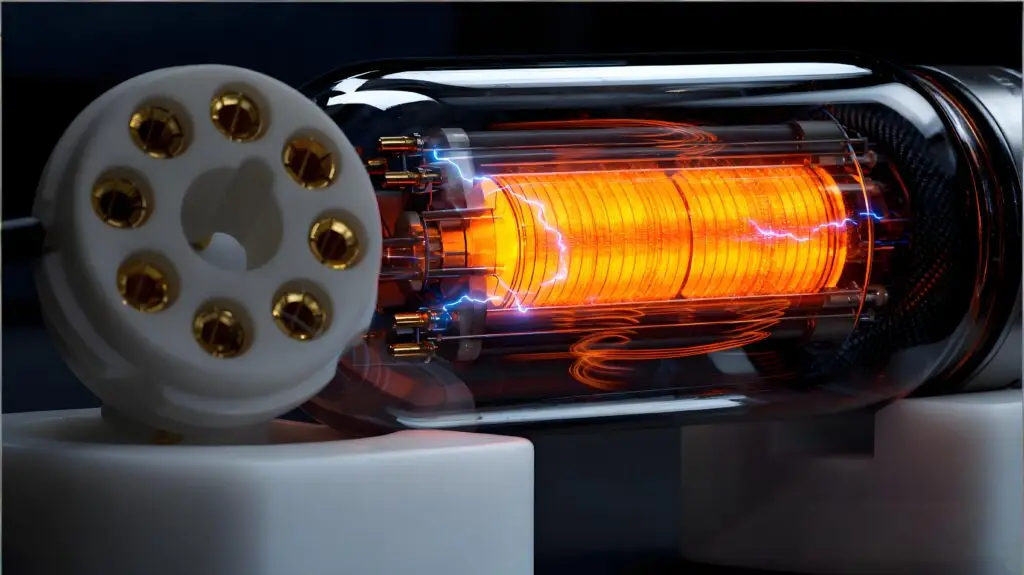
In the world of high-end tube audio, we obsess over boutique capacitors and plate voltages, yet we often overlook the most critical physical link in the signal chain: mechanical tension. If you’ve ever battled mysterious signal dropouts, intermittent crackling, or the dreaded smell of ozone, the culprit isn’t always a failing tube—it’s a fatigued 8 pin octal vacuum tube socket.
The integrity of metal-to-metal contact is the literal heartbeat of your amplifier. Over time, relentless heat cycles cause the socket’s internal grip to expand and lose its “spring,” leading to micro-vibrations, poor conductivity, and destructive arcing. In this technical deep dive, we explore the physics of socket fatigue and explain why many modern replacements fall short of vintage standards. You will learn how to identify high-quality, high-tension sockets versus inferior alternatives, ensuring your gear maintains the structural reliability required for peak sonic performance.
Related Reading: 8 pin octal vacuum tube sockets
The Anatomy of an 8-Pin Octal Socket: More Than Just a Plastic Base
To the uninitiated, an octal socket appears to be a simple mounting bracket; to the seasoned engineer, it is a high-voltage mechanical interface where physics meets performance. The anatomy begins with the insulating body, typically molded from phenolic (Bakelite), Micalex, or high-grade ceramic. While the base provides the structural integrity and dielectric strength necessary to prevent arcing between pins carrying upwards of 450V DC, the true engineering happens within the recessed metal contacts.
These contacts are typically bifurcated “tulip” or “wrap-around” clips designed to exert a specific Newton-force against the tube pins. In a high-quality socket, the metallurgy—often phosphor bronze or beryllium copper—is chosen for its “spring memory.” Unlike cheap stamped brass, which deforms permanently after only a few insertion cycles, these premium alloys are designed to maintain their structural tension despite the extreme thermal cycling inherent in vacuum tube operation.
The critical failure point in inferior sockets is the loss of this lateral mechanical tension. When the metal fatigues, the physical contact surface area diminishes. This creates micro-gaps that introduce parasitic resistance, leading to localized heating (the Joule effect). As the connection degrades, the resulting heat further softens the metal, creating a feedback loop of failure that manifests as intermittent signal dropouts, increased noise floor, or destructive carbon tracking. A superior socket is not defined by its aesthetic, but by its ability to maintain a high-pressure, gas-tight seal against the tube pins, ensuring a low-impedance path that can withstand the rigors of high-current draw and fluctuating temperatures over decades of service.
The Physics of Contact Pressure: Why Metal-to-Metal Tension Governs Signal Integrity
At the heart of any vacuum tube circuit lies the critical junction where the tube pin meets the socket terminal. This is not merely a physical resting point; it is a dynamic electrical interface governed by the laws of mechanical force. Signal integrity is directly proportional to the effective surface area of the contact. When mechanical tension is high, the metal surfaces are forced into a state where microscopic asperities are crushed together, minimizing contact resistance. However, when tension is insufficient, the interface develops a high-impedance bottleneck that degrades the signal before it even reaches the grid.
The primary catalyst for tension failure is the thermal duty cycle. Octal power tubes, such as the KT88 or 6L6GC, generate substantial heat that transfers directly to the socket via conduction. As the socket terminals undergo repeated expansion and contraction, the metal reaches a point of “stress relaxation.” Inferior alloys, particularly generic brass, lose their elastic memory (spring temper) under these conditions, causing the socket’s “fingers” to permanently splay outward. This loss of grip leads to micro-arcing—tiny, high-temperature sparks that occur when current jumps across microscopic air gaps. This phenomenon creates carbon tracking, which further increases resistance and manifests as audible “pops,” thermal hiss, or catastrophic signal dropouts.
To identify high-quality sockets, look for the “retention profile.” Premium sockets typically utilize phosphor bronze or heat-treated beryllium copper, which retain their spring tension at much higher temperatures than standard alloys. Expert-level sockets often feature bifurcated (split) or wrap-around contacts that grip the pin from multiple sides rather than a single-sided leaf spring. A “loose” socket is a liability; a high-integrity socket ensures that the mechanical “pinch” remains constant, preserving the low noise floor and transient response required for high-fidelity performance.
Thermal Cycling and Metal Fatigue: How Heat Weakens Socket Tension Over Time
Vacuum tubes are essentially high-wattage heaters, with power pentodes like the EL34 or KT88 reaching envelope temperatures exceeding 200°C. This intense thermal energy is conducted directly through the pins into the socket’s female grips. Every power cycle represents a “thermal excursion” where the metal grips expand and contract. Over time, this repeated stress leads to metal fatigue and a phenomenon known as “stress relaxation.”
The metallurgical integrity of the socket determines how it handles this abuse. In low-grade sockets, usually made of thin-gauge brass, the heat eventually acts as an annealing process, softening the metal and destroying its “elastic memory.” Once the metal loses its spring, it no longer “bites” the tube pin with the necessary kilograms-per-square-inch of pressure. This creates a microscopic gap, leading to increased contact resistance. This resistance generates localized heat (Joule heating), which further weakens the metal—a destructive feedback loop.
The result is micro-arcing and signal dropouts. High-voltage arcs can carbonize the socket base, creating a conductive path that leads to catastrophic component failure. To identify a high-quality socket, look for heavy-gauge phosphor bronze or heat-treated beryllium copper contacts. Unlike cheap stamped brass, these alloys are specifically engineered to maintain mechanical tension at elevated temperatures. If a tube “wiggles” with zero resistance or if the metal grips show “rainbow” heat tinting (discoloration), the tension has been compromised, and the socket is no longer capable of maintaining the signal integrity required for high-fidelity audio.
The Dangerous Consequences of Loose Pins: Arcing, Parasitic Oscillation, and Tube Failure
When mechanical tension fails, the consequences transition from subtle sonic degradation to catastrophic hardware failure. The most immediate threat is arcing. In high-voltage octal applications—where plates often carry 400V to 550V DC—a loose connection creates a high-resistance air gap. As the tube vibrates or expands, a micro-arc can jump this gap, ionizing the surrounding air and carbonizing the socket base (especially in phenolic or low-grade plastic variants). Once a “carbon track” forms, the socket material itself becomes conductive, leading to a permanent short-circuit that can destroy both the tube and the power transformer.
Beyond high-voltage arcs, loss of tension on the control grid pins (typically Pin 5 on an EL34 or 6L6) introduces parasitic oscillation. If the grid contact is intermittent or high-resistance, the tube’s bias becomes unstable. This instability can trigger high-frequency oscillations that are inaudible to the human ear but devastating to the output transformer, as the tube effectively becomes a radio transmitter operating outside its thermal parameters.
The most common end-state is thermal runaway. If the bias pin loses contact entirely, the tube “goes wide open,” drawing excessive plate current until the anodes glow incandescent orange—a condition known as “red plating.” This doesn’t just kill the vacuum tube; it stresses the entire power supply rail. Identifying a high-quality socket requires inspecting the “spring memory” of the clips. Superior sockets utilize phosphor bronze or beryllium copper with wrap-around “tulip” or reinforced “side-wipe” designs that maintain 360-degree pressure. Conversely, inferior stamped-tin alternatives lose their temper after only a few dozen heat cycles, inviting the air gaps that lead to these catastrophic failures.
Material Science: Comparing Ceramic, Micanol, and Phenolic Socket Housings
While the metal alloy of the contact determines the initial spring rate, the housing material dictates the long-term structural stability of that tension. In the high-heat environment of a vacuum tube chassis, the housing acts as the mechanical “backstop” for every contact leaf. If the housing material deforms or expands excessively under thermal load, the internal metal contacts lose their alignment, leading to the localized tension loss that precipitates signal failure.
Ceramic (Steatite) is the gold standard for high-wattage power stages, such as those employing KT88s or 6550s. Its primary advantage is a near-zero coefficient of thermal expansion and total immunity to carbon tracking. Because ceramic remains rigid at temperatures that would melt or soften polymers, it ensures that the contact clips remain trapped in their precise intended geometry. However, its lack of flex means it provides no “give”; if a tube pin is slightly oversized, the mechanical stress is transferred entirely to the metal clip, making the quality of the alloy inside even more critical.
Micanol, a mica-filled phenolic, represents the “Goldilocks” of socket materials. It offers superior dielectric strength and moisture resistance compared to standard plastics. For the audiophile, Micanol provides a critical balance of mechanical damping and structural rigidity. It absorbs micro-vibrations better than ceramic—reducing potential microphonics—while maintaining enough hardness to prevent the contacts from shifting or “wobbling” within their cavities.
Standard Phenolic is frequently found in vintage consumer gear and budget modern builds. While cost-effective, it is prone to “outgassing” and becoming brittle over decades of heat cycles. Under high-current loads, standard phenolic can soften, allowing the contact leaves to splay outward. Once the housing fails to provide a firm counter-force, the mechanical “memory” of the metal is compromised, creating the microscopic air gaps that invite catastrophic arcing and parasitic oscillation.
Contact Metallurgy: The Roles of Phosphor Bronze, Beryllium Copper, and Silver Plating
While the housing provides the structure, the contact metallurgy is the “engine” of the socket, dictating how much mechanical force is exerted on the tube pins over thousands of thermal cycles. The most common material found in standard-grade octal sockets is Phosphor Bronze. It offers a respectable balance of electrical conductivity and spring tension. However, in high-heat environments—such as those surrounding a pair of KT88 or 6L6GC power tubes—phosphor bronze is susceptible to “stress relaxation.” Over time, the heat causes the metal to undergo a subtle annealing process, leading to a permanent loss of clamping force and, subsequently, increased contact resistance.
For high-reliability or “mil-spec” applications, Beryllium Copper (BeCu) is the superior choice. BeCu possesses a significantly higher modulus of elasticity and fatigue strength than phosphor bronze. It maintains its “memory” and spring tension even when subjected to extreme operating temperatures that would cause lesser metals to go soft. This ensures that the mechanical “grip” on the tube pin remains constant, preventing the micro-arcing and signal modulation that occur when a connection becomes physically loose due to thermal expansion.
The interface is further refined by Silver Plating. Unlike nickel or tin, silver has the highest electrical conductivity of any element. Critically for vacuum tube longevity, even as silver oxidizes, silver oxide remains conductive—unlike the resistive oxides formed on copper or brass. A silver-plated BeCu contact provides a low-impedance, high-tension connection that “self-cleans” through the mechanical wiping action of inserting the tube. When identifying high-quality sockets, look for the distinct luster of silver and a contact geometry that utilizes a “wrap-around” design rather than a simple leaf spring; this ensures the metallurgy can exert pressure from multiple points, safeguarding the integrity of the signal path against the rigors of heat and vibration.
Identifying High-Quality vs. Inferior Sockets: What to Look for in Modern Manufacturing
In the era of modern manufacturing, distinguishing a robust octal socket from a cost-cut imitation requires a critical evaluation of contact geometry and spring retention characteristics. Inferior sockets often utilize thin, stamped-tin “tuning fork” contacts that provide minimal surface area and lack the restorative spring force needed for long-term reliability. When inspecting for high-quality alternatives, prioritize multi-leaf wrap-around contacts—precision-engineered components that provide 360-degree radial pressure. Unlike simple folded metal, these wrap-around designs maintain constant tension even as the pin expands and contracts during thermal cycles.
A primary metric for quality is consistency of insertion and extraction force. In inferior sockets, you may find that pin 2 and pin 7 (the high-current heaters) feel loose while the signal pins remain tight; this inconsistency indicates poor manufacturing tolerances and leads to localized resistive heating. A high-quality socket should exhibit a uniform “grip” across all eight pins. Furthermore, examine the lead-in chamfer of the contact throat. Superior sockets feature a deep, flared entry that guides the pin smoothly, whereas cheap sockets often have sharp, un-deburred edges that can shave metal off the tube pins, eventually leading to a loss of mechanical interference.
Finally, evaluate the mechanical “memory” of the metal. A high-grade socket, particularly one using beryllium copper, will return to its original narrow aperture after a tube is removed. In contrast, inferior sockets often “take a set”—remaining permanently splayed after one or two uses. If a socket allows the tube to “rock” significantly within the base, the mechanical tension is insufficient to damp microphonic vibrations or prevent the micro-arcing that precedes catastrophic failure. Look for thick-gauge contact walls and uniform plating that extends deep into the contact barrel, ensuring that the interface remains gas-tight and chemically stable over decades of operation.
How to Perform a Tension Test: Ensuring a Secure Fit for Your Power Tubes
To objectively assess the mechanical integrity of an octal socket, you must move beyond visual inspection and perform a tactile “tension test.” The most accurate method involves using a dedicated pin gauge—specifically a .093” diameter polished steel pin—rather than a full vacuum tube. Using a single pin allows you to isolate the friction of individual female contacts without the cumulative resistance of the other seven pins masking a localized failure.
When inserting the gauge, you are looking for “insertion force” and, more importantly, “extraction resistance.” A healthy phosphor bronze or beryllium copper contact should provide a distinct, snappy “bite.” As the pin enters, the spring leaves should deflect and exert a constant normal force against the pin surface. If the pin drops into the hole under its own weight or feels “mushy” with no tactile feedback, the metal has reached its elastic limit or suffered from significant annealing due to thermal cycling. This lack of tension is a precursor to micro-arcing and parasitic oscillation, as the intermittent contact creates a high-impedance path for high-voltage DC.
For a field test using a sacrificial tube, perform the “wiggle test” while the tube is seated. There should be zero lateral play within the contacts themselves. While the tube envelope may move slightly due to the tolerances of the plastic base, the pins should remain firmly gripped by the socket clips. If you can feel the pins sliding freely within the clips, the mechanical interface is compromised. In high-current power stages, any socket failing this tactile threshold should be replaced immediately; attempting to “re-tension” fatigued metal with a dental pick is a temporary fix that often exacerbates metal fatigue, leading to eventual catastrophic failure.
Maintenance and Restoration: When to Re-Tension Pins versus Full Socket Replacement
Deciding whether to salvage a vintage octal socket or commit to a full replacement is a critical inflection point in high-end audio restoration. Re-tensioning is often the first line of defense, but it requires a nuanced understanding of metallurgy. If the contact leaves—typically phosphor bronze or beryllium copper—retain their spring temper but have simply yielded to years of “tube rolling,” a careful mechanical adjustment can restore the necessary grip. Using a precision dental pick to gently reset the leaf gap can close the circuit gap, provided the metal hasn’t reached its elastic limit. This is often the preferred route for maintaining the “originality” of vintage point-to-point wired amplifiers where the chassis integrity is a priority.
However, re-tensioning has diminishing returns. If the metal has undergone significant work hardening or has lost its temper due to chronic overheating, any attempt to bend the pins back will result in a “dead” feel or immediate fracture. Furthermore, if you observe signs of “carbon tracking”—microscopic, blackened pathways etched into the base material between pin holes—re-tensioning is a dangerous waste of time. Carbon is conductive; once a high-voltage arc has established a path through a phenolic or micanol base, the socket becomes a fire hazard and a source of parasitic noise.
A full replacement is mandatory when the housing shows signs of charring, crystallization, or “gassing out.” If your tension test reveals that the pins no longer “bite” despite adjustment, the alloy’s molecular structure has failed. In these instances, the stability offered by a modern, high-quality ceramic or PTFE-based socket far outweighs the perceived value of a failing vintage part. Prioritize mechanical reliability; a loose socket is not just a sonic compromise—it is a precursor to catastrophic output transformer failure.
The Impact of Mechanical Stability on High-Fidelity Audio and Guitar Amplifier Tone
Mechanical stability in an octal socket is the invisible arbiter of sonic purity. In high-fidelity systems, a compromised mechanical bond introduces non-linear contact resistance. This does not always manifest as a total signal failure; instead, it presents as a subtle elevation of the noise floor and a softening of transient response. When the socket’s grip on the tube pins—specifically the control grid and plate—weakens, the interface becomes susceptible to micro-vibrations. This “microphonic coupling” effectively transforms the socket into a transducer, where physical chassis vibrations modulate the electron flow, blurring the stereo image and masking low-level harmonic detail.
In the context of guitar amplifiers, the impact is even more pronounced due to high-gain stages and intense cabinet resonance. Loose tension leads to “contact bounce,” where the electrical connection momentarily fluctuates under heavy low-end frequencies. This can trigger parasitic oscillations that sound like “ghost notes” or an unmusical “fizz” on the decay of a chord. Furthermore, inconsistent tension on the heater pins can cause fluctuating cathode temperatures. Because the emission of the tube is thermally dependent, these micro-fluctuations lead to erratic bias shifts, robbing the amplifier of its “bloom” and dynamic touch sensitivity.
High-quality sockets utilize spring-tempered alloys like Beryllium Copper to maintain a “gas-tight” seal that resists the inevitable softening caused by thermal cycling. Inferior sockets made from low-grade brass or stamped steel lose their “memory” after only a few dozen heat cycles, leading to the air gaps that invite oxidation and arcing. For the audiophile or the touring musician, mechanical tension is the prerequisite for electrical consistency; without a tenacious grip, even the finest NOS tubes are reduced to the level of their weakest connection.
Have questions or your own tips to share? Drop a comment below!