
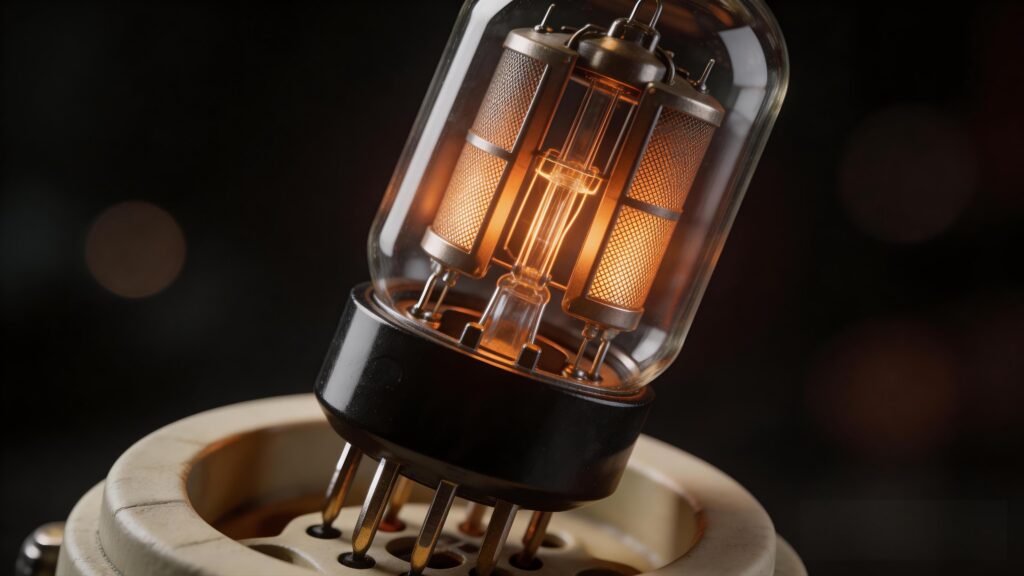
For many tone purists, the search for the ultimate “vintage warmth” begins and ends with octal-base tube circuitry. Unlike the ubiquitous 9-pin miniatures, octal tubes like the 6SL7 and 6SN7 offer a unique, touch-responsive compression and a signature harmonic richness that modern designs often struggle to replicate. However, the secret to a professional sound isn’t just in the glass—it’s in the execution.
Mastering an octal plug tube amp requires a nuanced approach to gain staging and a deep understanding of how the preamp interacts with the power section to prevent “mushy” lows or harsh clipping. In this guide, we reveal the technical strategies for dialing in the midrange, offering specific EQ secrets to help you harness that legendary octal bloom. Whether you are chasing smooth cleans or a harmonically dense overdrive, learning to command these “old-school” circuits is the key to unlocking a more responsive, three-dimensional tone.
Understanding the Architecture: What Defines an Octal Plug Tube Amp?
To master an octal plug tube amp, one must first understand that its architecture is a vestige of a “bigger is better” era of vacuum tube design. Architecturally, the “octal” designation refers to the eight-pin base standard that preceded the common 9-pin miniature “noval” tubes, such as the ubiquitous 12AX7. In an octal preamp circuit, typically centered around the 6SL7 (high-mu) or 6SN7 (medium-mu) dual triodes, the physical envelope and internal elements—plates, grids, and cathodes—are significantly larger.
This increased physical scale dictates the tube’s electrical footprint. Octals generally exhibit lower transconductance and a different internal capacitance profile than their miniature successors. This results in a “slower” transient response and a remarkably linear phase relationship across the midrange. While a 12AX7-based circuit might provide a sharp, aggressive “bite,” the octal architecture delivers “heft.” The larger plate structure facilitates a more gradual transition into clipping, producing a dense wash of second-order harmonics that guitarists describe as “bloom” or “swirl.”
Furthermore, the octal’s ability to handle larger signal swings without immediate square-wave distortion allows for a more touch-sensitive interaction between the preamp and the power section. This “headroom-heavy” architecture is why octal amps are prized for their 3D-textured midrange; the signal doesn’t just get louder—it gets wider. For the professional, dialing in this amp isn’t about fighting gain; it’s about managing the massive harmonic energy and low-mid weight that this specific glass-to-socket architecture inherently generates. Understanding this structural foundation is the first step in avoiding the “mud” often associated with vintage circuits and instead finding that elusive, creamy saturation.
The Sonic Signature: Why Octal Tubes Deliver Superior Midrange Textures
The “magic” of an octal preamp—specifically those utilizing 6SL7 or 6SN7 dual triodes—lies in the physical architecture of the tubes themselves. Unlike the smaller, more common noval (9-pin) 12AX7s, octal tubes feature larger internal plates and a greater vacuum volume. This translates to a lower gain factor but a significantly higher headroom in the midrange frequencies. This is where the “superior texture” originates: it is a product of high linearity and a softer, more musical transition into saturation.
To master this signature, one must rethink traditional gain staging. Because octal tubes provide a more robust, “chewy” signal, the goal isn’t to force high-gain clipping, which can lead to muddy intermodulation distortion in these circuits. Instead, professional dialing involves “stacking” the gain modestly. You should utilize the preamp to add harmonic weight—specifically targeting the 400Hz to 800Hz range—then let the power section provide the final touch of compression. When these tubes are pushed, they exhibit a second-order harmonic richness that feels “three-dimensional” compared to the sharper, more aggressive odd-order harmonics of modern miniature preamp designs.
For the most responsive tone, avoid the common mistake of aggressive EQ “scooping.” Octals thrive when the midrange is allowed to breathe as the signal’s core. Set your Mid control as the primary anchor, then roll back the Treble to shave off any “ice-pick” artifacts. This focuses the energy into a creamy, vocal-like punch that cuts through a mix without needing excessive volume. By treating the octal preamp as a textural tool rather than a simple gain stage, you unlock a vintage “bloom” that is both touch-sensitive and harmonically dense.
Decoding the Tubes: Comparing 6SL7 and 6SN7 Performance in Modern Circuitry
To master the octal landscape, you must differentiate between the 6SL7 (high-mu) and 6SN7 (medium-mu) dual triodes, as they dictate the gain structure of your signal path. The 6SL7 is the architect of vintage saturation. With a voltage gain factor of approximately 70, it introduces a lush, compressed midrange that responds dynamically to pick attack. In modern boutique circuits, the 6SL7 is the go-to for “chewy” textures; however, its higher plate resistance requires precise gain staging. To prevent the “muddy” low-mid buildup common in octal designs, experts often utilize smaller coupling capacitors—think .01µF instead of .022µF—to tighten the transient response before the signal reaches the driver stage.
Conversely, the 6SN7 is the king of headroom and linearity. With a mu of 20, it provides transparent amplification that allows the harmonic complexity of the 6SL7 preamp to bloom without premature clipping. When used as a phase inverter or driver, the 6SN7 provides the “weight” and “heft” behind the notes, creating a three-dimensional soundstage.
The pro’s secret to dialing in these tubes lies in the “stacking” of their characteristics. If your tone feels overly dark or “woolly,” the common mistake is boosting the treble; instead, back off the 6SL7’s input gain and push the 6SN7-driven power section harder. This leverages the 6SN7’s superior current handling to maintain note definition. For EQ strategy, octal circuits naturally peak in the 400Hz to 800Hz range. Rather than a traditional mid-boost, employ subtractive EQ: trim the extreme lows to prevent intermodulation distortion and let the inherent 6SL7/6SN7 harmonic richness occupy the center of the mix for that signature vocal-like responsiveness.
Strategic Gain Staging: How to Achieve Touch-Sensitive Response Without Harshness
To master the touch-sensitive response of an octal-based circuit, you must move beyond the “set-and-forget” mentality of modern high-gain amplifiers. The secret to octal gain staging lies in the interaction between the 6SL7’s high-mu preamp characteristics and the 6SN7’s robust current-driving capabilities. Because octal tubes feature larger internal plate structures than their 12AX7 counterparts, they exhibit higher interelectrode capacitance, which naturally rounds off the “fizzy” high-order harmonics that cause harshness.
To achieve a professional “edge-of-breakup” tone, start by setting your master volume higher than usual—around 70%—to provide the power section with ample headroom. Then, slowly increase the preamp gain (the 6SL7 stage) until you feel the notes begin to “bloom.” Unlike the sharp, square-wave clipping of noval tubes, octals transition into saturation with a soft-knee curve. This creates a “woody” compression where the midrange thickens significantly before audible distortion occurs.
If the tone becomes “muddy” rather than “warm,” use a subtractive EQ strategy: back off the bass frequencies to around 3 or 4. This prevents the large octal plates from over-saturating on low-frequency transients, which can choke the midrange detail. By keeping the low-end lean, you allow the 6SL7 to focus its energy on the 400Hz to 1kHz range, where the “secret” harmonic richness lives. The result is a highly responsive interface where your picking dynamics dictate the grit; a light touch yields 3D cleans, while a heavy strike triggers the harmonically dense, vintage growl that defines the octal legacy.
The Hybrid Advantage: Integrating Octal Preamps with High-Headroom Class D Power
The synergy between an octal-based preamp and a high-headroom Class D power section represents the current “sweet spot” in boutique amplification. While purists often argue for all-tube signal paths, the hybrid approach solves the historical issues of weight and heat while preserving the complex harmonic bloom of 6SL7 and 6SN7 tubes. In this architecture, the octal stage acts as the “tone engine,” providing the thick, second-order harmonic saturation that Class D inherently lacks.
To master this pairing, technical gain staging is paramount. Unlike traditional tube power sections that compress gracefully when pushed, Class D modules are designed for linear reproduction and can clip harshly if the input signal exceeds their voltage rails. To avoid this, you must treat the octal preamp as a dedicated saturation circuit. Focus on pushing the preamp gain until the “chewy” texture of the octal tubes emerges, then use a high-quality master volume or attenuator to feed a clean, robust signal to the power section. This ensures the Class D module functions as a transparent “magnifying glass” for the tube’s character rather than an active participant in the distortion.
When dialing in your EQ, remember that octal tubes naturally excel in the low-mid frequencies (300Hz to 600Hz). When integrated with the high damping factor of Class D, these frequencies can become overly resonant or “boxy.” Use a subtractive EQ strategy: dial back the 400Hz range slightly to prevent mud, allowing the octal’s inherent warmth to breathe without overwhelming the fast, articulate response of the power section. This results in a “three-dimensional” soundstage where the vintage midrange texture is supported by a modern, high-fidelity low end.
Advanced EQ Strategies for Sculpting Vintage Warmth and Harmonic Clarity
To master an octal-driven signal path, you must move beyond the “set-and-forget” mentality of standard 12AX7-based EQ. Octal tubes like the 6SN7 possess a larger plate structure, resulting in lower plate resistance and a naturally softer high-frequency roll-off. When sculpting for vintage warmth, your primary focus should be the low-midrange “bloom” between 400Hz and 800Hz. Unlike the aggressive “honk” of modern miniature dual-triodes, octal midrange is dense and textured. To prevent this from turning into mud, utilize a subtractive EQ approach: pull 2–3dB at 350Hz to decouple the low-end “thump” from the harmonic “growl.”
Harmonic clarity in an octal circuit is not achieved by boosting treble—it is achieved by managing the intermodulation distortion that occurs as the preamp interacts with the power section. Because octals saturate with a prominent second-order harmonic, over-driving the high-mids (2kHz–4kHz) can introduce “fizz” that masks the tube’s inherent “woody” character. Instead, keep your treble controls near unity and use a “Presence” or high-shelf control to lift the “air” above 6kHz. This allows the 6SL7’s high-gain richness to breathe without becoming piercing.
Finally, account for the interactive nature of passive tonestacks often found in these circuits. Increasing the Bass control frequently creates a mid-scoop that kills the octal’s signature responsiveness. For a professional, touch-sensitive “chewiness,” try a “mid-forward” curve: set your Mids to 7, Bass to 4, and Treble to 5. This configuration leverages the octal’s wide-bandwidth linearity, providing a sophisticated, hi-fi smoothness that remains articulate even under heavy saturation.
Managing the Transition: Protecting Your Signal from Unwanted Solid-State Clipping
In an octal-based signal path, the primary danger to your tone isn’t the tube saturation itself—which is musically pleasing—but rather the voltage mismatch occurring at the transition to the solid-state output stage. Octal tubes like the 6SN7 are capable of substantial voltage swings that can effortlessly exceed the input rail limitations of modern Class D modules or op-amp-based buffers. To prevent “hard” clipping—which produces dissonant odd-order harmonics that destroy the smooth midrange octals are known for—you must implement rigorous interstage management.
The secret lies in balancing the plate-to-grid relationship. When pushing your 6SL7 preamp for that thick, foundational grit, the signal amplitude often peaks at levels far higher than a standard power amp’s input sensitivity. Professionals mitigate this by utilizing a high-quality resistive voltage divider or a transformer-coupled output between the preamp and the power section. This allows you to run the octal tubes in their “sweet spot”—where the second-order harmonics are most prominent—while scaling the output voltage down to a level the solid-state section can digest without squaring off the waveforms.
Furthermore, pay close attention to impedance matching. Octal tubes generally exhibit different output impedance characteristics than their miniature 9-pin counterparts. If the subsequent solid-state stage has an insufficiently high input impedance, you risk “loading down” the signal, which results in a loss of high-end clarity and a muddying of the midrange. By ensuring at least a 10:1 ratio between the input impedance of your power section and the output impedance of your octal stage, you maintain the signal’s harmonic integrity. This ensures that the only clipping present is the warm, musical compression of the glass, rather than the harsh, cold shear of silicon.
Professional Rig Integration: Optimizing Pedals and Speakers for Octal Fidelity
Integrating an octal-based amplifier into a professional signal chain requires a departure from the “mid-forward” pedalboard philosophy common with 12AX7-based circuits. Because tubes like the 6SL7 and 6SN7 inherently possess a wider, more harmonically dense midrange, stacking them with traditional “mid-hump” overdrives often results in a congested, “boxy” frequency profile. To maintain octal fidelity, prioritize transparent boosts or low-gain drives with a flatter frequency response. These allow the natural “bloom” of the octal preamp to breathe while pushing the front end just enough to induce touch-sensitive compression without masking the tube’s organic texture.
When selecting speakers, the goal is to translate the octal tube’s unique sag and low-order harmonic content without adding unwanted coloration. For a purist vintage response, high-sensitivity Alnico magnet drivers are the gold standard; their natural compression complements the octal’s slower recovery time, creating a “chewy” tactile feel that excels in blues and jazz contexts. Conversely, if you are running an octal preamp into a high-headroom power section, a ceramic speaker with a balanced top-end helps tame the potential for high-frequency transients to turn brittle, ensuring the “warmth” remains musical.
Finally, manage your low-end integrity at the pedalboard level. Octal circuits can become “flubby” when hit with high-output humbuckers or heavy bass-boosted signals. Utilizing a high-pass filter (HPF) or a light bass cut before the input ensures the octal’s rich lower-mids remain tight and punchy. This strategic filtering prevents the preamp from choking on sub-frequencies, allowing the harmonic richness of the 6SN7 to shine through with professional clarity and articulate note separation.
Maintenance and Troubleshooting: Preserving the Life and Tone of Your Octal Tubes
To preserve the legendary harmonic depth and tactile response of octal-base tubes like the 6SL7 and 6SN7, you must move beyond basic care and address the specific mechanical and electrical vulnerabilities of their larger architecture. The primary threat to octal longevity is thermal stress and mechanical vibration. Because of their larger glass envelopes and internal plate structures, octals are more prone to microphonics than 9-pin miniatures. Regularly inspect the 8-pin guide posts and ensure the copper-alloy pins are free of oxidation; a microscopic layer of DeoxIT applied to the pins—never the socket—prevents intermittent signal loss and “crackling” that can interfere with the tube’s bias stability.
Troubleshooting an octal circuit requires a keen ear for “harmonic drift.” As these tubes approach the end of their lifecycle, the signature “bloom” of the midrange often collapses into a congested, “mushy” low-end. This is typically a symptom of declining transconductance or cathode depletion. If you notice a loss of headroom or a transition into harsh, non-linear clipping at lower gain settings, it is vital to check the DC voltages at the plate. Furthermore, octal preamps are sensitive to resistor drift; ensure your plate load resistors haven’t shifted in value due to heat, as this can push the tube out of its sweet spot and into a region of brittle distortion. To maximize the life of your glass, implement a brief warm-up period before applying high-voltage B+, and consider using high-temperature silicone dampers to mitigate chassis-borne vibrations. By maintaining these mechanical tolerances, you preserve the complex second-order harmonics and touch-sensitive dynamics that define the professional octal sound.
Have questions or your own tips to share? Drop a comment below!