
For silent recording, start with a device whose manual explicitly says it can act as a load for your amplifier’s speaker output, then confirm that it provides the recording output you need. Two Notes’ load-box guidance says a tube amplifier must be connected to an appropriate load. A simple line-out box or effects-loop device does not necessarily replace that load when the speaker is disconnected.
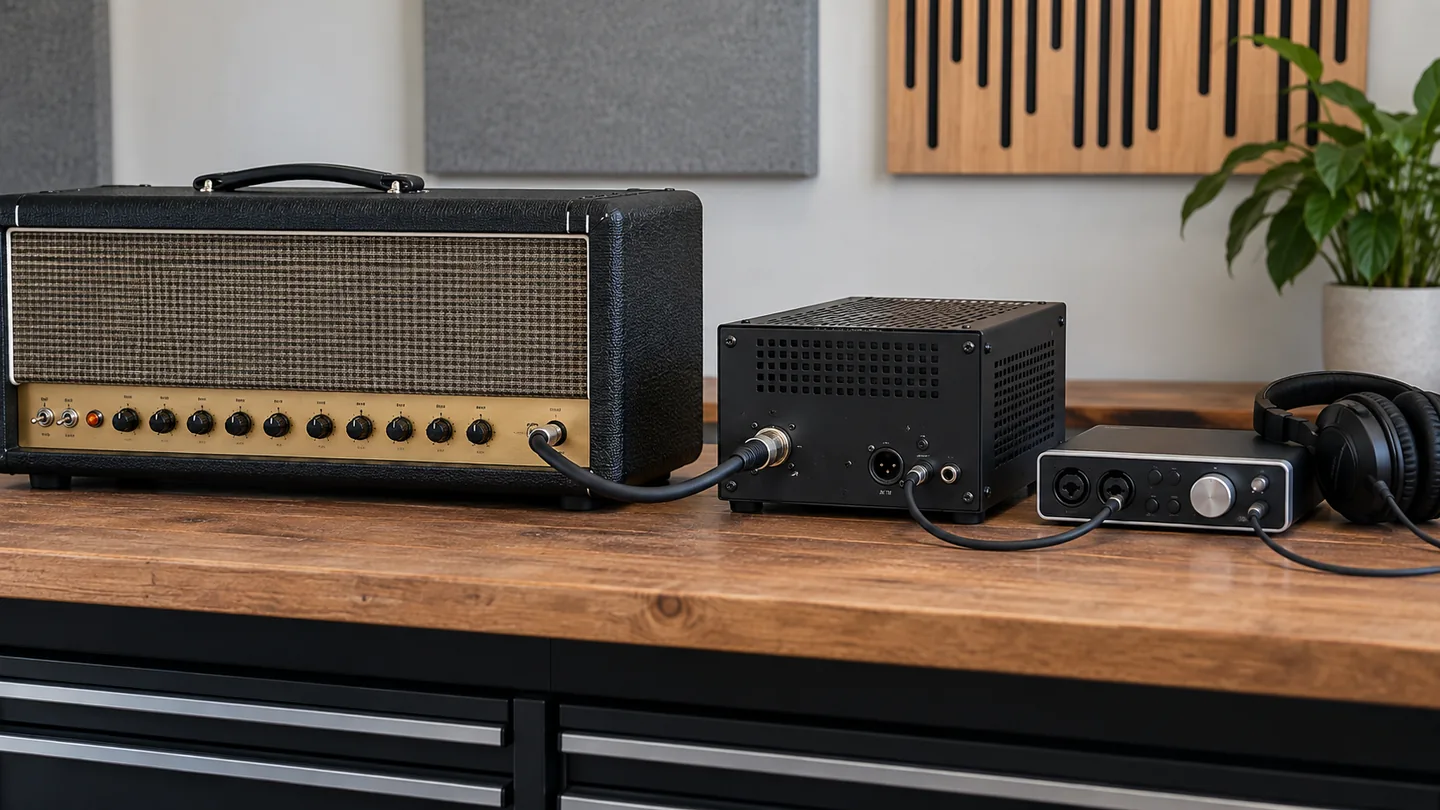
Illustrative image; not a photograph of a specific product.
The buyer’s real question
In a Reddit discussion about affordable silent recording, the owner had a Fender Princeton Reverb ’68 Reissue with no line out or effects loop and wanted an affordable line output without a loud cabinet. The owner also stated that a correct load was required. Replies compared load boxes, speaker simulation, and price. Before comparing brands, separate those three functions.
Load: The amplifier’s speaker output sees an appropriate electrical load. Attenuation: Some, but not all, of the output reaches a physical cabinet. Cabinet simulation: A processed signal imitates the filtering of a mic’d speaker for headphones, monitors, or a recording interface. One product may combine all three; another may provide only one.
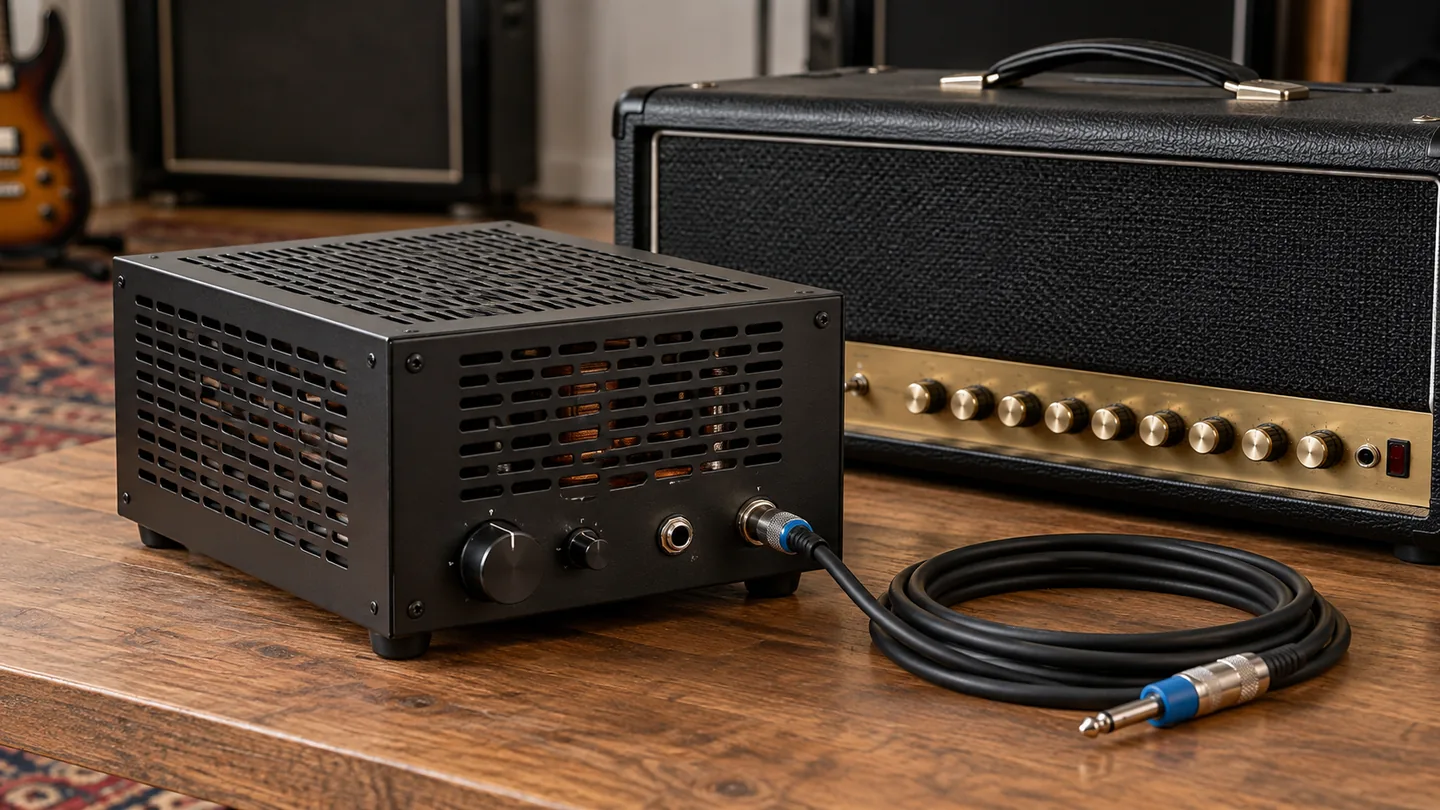
Read the signal path, not the marketing name
| Question | Why it matters |
|---|---|
| Is the unit a load that permits no cabinet? | Silent use needs an approved destination for the amp’s output. |
| Which input impedance is supported? | It must match a permitted amplifier output configuration; check the exact variant when a product comes in multiple impedances. |
| What continuous or RMS power, and any stated peak power, can it handle? | The device converts output power to heat. |
| Does its line output include cab simulation? | A raw amp-output signal often needs further filtering for natural recording tone. |
| Which cables and cooling clearances are specified? | The amp-to-load connection needs the specified speaker cable and unobstructed ventilation. |
Two Notes explains the load and impedance requirements. Its Captor X manual describes the unit as a load that can replace a speaker cabinet, requires matching the amplifier output impedance, and gives a 100 W RMS maximum with cooling guidance. Those values apply to that product, not to every load box. The same manual warns that, with the volume switch on FULL, plugging a cable into SPEAKER OUT disconnects the internal load; a cable left unconnected at the other end then leaves the amp without a proper load. Follow the exact manual’s silent-use diagram, rather than assuming an unused output jack is harmless. For a broader explanation of speaker load and sensitivity, see our tube amp speaker matching guide.
When not to buy a load box
If you only need quiet practice and already like a digital or headphone solution, a load box may be unnecessary. If a device’s rating or silent-use instructions are unclear for your amplifier, do not assume it is safe because it has a quarter-inch jack. Share both manuals with the manufacturer or a qualified amplifier technician before connecting it.
For a useful comparison, record the same phrase through your preferred cabinet at a safe level and through the candidate silent chain. Match playback level, then judge feel, latency, noise, and whether the recording needs additional cabinet processing.