
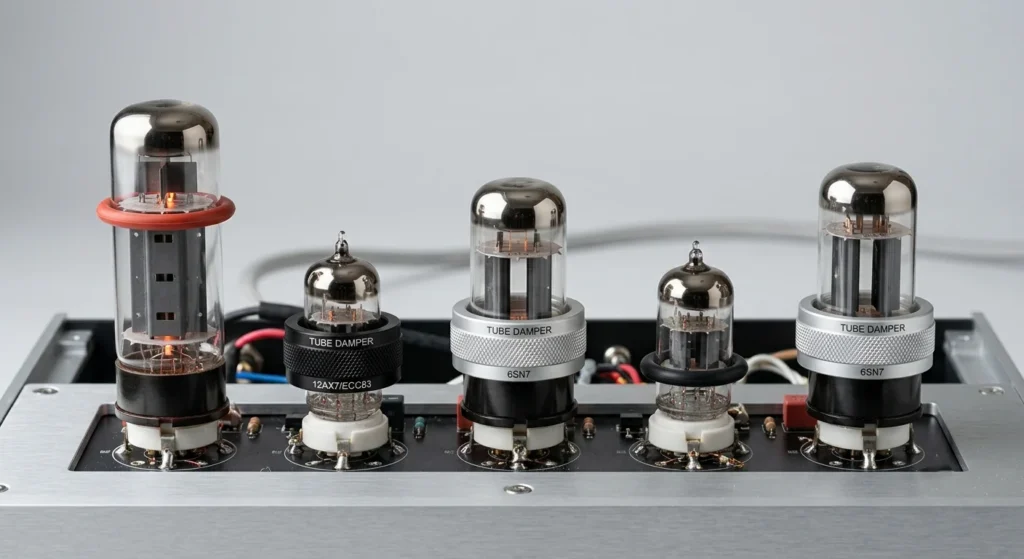
More importantly, mechanical vibration is the enemy of clean analog audio. High-quality vacuum tube dampers offer a direct, low-cost solution to isolate sensitive glass from physical vibrations. If you run high-gain combo amplifiers, cabinet vibrations constantly shake your preamp tubes. This structural feedback leads to harsh, microphonic tube rattle during performances.
In practice, fortunately, you do not need expensive structural modifications to fix this issue. Precision-molded rings made from ultra-dense, high temperature silicone absorb these mechanical shocks before they reach the internal tube grids. They fit snugly over the glass envelope, dampening resonant frequencies instantly.
At the same time, for just 5.00 to 7.50 per ring, this simple upgrade restores clarity and quiet operation to your signal chain. We evaluate the best-performing silicone damping rings on the market. This review helps you select the exact size and temperature rating for your specific amplifier.
Understanding Tube Rattle: Why Amps Need Vacuum Tube Dampers
For example, to make an informed purchase, look closely at how these cost-effective vacuum tube dampers withstand real-world use. For a modest investment of 5.00 to 7.50, a commercial-grade damper ring must feature a specialized silicone formulation. This compound must run continuously at temperatures up to 450°F to ensure long-term durability.
This extreme thermal tolerance is critical because your preamp tubes, such as the ubiquitous 12AX7, run very hot during normal operation. As a direct consequence of this heat, cheap rubber hardware will quickly crumble and fail. Therefore, specialized high temperature silicone is the only viable material choice for long-term reliability.
When evaluating these dampening accessories, pay close attention to the structural firmness, which is measured as durometer. An optimal rating of 50 to 60 durometer provides the perfect balance of flexibility and density, Because of this precise density, these rings effectively isolate the glass envelope from physical cabinet movements. These structural vibrations are highly common in high-gain combo amplifiers. By dampening these physical movements, you eliminate the annoying mechanical tube rattle that ruins clean audio signals.
When shopping for these components, keep these key specifications in mind:
-
Material Composition: Industrial-grade silicone resists thermal degradation up to 450°F without losing its structural shape.
-
Hardness Rating: A 50-to-60 durometer measurement ensures the ring absorbs mechanical shock without slipping down the glass envelope.
-
Sizing Match: Standard small-diameter rings fit 12AX7 preamp valves, while larger rings secure hot-running power tubes.
-
Cost Efficiency: Expect to pay between 5.00 and 7.50 per ring for professional-grade units that offer immediate acoustic silencing.
The Mechanics of Microphonics and Metallic Ringing
Investing in these budget-friendly accessories represents the most cost-effective strategy to eliminate structural microphonics before they degrade your audio. When sourcing these specialized vacuum tube dampers, you must look beyond generic hardware-store O-rings. Cheap, hardware-grade alternatives lack the necessary thermal stability and will quickly dry out, crack, or melt onto your hot-running preamp tubes.
Instead, select purpose-built, high temperature silicone rings designed specifically for demanding vacuum-tube environments. These heavy-duty dampers feature a robust, square-shouldered profile that maximizes physical contact with the glass envelope. Consequently, this specialized design provides far superior vibration absorption compared to cheap, round-profile alternatives. To get the best value, look for multi-packs in the 20 to 30 range, which typically contain four to six precision-molded rings.
For standard 12AX7 preamp valves, a dual-ring setup per tube yields the most stable results. If you are troubleshooting high-gain combo amplifiers, focusing your budget on the first-stage input tube provides the most noticeable noise reduction. By targeting these highly sensitive input stages first, you can resolve annoying tube rattle without buying unnecessary accessories for the entire chassis. For maximum efficiency, look for suppliers offering a certified 55-durometer rating to guarantee the ideal balance of mechanical compliance and long-term durability.
Why Combo Amplifiers are Highly Susceptible
Achieving this durability is critical in combo amplifiers, where the speaker and chassis share a single cabinet, Because of this close proximity, raw acoustic energy shakes the glass envelopes of your preamp tubes directly. Consequently, these structural vibrations transfer into the internal tube elements, generating an annoying, metallic tube rattle. This mechanical feedback loop degrades your signal-to-noise ratio, particularly when running high-gain settings.
To resolve this issue without overspending on new valves, you can install specialized vacuum tube dampers. Specifically, these high temperature silicone rings absorb the mechanical energy before it vibrates the delicate internal grid of a 12AX7. For a modest investment of five to eight dollars, a technician can isolate the most sensitive input stages and stop the rattle at the source.
In contrast, generic rubber hardware O-rings cannot handle the intense thermal environment of a tube chassis. These cheap substitutes quickly bake, harden, and crumble under normal operating temperatures. Using a rated 55-durometer silicone ring instead preserves the mechanical compliance needed to damp physical cabinet vibrations over years of heavy use.
How High Temperature Silicone Tube Damper Rings Work
This specific 55-durometer rating represents the sweet spot for isolating microphonic vibration without choking the glass envelope, Because cheap hardware-store rings use low-grade rubber, they quickly dry out and lose their elasticity under heat. By contrast, a high temperature silicone ring maintains its mechanical compliance at operating temperatures up to 450 degrees Fahrenheit. Consequently, investing five to eight dollars in a set of specialized vacuum tube dampers is a highly cost-effective alternative to discarding noisy but electrically sound preamp tubes.
From a design standpoint, the profile of the ring determines its effectiveness in silencing tube rattle. Standard round O-rings contact the glass at a single, narrow point, which limits their dampening capacity and allows them to slide down the tube. In contrast, premium dampers feature a square-shouldered profile. This flat inner surface maximizes contact area against the glass wall. As a result, the ring absorbs and dissipates structural energy far more efficiently than generic circular hardware.
For most musicians running combo amplifiers, treating the sensitive 12AX7 preamp tubes yields the most immediate noise reduction, While some audiophiles advocate for expensive metal shielding canisters, these heavy retrofits often trap heat and accelerate tube failure. Using specialized, low-profile silicone rings instead allows the tube to shed heat naturally while offering superior vibration isolation. Ultimately, selecting a tool engineered for high-temperature compliance ensures your amplifier stays quiet through years of heavy gigging.
Mass, Durometer, and the Square-Shouldered Profile
To permanently silence tube rattle, high temperature silicone vacuum tube dampers must match the physical demands of hot glass envelopes. Standard hardware-store O-rings are typically made of cheap nitrile rubber. These inferior rings quickly dry out, bake, and crumble under normal operating conditions. In contrast, specialized 55-durometer silicone rings maintain their elastic compliance at temperatures up to 450°F. This specific durometer rating is soft enough to absorb high-frequency vibrations but firm enough to hold its position on the glass.
Adding the correct amount of physical mass to the glass envelope shifts its natural resonant frequency. Generic thin bands lack the weight to alter this resonance. Conversely, heavy brass clamp-on retrofits add too much bulk and strain delicate tube sockets. A square-shouldered silicone profile solves this by concentrating dampening mass directly against the vibration source, Because of this design, you get maximum vibration absorption without risking mechanical damage to your amplifier.
For a modest investment of 5.00 to 7.50 per ring, these specialized dampers offer a highly practical fix for high-vibration combo amplifiers. They protect sensitive 12AX7 preamp tubes from structural feedback without trapping destructive heat.
Thermal Resistance Requirements for Power and Preamp Tubes
Managing these distinct thermal environments is critical when choosing vacuum tube dampers to eliminate mechanical tube rattle. Preamp tubes like the 12AX7 generate moderate heat, usually staying below 300°F. Consequently, lightweight high temperature silicone rings easily handle this thermal load while isolating high-frequency microphonics. On the other hand, power tubes like EL84s run much hotter, frequently reaching envelope temperatures over 400°F. Standard industrial dampening rings degrade almost immediately under these extreme temperatures. In contrast, premium 55-durometer silicone rings withstand these high thermal baselines without losing their elastic compliance.
This thermal stability is especially vital in combo amplifiers where the speaker shares the cabinet with the hot valves. The intense acoustic energy in these cabinets constantly drives mechanical vibrations directly into the tube’s internal structure. As a result, you get a metallic halo of noise that ruins your signal path. Heavy metal shielding canisters are a poor solution because they act as thermal insulators that shorten tube life. Conversely, low-profile silicone rings damp the physical vibration of the glass envelope while allowing the tube to dissipate heat naturally.
Sizing Guide: Selecting the Right Tube Dampers Rings for Your Valves
Selecting the correct size of these vacuum tube dampers is critical to ensuring an interference fit that successfully stops tube rattle without cracking the delicate glass envelope. If a dampening ring is too loose, it will fail to transfer and dissipate the mechanical vibrations of the valve. Conversely, an excessively tight ring puts dangerous physical tension on the glass expansion joint near the base pins.
To achieve proper mechanical isolation, you must match the inner diameter of the high temperature silicone ring to the specific outer diameter of your valve. For example, standard preamp tubes require a smaller internal diameter ring to grip the glass envelope securely. In contrast, larger power pentodes and rectifiers require much wider rings with a stiffer durometer rating to support their physical mass.
From a purchasing perspective, premium 55-durometer rings typically retail between 5.00 and 7.50 per unit, While cheap generic O-rings are available for pennies, they quickly dry out and crack under intense heat. On the other hand, investing in engineered, square-shouldered silicone rings provides a permanent mechanical fix that preserves your signal path. These premium dampers convert destructive kinetic energy into negligible thermal energy, keeping your combo amplifiers quiet.
Small Dampers (12AX7, 12AT7, and Preamp Tubes)
To systematically address tube rattle in small-signal valves, you must select high temperature silicone dampers designed specifically for miniature 9-pin glass envelopes. Preamp tubes like the 12AX7 and 12AT7 feature a nominal outer diameter of approximately 20mm to 22mm. Therefore, a properly engineered damper ring must have an internal diameter of 18mm to 19mm to establish a secure tension-fit, While power tubes demand stiff compounds to support their heavy mass, small-signal preamp tubes perform best with a highly compliant 50 to 55 durometer silicone. This precise durometer rating ensures the ring absorbs high-frequency chassis vibrations without applying crushing force to the thin glass wall.
In typical combo amplifiers, the first gain stage is highly vulnerable to microphonic feedback. Placing two small silicone rings on a 12AX7 valve effectively isolates its delicate internal grid structures. Conversely, leaving these small valves unshielded allows physical cabinet vibrations to modulate the electron stream, causing an audible metallic ringing. On the other hand, traditional metal shields trap ambient heat and shorten the operating lifespan of your tubes. Installing these low-profile vacuum tube dampers provides a highly reliable thermal and mechanical balance for your high-gain circuits.
Large Dampers (6V6, 6L6, 5Y3, 5AR4, and Power/Rectifier Tubes)
Moving up from small-signal preamp valves, larger octal power and rectifier tubes require a completely different mechanical approach to eliminate destructive tube rattle. Consequently, off-the-shelf rings sized for small tubes will not fit these larger envelopes. For mid-sized octal valves like the 6V6, 5Y3, and 5AR4, the glass envelope typically measures 28mm to 30mm in outer diameter. To achieve an effective tension-fit, you must select high temperature silicone dampers with a 25mm to 27mm internal diameter. In contrast, larger power tubes like the 6L6 require a broader 31mm to 33mm internal diameter ring to accommodate their wider 35mm to 38mm glass bodies, Because power and rectifier tubes handle much higher electrical currents, they generate extreme heat and intense physical vibrations. For this reason, these large-envelope vacuum tube dampers utilize a stiffer 60-durometer silicone compound. This increased material density provides the necessary resistance to absorb heavy, low-frequency cabinet resonance in high-output combo amplifiers. Additionally, the material formulation must withstand continuous operating temperatures up to 240 degrees Celsius. Selecting premium, industrial-grade silicone ensures the rings will not melt, crack, or bake onto your vintage glass envelopes over time.
Budget-conscious players often overlook this simple mechanical upgrade, yet spending 5.00 to 7.50 on a pair of engineered rings is highly cost-effective. By installing these heavy-duty dampers, you directly shield the delicate internal filaments and plate structures from physical shock. Ultimately, this basic preventative maintenance stops mechanical noise, prevents microphonic degradation, and preserves the structural integrity of your expensive power stage.
Installation Best Practices and Expected Performance Upgrades
Installing engineered vacuum tube dampers provides a direct, mechanically sound solution to destructive tube rattle. In high-gain combo amplifiers, intense acoustic energy shakes the chassis. This vibration directly excites the delicate internal grid structures of your preamp tubes. Consequently, these vibrations cause physical displacement of the internal filaments, leading to microphonic ringing and unwanted signal distortion.
Specifically, physical contact between the high temperature silicone and the glass envelope dampens high-Q resonances. For example, standard 12AX7 dual-triodes require a highly compliant 50 to 55 durometer material to absorb high-frequency chassis noise. In contrast, larger power envelopes demand a stiffer 60 durometer compound to successfully dissipate lower-frequency cabinet vibrations. This targeted dampening changes the resonant frequency of the glass, shifting it well outside the sensitive audio frequency band.
Also, this mechanical upgrade outperforms vintage-style metal shields, While cheap metal cans block electromagnetic interference, they also act as thermal blankets. This trapped heat accelerates cathode depletion and shortens tube life. High-grade silicone rings stabilize the glass envelope while allowing ambient air to circulate freely. This simple physical modification successfully mitigates mechanical feedback, stabilizes your noise floor, and protects your vintage tube investment.
Optimal Ring Placement on the Glass Envelope
To achieve this physical protection, you must position the high temperature silicone rings at the exact anti-nodes of the glass envelope. As a result, incorrect placement of vacuum tube dampers will fail to suppress tube rattle in high-vibration environments like combo amplifiers.
For standard 12AX7 preamp tubes, slide the first 50 to 55 durometer ring onto the upper third of the glass envelope. Consequently, this placement dampens the area directly adjacent to the internal mica spacers and internal filaments, where mechanical displacement is greatest.
If you are treating taller power tubes, you should install two stiffer 60 durometer rings instead of one. Place the lower ring roughly one-third of the way up from the base, and position the upper ring near the shoulder of the dome, Because of this dual-point contact, you completely decouple the envelope from low-frequency cabinet vibrations.
Fortunately, sourcing these engineered components is highly cost-effective, with typical pricing ranging from 5.00 to 7.50 per damper. This minor investment represents a highly measurable mechanical upgrade that outperforms expensive boutique modifications. When installing, always verify that the rings do not slide down to touch the tube socket or cover any printed chassis markings.
What to Expect: Acoustic Silencing and Extended Tube Life
Once you secure these vacuum tube dampers in their correct positions, you will observe an immediate reduction in the mechanical transfer of kinetic energy. This structural stabilization directly targets the glass envelope, dampening the high-Q resonances that cause audible tube rattle in high-vibration combo amplifiers. Specifically, the high temperature silicone absorbs the shear waves traveling through the chassis before they can agitate the internal dual-triode or pentode elements.
As a direct consequence of this mechanical decoupling, the physical vibration of the internal filaments and grid wires is suppressed, Because these internal components remain stationary, you eliminate the spurious microphonic modulation of the electron stream. In practical terms, this lowers the noise floor of the amplifier and removes the high-frequency metallic ghost notes that plague sensitive preamp tubes like the 12AX7.
Beyond immediate acoustic silencing, this modification extends the operational lifespan of your valves. By minimizing continuous mechanical oscillation, you protect the delicate internal mica spacers from widening their anchor holes over time. Furthermore, reducing physical shock prevents structural fatigue at the critical weld points of the cathode and heater filament. Ultimately, this simple mechanical modification delivers measurable stability, ensuring consistent electrical performance and preventing premature tube failure without altering the fundamental circuit transfer characteristics.
FAQ About tube dampers rings
Do tube dampers change the actual tone of the amplifier?
Tube damper rings do not alter the fundamental voice or EQ of your amplifier, but they absolutely improve the clarity of your tone. Their main job is to stop vacuum tubes from vibrating, which eliminates annoying background rattles, hums, and high-pitched feedback known as microphonics. By absorbing these unwanted physical vibrations, dampers make your amp sound tighter, cleaner, and more defined, especially at high volumes.
A great practical tip is to place a damper ring on your first preamp tube, often labeled as V1. This is the most sensitive tube in your amplifier and has the biggest impact on your overall sound. Adding a high-temperature silicone damper here will significantly reduce any metallic ringing and give you a much quieter, more focused tone without losing any of your amp’s natural warmth.
How many high temperature silicone rings should be installed per vacuum tube?
For most standard audio vacuum tubes, we highly recommend installing two high-temperature silicone rings per tube. This setup provides the ideal balance of vibration dampening without trapping too much heat. For smaller preamp tubes like the common 12AX7, using two rings is the sweet spot for silencing unwanted rattle and microphonic hum.
When installing them, space the rings evenly along the glass body. A great practical tip is to position one ring about a third of the way down from the top of the tube, and the second ring about a third of the way up from the base. Avoid placing them directly over the hottest internal metal elements, which keeps your tubes running cool and sounding crystal clear.
Can these dampening rings melt or damage my vintage tubes?
No, high-quality tube dampening rings will not melt or damage your prized vintage tubes. Quality rings are made from specialized, high-temperature materials like aerospace-grade silicone or Teflon, which can easily withstand the intense heat your tubes produce. However, you should avoid cheap, generic rubber rings, as these can degrade, melt, and leave a sticky, difficult-to-clean residue on the glass.
To keep your vintage gear completely safe, a great practical tip is to only purchase rings specifically rated for audio vacuum tube use, and always install or adjust them when the tubes are completely cool. This prevents any accidental burns and ensures the rings sit snugly in the sweet spot on the tube’s glass body to safely eliminate microphonic vibrations.